Cake Decorator Asked to Keep a Water Bottle at Her Station to Protect Her Milk Supply — the EEOC Says She Was Fired Instead
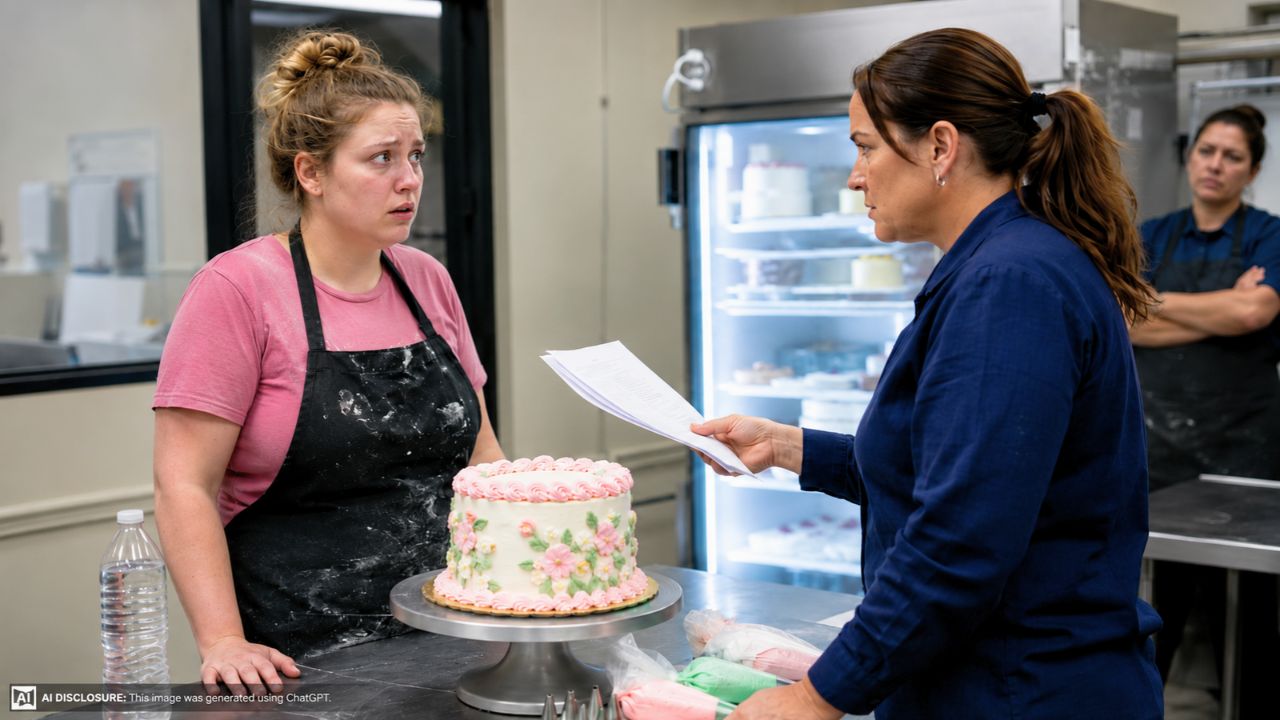
Photo credit: AI-generated image created using ChatGPT. Illustrative only.
It started as one of those small, practical requests that usually gets handled in a minute and forgotten: a cake decorator asked to keep a water bottle at her workstation so she could maintain her breast milk supply while working. At first, her store said yes.
But the U.S. Equal Employment Opportunity Commission says the story didn’t stay simple. In a federal lawsuit described in the agency’s press release, the EEOC alleges Roundy’s Supermarkets refused to keep accommodating the nursing mother after a transfer, demanded access to her private medical records, and ultimately fired her instead of letting her keep water at her station.
A small accommodation, until the transfer changed everything
Roundy’s Supermarkets operates Pick ‘n Save and Metro Market grocery stores. According to the EEOC’s suit, the employee worked as a cake decorator at a Pick ‘n Save location in Madison, Wisconsin, where she requested the ability to keep a water bottle at her workstation.
The request wasn’t framed as a perk or convenience. The EEOC says she needed water access to protect her milk supply while breastfeeding. At that Madison location, the company initially accommodated her.
Then, in June 2024, Roundy’s transferred her to a Metro Market store in Shorewood Hills. That’s when the accommodation allegedly stopped being treated like an easy “yes.”
When “no water” turned into a real health problem
At the new store, management refused to allow the workstation water accommodation, according to the lawsuit. The EEOC says that refusal had a direct effect: her milk supply declined.
That detail matters because it ties the request to a concrete, physical outcome—not a vague preference or a general complaint. The agency is painting a picture where something basic, like access to water, was linked to the employee’s ability to continue breastfeeding safely and successfully while working.
And instead of the issue cooling off after one denial, the EEOC says it escalated because the employee kept asking for the same accommodation.
The requests kept coming, and then the paperwork got personal
After her milk supply declined, the employee continued to ask for the water accommodation, the EEOC says. That’s when the company allegedly shifted the focus away from the workstation and onto her medical information.
According to the EEOC, Roundy’s insisted she sign a release that would authorize the company to access her private medical records. The lawsuit describes this as an unlawful attempt to get medical information without a job-related justification.
That demand is a key part of why the EEOC is also bringing an Americans with Disabilities Act claim. The ADA limits when employers can seek medical information, and the agency says this situation crossed that line.
From a basic ask to a termination
The EEOC’s bottom line is blunt: it says Roundy’s fired the employee rather than permit her to keep a water bottle at her workstation. Not reassigned. Not offered an alternative setup. Fired.
In the agency’s view, that’s where the case becomes more than an accommodation dispute and turns into a termination tied to a protected need. The EEOC says the conduct violated the Pregnant Workers Fairness Act, which requires employers to go through an interactive process to accommodate pregnancy-related limitations and prohibits firing someone because they need an accommodation.
In the press release announcing the suit, Acting EEOC General Counsel Catherine L. Eschbach called water access for a nursing mother “a simple, commonsense measure that supports both maternal and infant health,” adding, “No worker should be forced to choose between her job and safely breastfeeding her child.”
Why the EEOC is leaning on the PWFA and the ADA
This lawsuit sits at the crossroads of two legal frameworks the EEOC says apply to what happened. The first is the Pregnant Workers Fairness Act (PWFA), which went into effect June 27, 2023—right before the time period described in the suit.
The agency’s position is that breastfeeding-related limitations can require reasonable accommodations at work, and that employers have to engage in the back-and-forth “interactive process” instead of shutting things down. Here, the EEOC says Roundy’s did the opposite after the transfer: it refused the accommodation and then terminated the employee for continuing to ask.
The second framework is the ADA. The EEOC isn’t saying the employer simply asked for a note; it alleges the company demanded a release to access private medical records without a job-related reason. That allegation is what turns the medical paperwork demand into its own claim, separate from the water bottle request.
How people tend to react when the “accommodation” is this basic
The EEOC’s description hits a nerve because it’s not a request for a renovation or special equipment. It’s water—something many workers can have at their stations without a second thought, depending on the role and workplace rules.
When cases like this get discussed, people usually zoom in on the practical mismatch: if the accommodation was granted at one location, why couldn’t it continue after a transfer? Others focus on the escalation point—when a request for water turns into a demand to sign away privacy and hand over medical records.
And the biggest question people tend to ask is the one at the center of the EEOC’s lawsuit: why did the employer choose termination as the solution, instead of working out a workaround that kept the employee on the job?
The EEOC says it filed the case—EEOC v. Roundy’s Supermarkets, Inc., Case No. 3:26-cv-00241—in the U.S. District Court for the Western District of Wisconsin after attempting to resolve the matter through its administrative conciliation process. For the worker at the center of it, the dispute that began with a water bottle ended with unemployment, and now it’s moved into federal court.
Check out more from Now Rundown:
- A Party of 12 Came Back a Month Later Demanding Their $80 Tip Refunded — My Restaurant Made Me Pay It
- Her Coworker Kept Filing the Same Complaint About Her After Being Warned — Then She Filed a Counter-Report With Every Email Documented
- Siblings Demanded Half of Their Sister’s $11 Million Inheritance — She Refused Because They Never Visited
- The Kid I Bullied in Middle School Just Interviewed for a Job on My Team — He Bombed It and I Didn’t Hire Him

Abbie Clark is the founder and editor of Now Rundown, covering the stories that hit households first—health, politics, insurance, home costs, scams, and the fine print people often learn too late.