Mining Equipment Operator Asked to Avoid the Roughest Machines During a High-Risk Pregnancy — the EEOC Says U.S. Steel Put Her on Involuntary Leave Instead
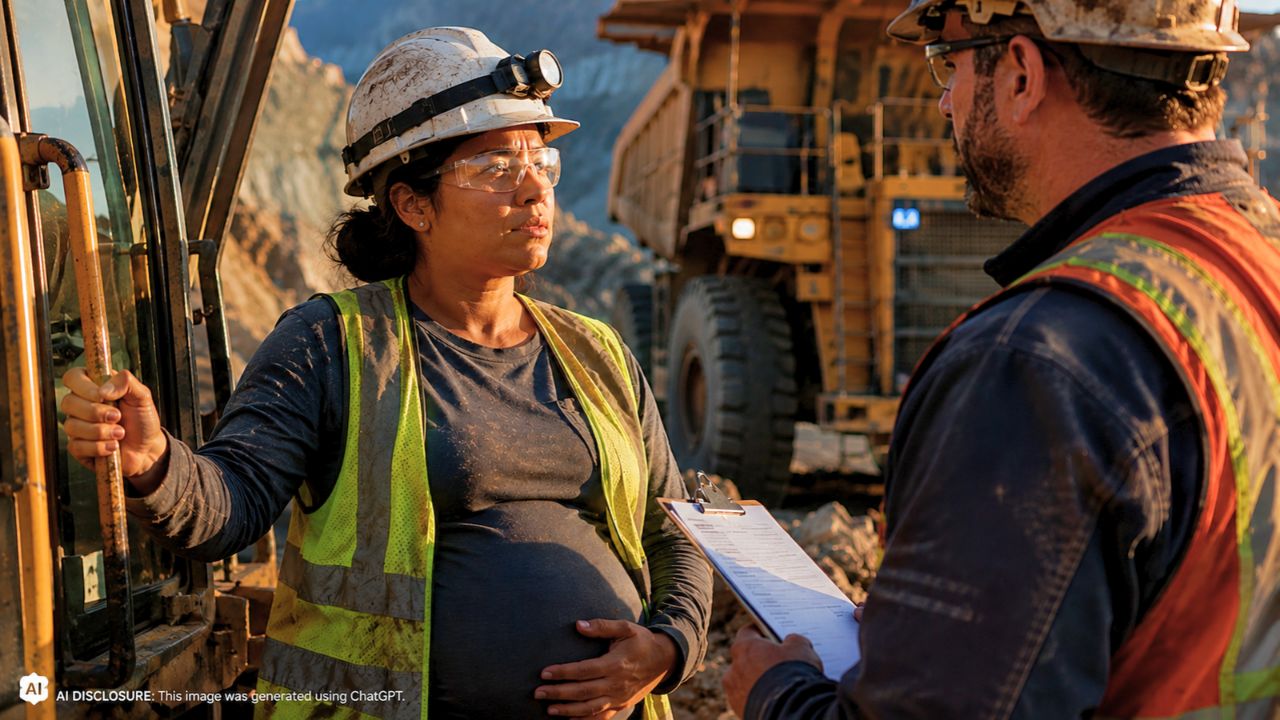
Photo credit: AI-generated image created using ChatGPT. Illustrative only.
A veteran mining equipment operator at U.S. Steel’s Minntac mine in northern Minnesota says she wasn’t trying to stop working when her pregnancy became high-risk—she just needed a temporary tweak to stay safe. The U.S. Equal Employment Opportunity Commission says the company’s response wasn’t to move her to less jarring machines for a while, but to take her off the job on an involuntary leave.
In a lawsuit laid out in the agency’s announcement, the EEOC accuses U.S. Steel of pregnancy discrimination and retaliation under the Pregnant Workers Fairness Act, a relatively new federal law that requires reasonable accommodations for pregnancy-related limitations in most cases.
She asked for a simple adjustment during a high-risk pregnancy
According to the EEOC’s lawsuit, the employee was an experienced operator working at Minntac, an iron mining operation run by U.S. Steel. During her pregnancy, she had a specific medical need: avoid the most physically jarring equipment.
That request wasn’t framed as an inability to do her job, the EEOC says. The accommodation she sought was to temporarily work on other tasks and equipment already within her job description—basically, keep her on the clock and contributing, just with fewer “rough ride” assignments while she was medically restricted.
It’s the kind of request that can sound straightforward in theory and get messy quickly on a production site, where assignments rotate and the day’s work depends on who’s available. But the EEOC’s position is that this wasn’t a “no” situation—it was an accommodation situation.
Instead of a reassignment, she was put on involuntary leave
The EEOC says the company didn’t temporarily re-slot her into less jarring work. It placed her on an involuntary leave for several weeks.
That detail matters because forcing someone out, even temporarily, can hit paychecks, schedules, and job standing—especially in workplaces where overtime, shift differentials, and premium assignments are a major part of what workers take home. The press release doesn’t list a dollar amount, but it does point to the real-world consequence: time away from work when she was willing and able to do work with reasonable limits.
U.S. Steel later allowed her to return. But the EEOC says coming back didn’t mean returning to normal.
Coming back didn’t mean going back to her regular job
When the operator returned, the lawsuit alleges the company first assigned her to work that didn’t match her medical restrictions. Then, the EEOC says, U.S. Steel removed her from her normal role altogether.
For the rest of her pregnancy, the agency says she ended up in a menial office job. It wasn’t just a change of scenery—it came with reduced earning potential, a phrase that tends to carry a lot of weight in mining and industrial work where pay often depends on the type of assignment.
The picture the EEOC paints is a worker who tried to stay in her lane—keep working, keep earning, protect her pregnancy—being pushed farther and farther from the job she’d built experience in. The accommodation didn’t look like a temporary adjustment anymore. It looked like a sidelining.
After the pregnancy, the EEOC says the “payback” started
The lawsuit doesn’t stop at how U.S. Steel handled the pregnancy. It also alleges retaliation afterward.
Specifically, the EEOC claims that after her pregnancy, the company denied her higher-paying assignments and sent her to more difficult and less desirable jobs in remote areas of the mine.
In a workplace where the best assignments can mean better pay, better hours, or simply a more manageable day, that kind of shift can feel like a message. The EEOC’s allegation is that the message was punishment for seeking an accommodation and for engaging with the EEOC process.
The legal backdrop: a new law with sharp edges
The EEOC says the conduct violates the Pregnant Workers Fairness Act, or PWFA. The law went into effect June 27, 2023, and it’s designed to close a gap that left many pregnant workers stuck between “you can work” and “you need help working safely.”
Under the PWFA, employers generally must provide reasonable accommodations for known limitations related to pregnancy, childbirth, or related medical conditions, unless doing so would cause an undue hardship. Just as important here, the law also bars employers from punishing someone for requesting an accommodation or for reporting violations to the EEOC.
In the agency’s announcement, acting EEOC General Counsel Catherine Eschbach emphasized that the PWFA created “new and meaningful legal protections for pregnant workers,” and said employers should review and update policies to comply.
The EEOC says it filed the case—EEOC v. U.S. Steel, Case No. 0:25-cv-04721—in U.S. District Court for the District of Minnesota after trying to resolve the matter through the agency’s conciliation process first.
What people tend to focus on in cases like this
Even without public comments attached to the EEOC release, the contours of the dispute point to the same pressure points workers and supervisors argue about in real time: who decides what’s “reasonable,” whether a temporary adjustment is truly available, and what happens to a worker’s earnings when they get bumped from normal assignments.
Another flashpoint is the difference between “leave” and “accommodation.” The EEOC is explicitly treating involuntary leave as a failure to accommodate—because the employee allegedly could have worked with modifications. That’s a big deal for employees who can’t afford to be benched, and for employers who may be used to treating leave as the default solution when restrictions enter the picture.
Finally, retaliation claims often turn on patterns that are hard to see in a single day but obvious over a season: premium work disappears, the best routes or locations go to others, and the worker who asked for help ends up with the assignments nobody wants. The EEOC is saying that’s what happened here—high-paying work denied, rougher and more remote work assigned.
U.S. Steel will have a chance to respond in court, and the case will determine whether the agency can prove what it alleges. But the EEOC’s message is already clear: under the PWFA, a pregnancy-related restriction isn’t supposed to automatically push a capable worker out of her job—or set her up for worse treatment once she comes back.
Check out more from Now Rundown:
- A Party of 12 Came Back a Month Later Demanding Their $80 Tip Refunded — My Restaurant Made Me Pay It
- Her Coworker Kept Filing the Same Complaint About Her After Being Warned — Then She Filed a Counter-Report With Every Email Documented
- Siblings Demanded Half of Their Sister’s $11 Million Inheritance — She Refused Because They Never Visited
- The Kid I Bullied in Middle School Just Interviewed for a Job on My Team — He Bombed It and I Didn’t Hire Him

Abbie Clark is the founder and editor of Now Rundown, covering the stories that hit households first—health, politics, insurance, home costs, scams, and the fine print people often learn too late.