Stepfather Bought His Son a Nicer Car Than His Stepdaughter’s After Her Biological Father Refused to Contribute a Cent
Photo credit: AI-generated image created using ChatGPT. Illustrative only.
When a blended family tries to keep things “equal,” big purchases have a way of turning into emotional scorecards. That’s what happened after a stepfather helped buy his teen stepdaughter a reliable first car—only to bring home a newer, flashier vehicle for his son months later.
In the original post, the man laid out the math behind both purchases and asked whether he was wrong for the difference. What he didn’t expect was how quickly a practical decision would land as a personal one inside his house.
A blended family, two teens, and one milestone purchase
The man said he’s been married to his current wife for five years. Her two daughters, 17 and 12, live with them, while his own daughter is 24 and his son was about to turn 16.
When his older stepdaughter turned 16 the year before, his wife wanted to buy her a car. He agreed to help pay. He also noted he makes considerably more than his wife, and he assumed he’d end up covering most of the cost—especially because his wife’s ex-husband “wanted no part of it.”
According to the post, the stepdaughter’s biological father refused to contribute, insisting he had no money and shutting down the conversation. So the couple bought the teen a 2009 Chevy Malibu with over 100,000 miles, but in good shape. The stepdaughter was thrilled at the time, and the family felt like they’d made a smart, safe choice for a first car.
Then a second car showed up—and it looked like a different set of rules
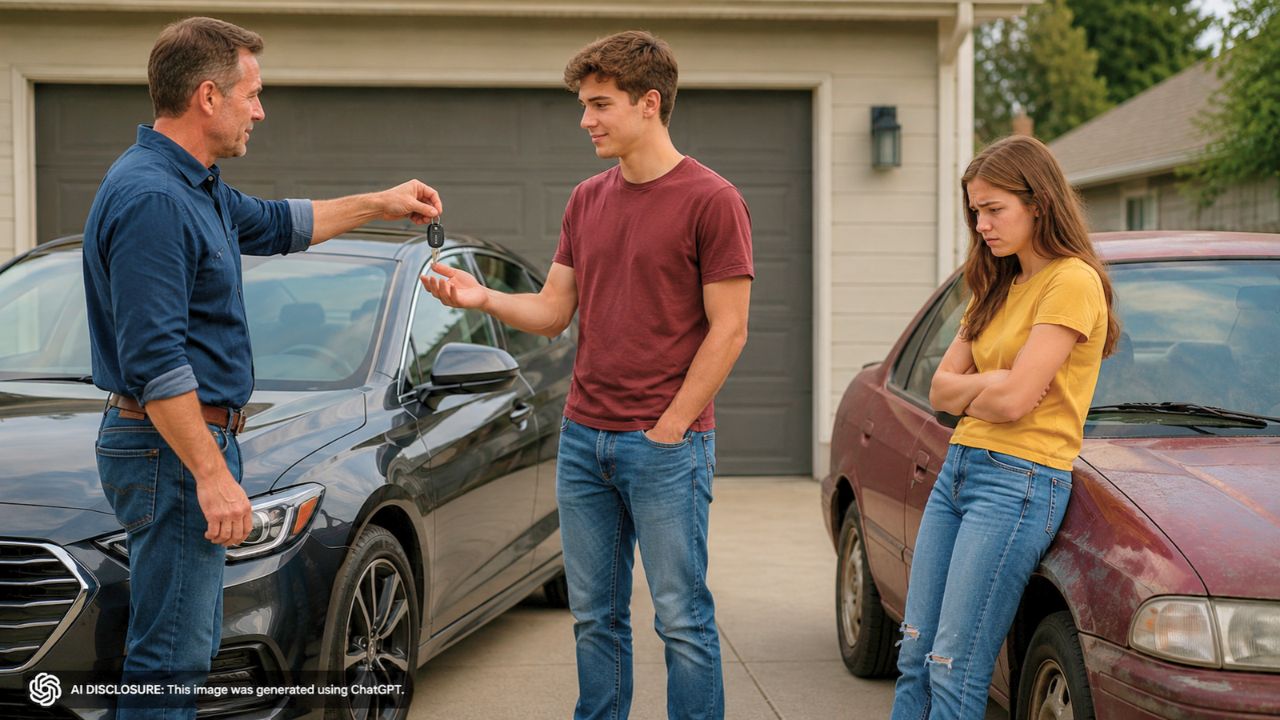
Months later, with the man’s son turning 16 in April, he started planning the same rite of passage. But there was one key difference: his son lives primarily with the man’s ex-wife, and she was part of the conversation this time.
Unlike his current wife’s ex, his ex-wife had a solid job and agreed to split the cost. In an edit, the man clarified that he proposed contributing the same amount he’d put down for the stepdaughter’s car, and his ex-wife agreed to match that amount, resulting in a 50/50 purchase.
They found a 2015 four-door Jeep Wrangler—newer, more expensive-looking, and a model that tends to read as a “step up” even before anyone talks about price. The Jeep was kept at the man’s house as they waited for the birthday reveal.
And that’s when the comparison began. The longer the Jeep sat there, the harder it became to pretend the difference wasn’t obvious.
The complaint didn’t come from the adults first
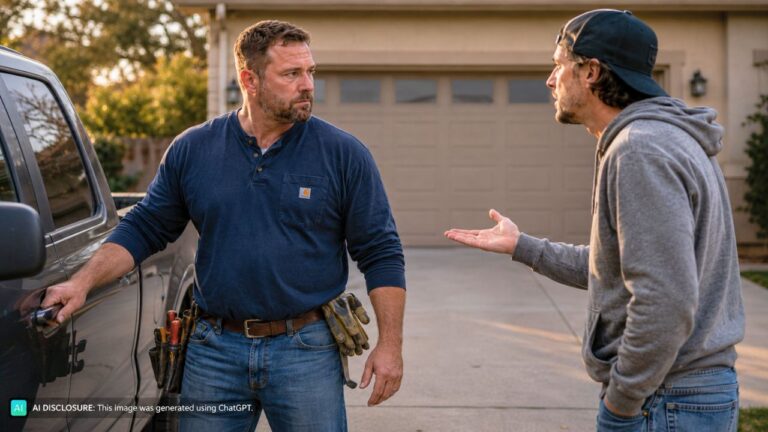
The man said his wife initially tried not to react. But her daughter noticed. The stepdaughter questioned why the son was getting a “much nicer” car, and the question didn’t disappear after it was asked once.
Over time, the wife’s frustration grew too. Eventually, the wife and stepdaughter approached him with a proposal: could they upgrade the stepdaughter’s car later, possibly for her high school graduation, so things felt more balanced?
On paper, it was a negotiation about vehicles. In the house, it was clearly about fairness, status, and what each kid would remember about how they were treated. The stepdaughter had been grateful when she received the Malibu, he said, but the new context changed how it felt.
It wasn’t just a car anymore. It was a visible reminder that one child had two parents able and willing to help, while the other did not.
His response landed like a punishment aimed at the wrong person
The man admits he can get sharp when he’s frustrated, and he did here. He told them he spent about the same amount of money on the stepdaughter’s Malibu as he personally spent on the Jeep, noting the Jeep cost him about $1,400 more but wasn’t “a vast difference.”
Then he went further. He told them if the stepdaughter wanted a nicer car, she should call her biological father and have the conversation with him. In his view, the only reason his son ended up with a newer vehicle was that the boy’s mother stepped up to share the cost, while his wife’s ex refused outright.
The stepdaughter left crying. His wife pushed back, telling him it wasn’t her daughter’s fault that her father wouldn’t help and pointing out that she herself only worked part-time at an animal shelter.
He stood his ground. He said he felt it was generous that he helped buy the Malibu in the first place and that he couldn’t be blamed for the fact that one co-parent contributed and the other didn’t.
What people focused on: the money was only half the story
In the post, he labeled the outcome as “No A-holes here,” but the details show why the household felt so raw. Even if his personal contribution was close between the two cars, the kids weren’t comparing his spreadsheet—they were comparing what showed up in the driveway.
The practical point he made was straightforward: two separate parent pairs bought two different cars under two different financial realities. But many readers tend to focus on something else in these kinds of disputes: how quickly “talk to your other parent” turns into emotional shrapnel in a blended home.
From a teenager’s perspective, being told to chase down a parent who is already uninvolved can feel like being punished for something they can’t control. From a spouse’s perspective, it can feel like a partner is dismissing the imbalance she’s been carrying for years.
And from the man’s perspective, the request to “make it equal” likely sounded like moving goalposts—especially when he believed he’d already been generous and when the missing contribution wasn’t his choice.
The fallout wasn’t about cars—it was about what comes next
The immediate consequence was emotional: a crying teen, a spouse feeling cornered, and a stepfather feeling unappreciated. But the longer-term consequences are the ones families like this have to live with.
The Jeep wasn’t even gifted yet, and the household was already negotiating the graduation present a year early. That’s a sign the tension isn’t going to resolve itself just because time passes.
If the family doesn’t find a way to talk about the difference without turning it into “your dad’s a problem” versus “I paid my share,” every big milestone could reopen the same wound—prom, graduation, college help, insurance, and whatever comes after.
For now, the man is left with a new vehicle in the driveway, a stepdaughter who feels like she drew the short straw, and a marriage that’s trying to balance fairness with financial reality. The money may have been split on paper, but inside the home, the cost is being measured differently.
Check out more from Now Rundown:
- A Party of 12 Came Back a Month Later Demanding Their $80 Tip Refunded — My Restaurant Made Me Pay It
- Her Coworker Kept Filing the Same Complaint About Her After Being Warned — Then She Filed a Counter-Report With Every Email Documented
- Siblings Demanded Half of Their Sister’s $11 Million Inheritance — She Refused Because They Never Visited
- The Kid I Bullied in Middle School Just Interviewed for a Job on My Team — He Bombed It and I Didn’t Hire Him

Abbie Clark is the founder and editor of Now Rundown, covering the stories that hit households first—health, politics, insurance, home costs, scams, and the fine print people often learn too late.