Electrician Refused to Do Free Work for His Kids’ Stepfather — After the Man Mocked Union Tradesmen in Front of Him at a Volleyball Game
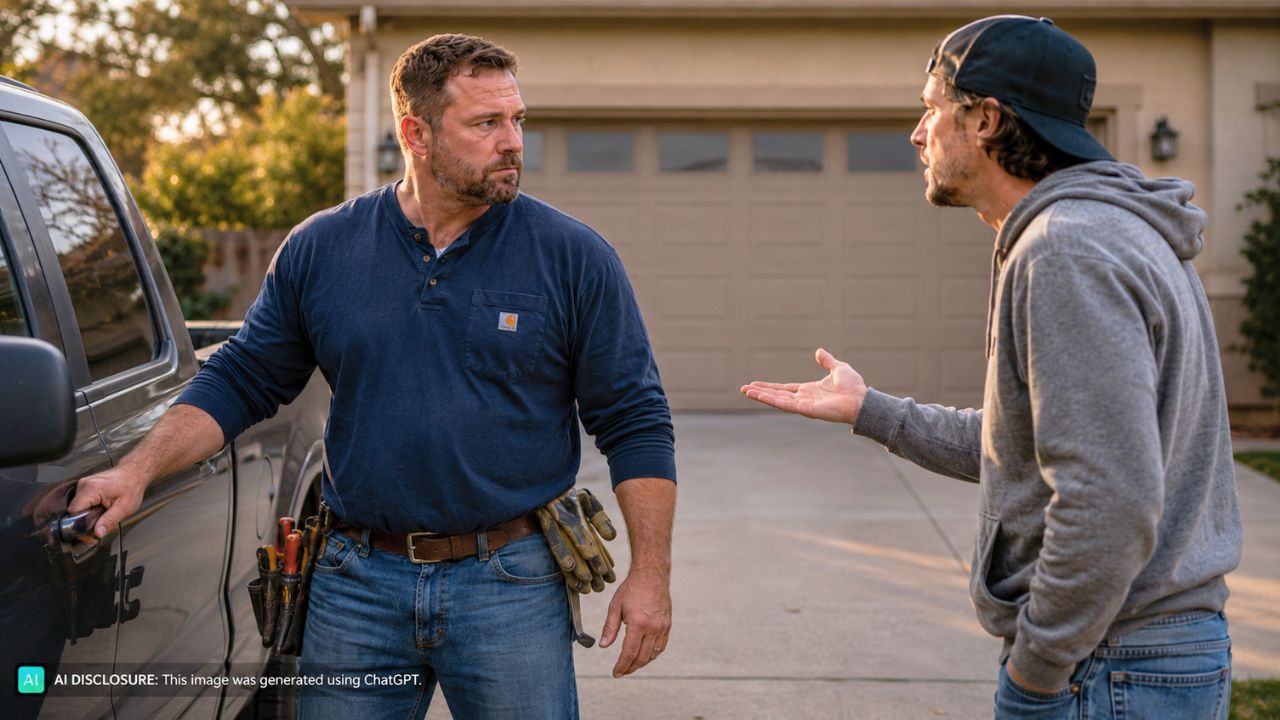
Photo credit: AI-generated image created using ChatGPT. Illustrative only.
Co-parenting can stay civil for months, then one awkward moment in the bleachers turns into a very real question about money, respect, and professional boundaries. That’s where one union electrician says he found himself after his ex-wife’s new husband took a swipe at unions—right in front of him—then later needed electrical help on a job.
In the original post, the electrician explains that he and his ex share custody of their three kids. The divorce the year before was rough, but things had settled into something workable. Then his ex remarried in August after dating her new husband, “Brad,” for six months—and the new dynamic started to show.
A volleyball game turned into a public shot at his livelihood
The flashpoint wasn’t a blowup at a handoff or a text thread gone nuclear. It was a comment at their daughter’s volleyball game, of all places.
Brad, who also works in the trades, was talking within earshot about how “Real tradesmen don’t need to be in a union.” The electrician says Brad said it right in front of him while he was wearing a shirt with his union logo on it. He didn’t argue back in the moment, choosing to stay calm and let it go.
But the remark didn’t land in a vacuum. To the electrician, it was a direct dig at his career and the system he works under—one that sets rates, rules, and expectations. And it was delivered publicly, at a kids’ event, where everyone is supposed to keep things about the game.
The “quick favor” that wasn’t really about time
A few weeks later, his phone rang. According to the post, his ex-wife called out of the blue and said a panel at one of Brad’s jobs needed work. Could he “just swing by” to check it out?
She framed it as small and easy: just a few minutes, a quick look, no big deal. She also added a detail that changed the ask entirely—he would be “technically working for Brad.” In other words, it wasn’t a favor for the kids or even for her household. It was help for her new husband’s work.
Electrical panels aren’t exactly the kind of thing people want guessed at or half-checked. Even if the request is “just take a look,” showing up with tools and touching a panel starts to look like taking responsibility for it—especially if something later goes wrong.
His answer: same rate for everyone, and union rules apply
The electrician didn’t respond with a personal attack. He responded with policy and pricing. He told his ex he charges everyone the same rate, and that under union rules he can’t just do a side job—work has to be done under his shop.
That’s where the call shifted from a practical request to a loyalty test. His ex pushed back: was he really going to “force this issue” with her husband? The electrician held his line. Brad could hire his own subcontractors, or he could pay for the electrician’s time like everyone else does.
To the electrician, this wasn’t about refusing to help out of spite. It was about refusing to provide free labor—especially to someone who had just mocked the very system he works within. “Professionalism isn’t petty,” he told her, adding that he doesn’t give free labor to people who disrespect his trade.
Why the pay dispute quickly became a co-parenting issue
His ex didn’t argue about the union rule so much as the relationship impact. She said he was being petty and creating tension, suggesting he was making a stink because Brad lives with the kids.
That’s a familiar pressure point for divorced parents: the idea that anything you do that inconveniences the other household is, by definition, “bad for the kids.” But from his perspective, the kids weren’t the ones asking for a favor. Brad’s work problem was.
And there’s another layer the post hints at: Brad is self-employed and, according to the electrician, barely makes a profit. The electrician also notes his own license allows him to do Brad’s kind of work at his pay rate. That detail makes the “quick favor” feel less like a one-time emergency and more like a possible pattern—lean on the union electrician when something gets tricky or expensive, while still acting superior about unions in public.
People zeroed in on boundaries, liability, and not mixing family with job sites
The post itself doesn’t include a full comment thread, but the conflict is the kind that tends to pull practical reactions: don’t do uncompensated electrical work for someone else’s business, and don’t let family pressure blur professional lines.
Even when someone is “just checking a panel,” there’s risk in being the last qualified person to touch it. If a problem later causes damage, delays, or injury, the question becomes who looked at it and what they said. The electrician’s insistence that any work must go through his shop isn’t just about a paycheck—it’s also about structure, documentation, and doing things the way his trade requires.
Others tend to focus on the respect element, too. Brad’s jab at unions wasn’t a private opinion shared over coffee; it was a pointed statement made at a school sports event, while the electrician sat there in union gear. Asking for free help afterward reads like having it both ways: criticize the system, then ask the person in it to bail you out for nothing.
The unresolved part: keeping the peace without giving in
The electrician says he’s now being accused of making co-parenting harder. That’s the bind: set a boundary, and you get blamed for the discomfort the boundary creates.
But he also seems to understand what can and can’t be negotiated. He didn’t threaten Brad. He didn’t retaliate at the volleyball game. He didn’t say “never.” He said pay the rate and follow the rules, like any other client.
For now, the tension remains less about the panel and more about whether his ex and Brad can accept that he isn’t an on-call resource for Brad’s business—especially after being publicly dismissed. And with three kids moving between two households, the next awkward sideline conversation may not be far away.
Check out more from Now Rundown:
- A Party of 12 Came Back a Month Later Demanding Their $80 Tip Refunded — My Restaurant Made Me Pay It
- Her Coworker Kept Filing the Same Complaint About Her After Being Warned — Then She Filed a Counter-Report With Every Email Documented
- Siblings Demanded Half of Their Sister’s $11 Million Inheritance — She Refused Because They Never Visited
- The Kid I Bullied in Middle School Just Interviewed for a Job on My Team — He Bombed It and I Didn’t Hire Him

Abbie Clark is the founder and editor of Now Rundown, covering the stories that hit households first—health, politics, insurance, home costs, scams, and the fine print people often learn too late.