Woman Told Her Sister That Her In-Laws Couldn’t Come to Thanksgiving on the Day Her Mom Would Meet Her Fiancé’s Parents for the First Time
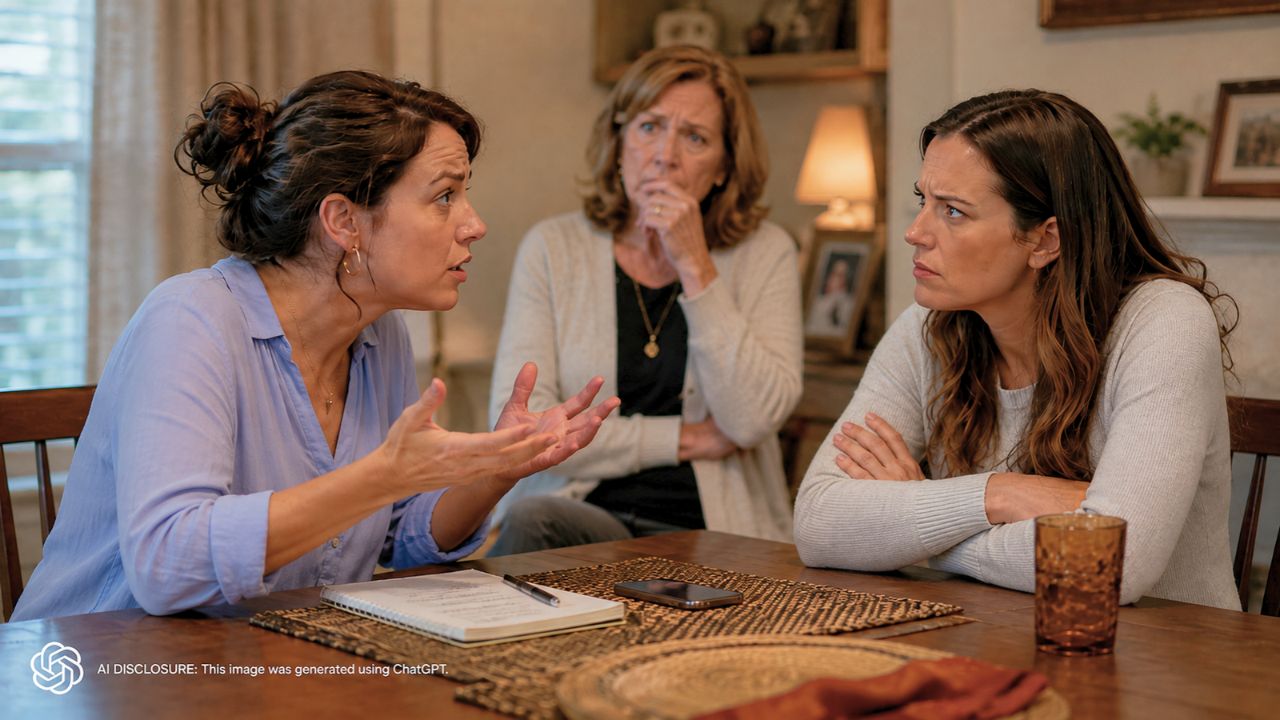
Photo credit: AI-generated image created using ChatGPT. Illustrative only.
Thanksgiving was supposed to solve a logistics problem for one engaged couple: get both sets of parents in the same room before the wedding. Instead, it turned into a family standoff over who counts as “immediate family” when you’re hosting.
In the original post, a 31-year-old woman explained that she and her 33-year-old fiancé planned to fly everyone to their home for the holiday—her mom and sister (plus spouse and toddler), and his parents. The catch is that her mom and her fiancé’s parents still haven’t met in person, and this Thanksgiving was meant to be the first time.
A long-delayed first meeting finally had a date
The poster said she’s close with her immediate family. They visit frequently despite living across the country, and they’ve even taken vacations together. Over the same stretch of time, her sister’s in-laws have also become a regular part of the family orbit—shared holidays, group trips, and more time together since the sister had a baby about a year and a half ago.
But while that extended-family network has been active, the two families who will be linked by the upcoming marriage have never actually met. Distance played a role, and so did differing COVID-19 comfort levels that made planning complicated for years.
They tried once already. The parents were supposed to meet last Christmas, but the couple got COVID and had to cancel. With a wedding coming up next spring, the poster said chances are running out.
The guest list was tight for a reason
That’s why Thanksgiving felt like the best option. The couple invited “our parents and siblings (and their partners + kids)” to their place, even though it requires a plane ride for everyone involved. It wasn’t framed as a huge open-door holiday; it was a deliberate gathering meant to introduce the families in a relatively controlled setting.
For the couple, it’s not just another meal. It’s the first impression moment, the kind that tends to linger into wedding planning and beyond—especially when people have different personalities, habits, and expectations around hosting.
The poster seemed to be aiming for a calm, focused weekend: fewer moving parts, fewer people to manage, and more time for the parents to talk without the room feeling like a crowded reunion.
Then her sister asked to bring her in-laws
The conflict ignited when the poster’s sister asked if her in-laws could come too. Given how intertwined the families already are, it wasn’t an out-of-nowhere question. The sister’s in-laws have been around for many big moments, and the sister apparently views them as part of the normal holiday mix.
The poster said she answered directly: because it would be the first meeting between her mom and her fiancé’s parents, she didn’t think adding her sister’s in-laws would be appropriate. So she said no.
She also said she tried to explain it clearly and honestly. But that didn’t soften the response she got back.
“Holidays are supposed to be inclusive”
Her sister got angry, arguing that Thanksgiving is meant to include people, not exclude them. In her view, refusing to invite the in-laws changed the tone of the holiday from family gathering to something closer to a private event with rules.
The sister took it a step further: if her in-laws couldn’t come, she said maybe she, her husband, and their child would stay home and spend the holiday with them instead.
It’s the kind of ultimatum that forces a choice quickly. Either the host expands the guest list and risks losing the “first meeting” focus, or she holds the line and risks not having her sister and nephew there at all.
And because travel is involved—plane tickets, time off, coordinating schedules—the pressure isn’t theoretical. The decision impacts money, planning, and whether this rare chance to get everyone together before the wedding evaporates again.
Why this isn’t just about one extra couple at the table
On paper, the sister’s request might sound small: two more people, already familiar faces, already part of past holidays. But for the engaged couple, adding another set of parents changes the entire dynamic of the weekend they’re trying to create.
Instead of a straightforward introduction between future in-laws, it becomes a broader family gathering with multiple “centers” of attention. Conversations split. Seating gets political. The first meeting could get diluted into small talk while other relatives catch up.
There’s also an emotional reality the poster is trying to manage: when parents meet for the first time, people tend to be more observant, more sensitive, and sometimes more performative. A smaller group can lower the stakes and make the moment feel less like an audience is watching.
The sister’s side has its own practical point, though. If her in-laws have become the default holiday unit—especially with a young child—she may feel like she’s being asked to choose between family groups. And once someone feels like their family is being ranked, the fight can get personal fast.
What people zeroed in on: hosting rights vs. family expectations
The post was framed as a question of whether the host was wrong for wanting a “nuclear families only” Thanksgiving. Even without a full comment thread included, the fault lines are familiar: the person paying for and hosting the event wants control over the guest list, while another family member sees the holiday as communal and shared.
A lot of the practical reactions in situations like this tend to revolve around clarity and timing. If the intention is a small, purpose-driven gathering, saying that upfront—before anyone imagines it as a big inclusive holiday—can prevent the “you’re excluding my family” argument from taking hold.
At the same time, the sister’s response raises the stakes because it introduces a consequence that affects the whole plan. If she doesn’t come, the poster loses not only time with her sister and nephew, but also part of the support system she expected to have while navigating a high-pressure first meeting between parents.
One way or another, the couple is now negotiating a holiday like it’s a contract: who attends, what it symbolizes, and how much control the host really gets to have when family traditions and in-law relationships are already deeply intertwined.
For now, the Thanksgiving plan is still in limbo. The poster wants a focused introduction before the wedding. Her sister wants a holiday that reflects the bigger family reality she’s been living for the past year and a half. And with flights, feelings, and a wedding clock ticking, neither side seems eager to blink first.
Check out more from Now Rundown:
- A Party of 12 Came Back a Month Later Demanding Their $80 Tip Refunded — My Restaurant Made Me Pay It
- Her Coworker Kept Filing the Same Complaint About Her After Being Warned — Then She Filed a Counter-Report With Every Email Documented
- Siblings Demanded Half of Their Sister’s $11 Million Inheritance — She Refused Because They Never Visited
- The Kid I Bullied in Middle School Just Interviewed for a Job on My Team — He Bombed It and I Didn’t Hire Him

Abbie Clark is the founder and editor of Now Rundown, covering the stories that hit households first—health, politics, insurance, home costs, scams, and the fine print people often learn too late.