Woman Left Her Best Friend’s Birthday Party Early After Realizing She Was Treated as a B-List Guest — The Friend’s Mother Called Her Disappointed
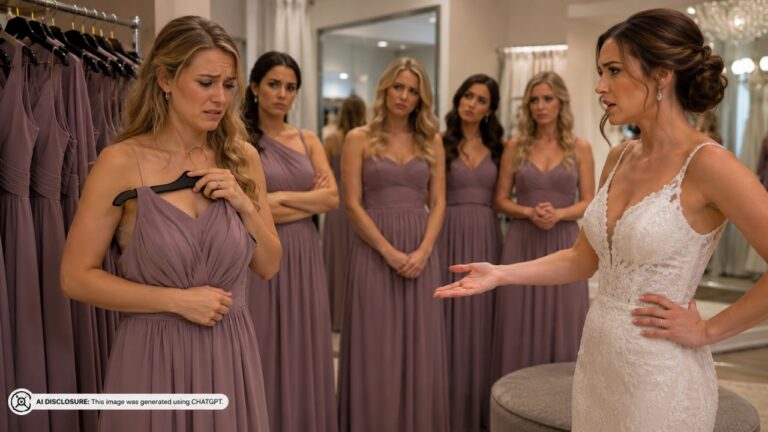
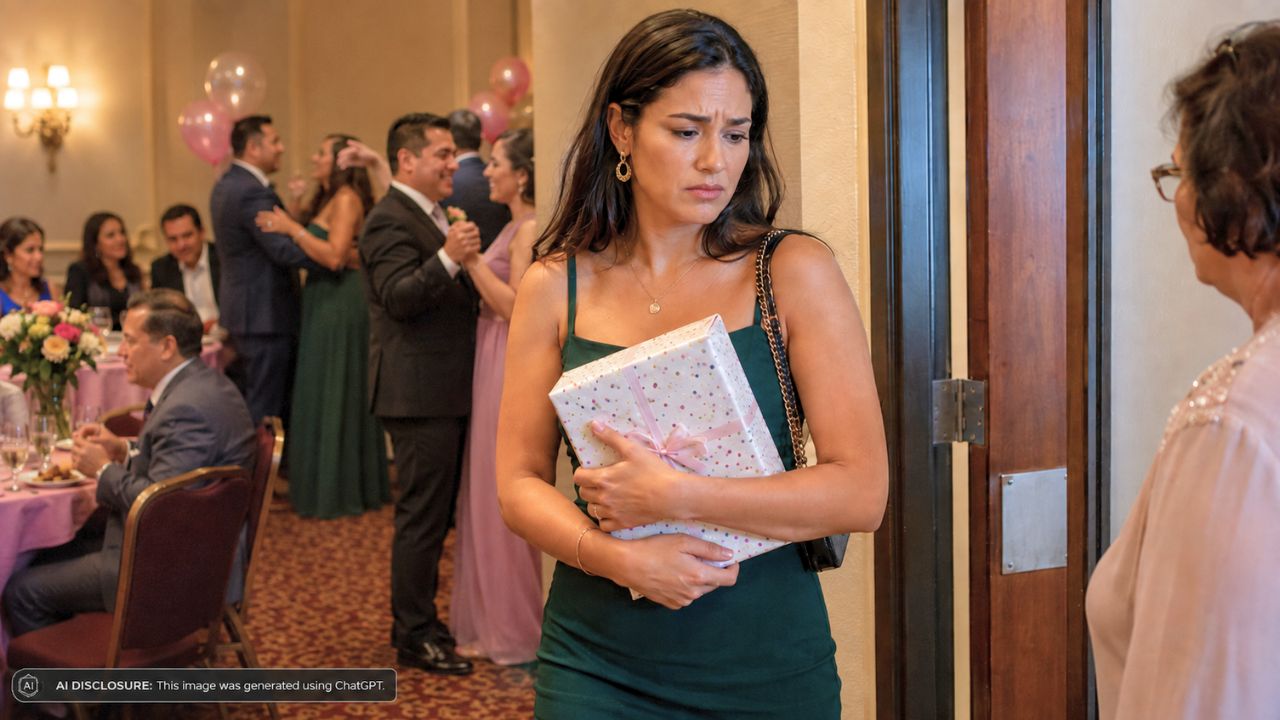
Photo credit: AI-generated image created using ChatGPT. Illustrative only.
She drove three hours, booked a hotel, and walked into what looked like a side room for spillover guests. Instead of the milestone birthday bash she expected for one of her oldest friends, she found four tables, about 10 other people, and a portable TV streaming the real party from the next room.
That’s the moment a 29-year-old woman says she realized she’d been treated like a “B-list” guest at her best friend’s 30th birthday celebration, according to the original post. She stayed for about 15 minutes, then left—taking her gift with her. By the next day, the fallout had spread past the birthday girl to her mother.
A decades-long friendship, and a big effort to show up
The woman describes a friendship with “Sally,” 30, that started when they were eight. They were close through school, then drifted naturally as college and work pulled them to different places. Even with distance, she thought the bond stayed intact—catch-ups felt easy, and they showed up for each other when it counted.
She says she was a bridesmaid at Sally’s wedding at 25, though she turned down maid of honor because she couldn’t commit to the travel and duties. Later, Sally drove to support her when her father had a stroke. She stayed with Sally during the breakup and divorce after Sally learned her then-husband cheated.
So when Sally planned a huge 30th birthday party—banquet hall, catered, DJ—the woman treated it like the kind of event you don’t miss. Because it was at night and she lived about three hours away, she booked a hotel and planned to drive home the next day.
The “extra room” didn’t feel like a small detail
When she arrived at the venue, she says she was ushered into a smaller room rather than the main hall. Inside were a few tables and a handful of people. A TV on a cart showed a live stream of the bigger party happening in the main room.
Another guest offered an explanation: Sally had invited more people than the main hall could hold, expecting more “no” RSVPs. But only one or two people declined, so the venue opened a second room for the overflow.
At first, that might have sounded like bad luck and tight logistics. Then she noticed something that changed the meaning for her. She says she saw on the stream that new guests were still arriving after she did, which made her feel she hadn’t been placed in the smaller room because the main room was already full.
In her mind, the message was clear: she didn’t get the “real” party experience. She got the leftover seating.
She left after 15 minutes, and took the gift
Rather than make a scene, she says she quietly left about 15 minutes after arriving. She also took her gift back with her. The decision wasn’t just about the seating arrangement—it was about what she believed it revealed about her place in Sally’s life.
She framed it simply: if she was going to watch a stream of the celebration, she could have done that at home without spending money on travel and a hotel. The short stay was her way of opting out before the night turned into a longer, more painful reminder that she wasn’t considered a priority guest.
But leaving early created its own chain reaction, especially because Sally apparently didn’t realize she’d left so quickly.
The calls came the next day—and so did the public shading
The next morning, as she was getting ready to check out of her hotel, Sally called asking why she didn’t show up. That’s when she explained she had attended, but hadn’t expected to be placed in a separate room to watch the party through a screen.
Sally then asked if she wanted to meet for lunch and bring the gift. The woman declined, saying she needed to get back home because she had plans that afternoon.
After that, the tone shifted from private disappointment to something more pointed. The woman says Sally posted an Instagram story implying that people who claim to love her don’t show up, and that she couldn’t help that so many people wanted to celebrate her.
During the drive home, she received another layer of pressure: a voicemail from Sally’s mother, telling her she was “very disappointed.” At that point, it wasn’t just a fight between two friends. Family had entered the chat, and the expectation seemed to be that the woman should have stayed quiet, stayed seated, and smiled through it.
Why the “B-list” label hit so hard
To an outsider, a second room at an overbooked venue might look like a simple logistics problem. To the woman, it felt like a ranking system. She believed that as one of Sally’s closest, longest friendships, she shouldn’t have been separated from the main event in the first place.
What stung more was the way it played out in real time. Being ushered away from the main party, finding the TV stream, then watching additional guests arrive and apparently be admitted into the main hall made it feel less like a capacity issue and more like a deliberate sorting.
There was also a practical cost. She paid for the trip and lodging to be present for a major birthday, only to feel like she’d been invited more as a number than as a person. Leaving early became her way of putting a boundary around that feeling before it turned into a longer night of simmering resentment.
Still, her choice to take the gift and decline lunch signaled she wasn’t interested in smoothing it over quickly—and that made the social consequences sharper.
What readers zeroed in on: seating, communication, and receipts
The post drew heavy engagement, with many focusing on a few concrete points: how the venue handled capacity, who was placed in which room, and whether Sally should have warned guests about the setup ahead of time.
A common practical reaction in these kinds of disputes is that details matter—who arrived when, whether the main room was actually at capacity, and whether the hostess made any effort to rotate people between rooms so no one was stuck with the “streaming” experience all night. The woman’s observation that people arrived after her and appeared to be in the main room became a key detail, because it supported her belief that this wasn’t random overflow placement.
Others focused on communication. If Sally truly miscalculated headcount, a quick, honest heads-up to friends—especially those traveling in—could have changed the tone. A simple acknowledgement like, “We had to add an extra room, but I’ll be bouncing back and forth,” might not have fixed the seating, but it could have softened the sting of feeling hidden away.
And then there was the escalation: the Instagram story and the mother’s voicemail. That public-and-family pressure made the conflict feel less like a misunderstanding and more like a demand for compliance.
For now, the friendship is sitting in an uncomfortable place. One side feels disrespected after making a serious effort to show up. The other seems to feel abandoned on a milestone birthday night. Whether they repair it likely depends on a single question neither can dodge: was the separate room an unavoidable mistake—or a quiet way of signaling who mattered most?
Check out more from Now Rundown:
- A Party of 12 Came Back a Month Later Demanding Their $80 Tip Refunded — My Restaurant Made Me Pay It
- Her Coworker Kept Filing the Same Complaint About Her After Being Warned — Then She Filed a Counter-Report With Every Email Documented
- Siblings Demanded Half of Their Sister’s $11 Million Inheritance — She Refused Because They Never Visited
- The Kid I Bullied in Middle School Just Interviewed for a Job on My Team — He Bombed It and I Didn’t Hire Him

Abbie Clark is the founder and editor of Now Rundown, covering the stories that hit households first—health, politics, insurance, home costs, scams, and the fine print people often learn too late.