Woman Was Upset When Her Mother-in-Law Left in the Middle of Her Son’s Birthday Dinner — After Years of Unresolved Tension Over Her Involvement
Photo credit: AI-generated image created using ChatGPT. Illustrative only.
A child’s birthday weekend is supposed to run on cake, excitement, and a little bit of chaos. For one mom in her late 30s, it also came with a familiar strain: hosting her mother-in-law in the house, watching her bond with the birthday boy, and feeling her own grief simmer underneath the surface.
In the original post, the woman asked if she was wrong for being upset after her mother-in-law left the home right before the family birthday dinner—an exit that, in her eyes, shifted the attention away from her son and onto adult feelings that have been building for years.
The tension had been there long before the candles were lit
The mother-in-law typically stays with the family for their son’s birthday weekend, and the poster didn’t describe her as malicious. She said her husband’s mum loves their child and isn’t a “bad person.” But the dynamic has been hard for her to tolerate, especially after losing her own mother before she ever got pregnant.
That loss, she explained, makes it painful to watch another grandmother figure be heavily involved in her son’s life—particularly in hands-on caregiving moments. She sometimes wishes her mother-in-law would take a step back, but she hasn’t been able to maintain a firm boundary when the help shows up.
She’s raised it with her husband before. He views his mother’s involvement as normal grandparent behavior. To his wife, it feels like a constant push-pull: she’s trying to hold onto her role as mom in her own home, while also managing grief that gets triggered in real time by everyday family interactions.
Birthday prep turned into a control struggle in the kitchen
The day of the birthday sounded busy and divided. The poster said she needed to bake the cake for the party. Her husband took their son out for the day and cooked dinner, but she still felt like she was mentally carrying most of the planning.
While she was occupied, her mother-in-law spent a lot of time around the child. That alone was already emotionally charged for the poster, who admitted she struggles most when her mother-in-law is very involved. It wasn’t just about logistics—it was about what those moments represented.
Then the kitchen became the breaking point. When the poster’s dad came over, her mother-in-law began washing some of the pots from dinner prep. The poster noticed items being put in the “wrong places.” She told her mother-in-law she was doing it wrong and asked her to stop.
It wasn’t framed as screaming or a blow-up. But it was sharp enough to land hard. The poster described it as a moment where she felt she needed to get some control back in her own kitchen—on a day when everything already felt like it belonged to everyone else.
The exit that changed the tone of the whole night
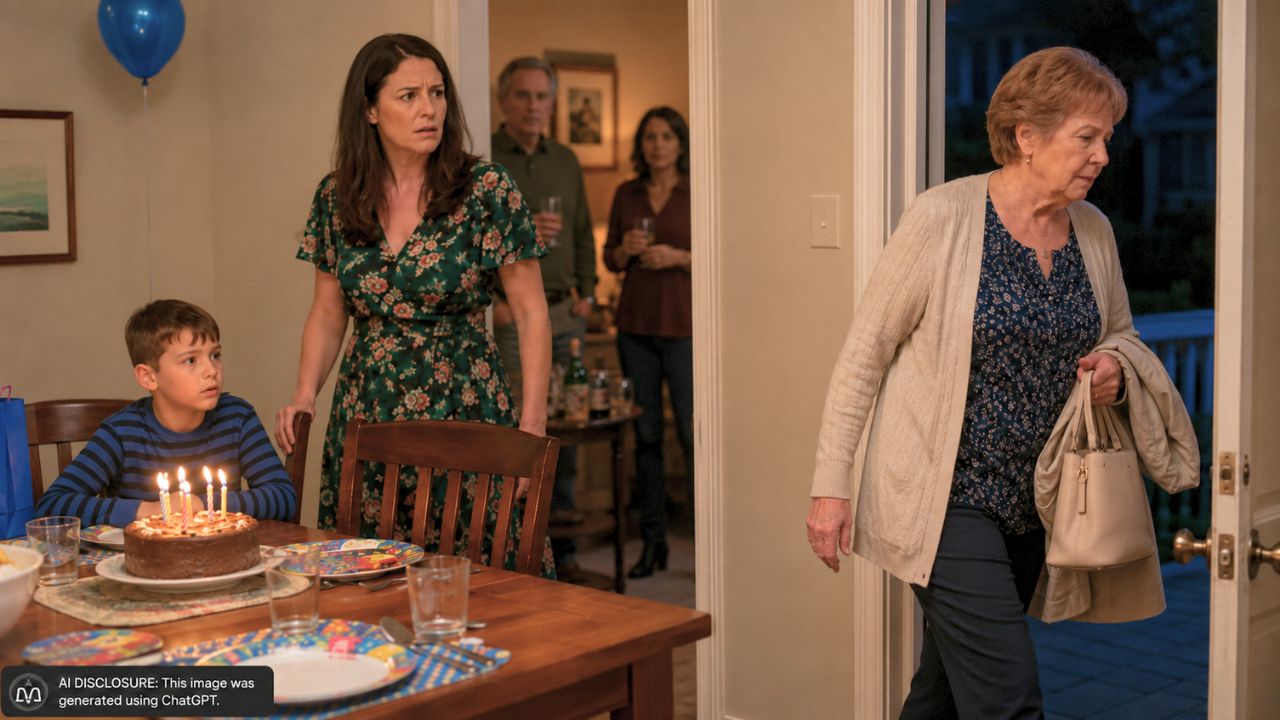
Instead of staying downstairs and letting the tension pass, her mother-in-law went upstairs. A short time later, she came back down and announced she was leaving with her partner—before the family sat down for the birthday dinner.
That’s when the poster said she felt blindsided. She didn’t tell her to leave. She didn’t shout. But to her, the departure felt like a “dramatic response,” especially on a day that was supposed to be centered on their child.
The practical impact was immediate: their son noticed they were gone and asked where they were. Even if the adults tried to keep things calm, the absence was obvious enough that the child clocked it in the middle of his own celebration.
For the poster, that made it worse. The leave-taking wasn’t just a private hurt between two adults in a kitchen. It became something the child observed, which meant the emotional tension entered the event they were trying to protect.
An apology was sent, but the fallout went straight to “unwelcome”
Afterward, the poster reached out with a message. She apologized for her tone and tried to explain the deeper reason behind her reaction: seeing her mother-in-law with her son can trigger grief over her own mother not being there.
She also emphasized that she knows it’s important to her husband that his mother have a relationship with their son, and that she isn’t trying to stop that connection. In other words, she attempted to separate “I’m hurting” from “I’m banning you.”
But she said her mother-in-law didn’t apologize for leaving. Instead, the feedback that came back was that her mother-in-law was “deeply hurt” and now felt unwelcome in their home.
At home, the bigger consequence hit: her husband became furious and told her this fit a larger pattern in how she treats his mum. In one weekend, the conflict expanded from one tense kitchen moment into a broader family rupture—one that could affect future visits, holidays, and how their child experiences extended family.
Where outside reactions tend to land in moments like this
Even without a full comment thread included, the pressure points in the story are the same ones people typically latch onto when family gatherings go sideways. One is the kitchen exchange: telling someone they’re doing the dishes “wrong” and ordering them to stop can read as territorial, even if it’s coming from stress and feeling crowded out in your own space.
The other is the timing of the departure. Leaving before a child’s birthday dinner, after an awkward moment, can look like a protest—whether or not it was intended that way. The poster’s frustration was that her apology focused on her tone, but there wasn’t accountability on the other side for an exit that created a visible absence the child immediately noticed.
And then there’s the marriage layer. The poster and her husband don’t appear aligned on what “normal grandparent involvement” looks like, or on what boundaries should exist when a visit is emotionally complicated. When one partner sees a grandmother’s involvement as loving and expected, and the other sees it as triggering and intrusive, a single tense comment can turn into a referendum on loyalty.
In practical terms, this kind of standoff usually pushes families toward a few options: clearer roles during visits, less hands-on help unless asked, or shorter stays so a birthday weekend doesn’t turn into a pressure cooker. Without those changes, every new celebration risks replaying the same fight—only with a child who gets older and more aware of who’s storming out and why.
The birthday ended, but the home dynamic didn’t reset
The poster didn’t describe a clean resolution—no follow-up sit-down, no shared plan, no agreement about future weekends. What she described instead was the familiar aftertaste of family conflict: she feels cast as the villain for having an emotional reaction, while the act of leaving mid-celebration is treated like an understandable response.
It’s the kind of fight that doesn’t stay in the kitchen. It lingers in the next invitation, the next holiday, and the next time someone reaches for a pot in a sink that isn’t theirs. And for the parents in the middle, the hard part is figuring out how to keep their child’s moments feeling safe and steady—even when the adults are carrying years of unresolved tension into the room.
Check out more from Now Rundown:
- A Party of 12 Came Back a Month Later Demanding Their $80 Tip Refunded — My Restaurant Made Me Pay It
- Her Coworker Kept Filing the Same Complaint About Her After Being Warned — Then She Filed a Counter-Report With Every Email Documented
- Siblings Demanded Half of Their Sister’s $11 Million Inheritance — She Refused Because They Never Visited
- The Kid I Bullied in Middle School Just Interviewed for a Job on My Team — He Bombed It and I Didn’t Hire Him

Abbie Clark is the founder and editor of Now Rundown, covering the stories that hit households first—health, politics, insurance, home costs, scams, and the fine print people often learn too late.