Zelenskyy and Trump signal movement on a Ukraine plan, what’s actually on the table
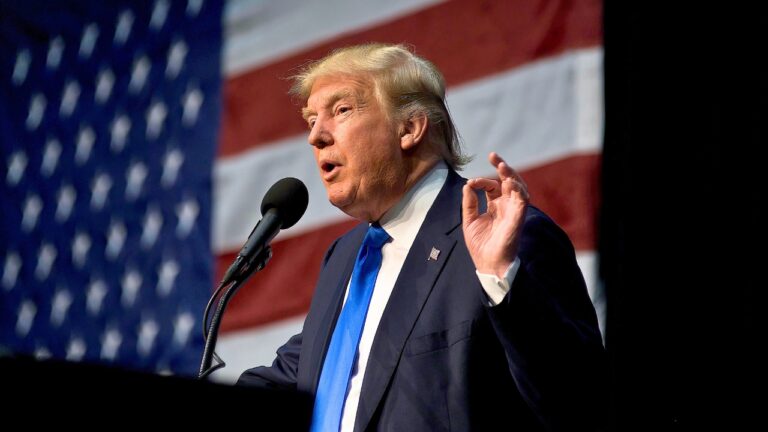
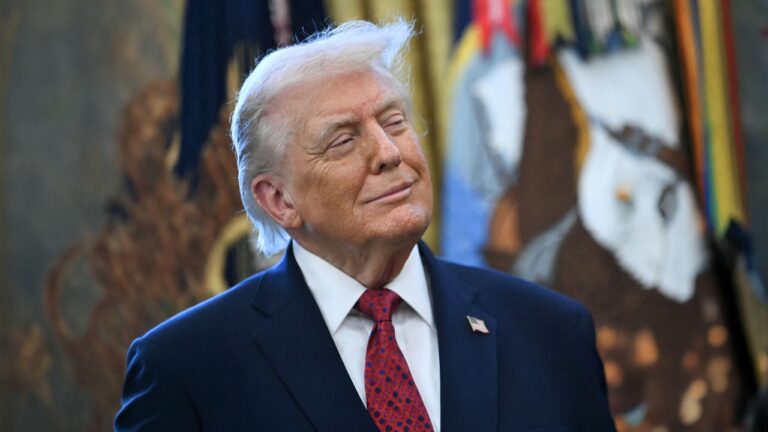
Photo credit: The White House, Public Domain/Wiki Commons
Volodymyr Zelenskyy and President Donald Trump are no longer just trading public barbs over how to end the war in Ukraine, they are now working from overlapping draft plans that could reshape Europe’s security order. You are watching a negotiation that mixes battlefield realities, long term security guarantees, and hard political limits in Washington and Moscow. The two leaders say they are edging toward a deal, but what is actually on the table is far more complex than a simple ceasefire.
Florida meeting signals a real, if fragile, opening
Your clearest sign that something has shifted came when Presidents Volodymyr Zelenskyy and Donald Trump met in Florida at the Mar, Lago residence and both emerged talking about progress instead of stalemate. According to accounts of the talks, the meeting in Florida brought the two presidents together for several hours of detailed discussion on a possible peace framework, with both sides describing the atmosphere as businesslike rather than ceremonial. Reports on the Florida session say the conversation focused on security guarantees, territorial lines, and the sequencing of any ceasefire, rather than on symbolic declarations, which is a strong indicator that you are looking at real negotiations rather than political theater.
Trump later told reporters that he and Zelenskyy were “getting a lot closer, maybe very close” to an agreement to end the war in Ukrai, a formulation that suggests the two leaders see at least a shared outline even if key gaps remain. Coverage of the Florida talks notes that the meeting followed weeks of preparatory work by negotiating teams and that the decision to host the Ukrainian leader at Mar, Lago was meant to underscore Trump’s personal investment in the process. One detailed account of the session describes how Presidents Volodymyr Zelenskyy and Donald Trump worked through specific military and economic issues, reinforcing that the Florida encounter was a working negotiation rather than a photo opportunity.
Trump’s 28 point blueprint and how it has evolved
To understand what Trump is putting on the table, you need to start with his 28 point peace proposal, a document that lays out a highly structured roadmap for ending the fighting. That plan, presented as a US brokered initiative, calls for a series of reciprocal steps by Kyiv and Moscow, including territorial compromises, demilitarized zones, and phased sanctions relief. It is framed as a way for The US to leverage its influence over military aid and economic support to push both sides toward a settlement, with Kyiv expected to make specific concessions in exchange for long term security guarantees and reconstruction funding.
Reporting on the plan explains that the original 28 points were later narrowed after consultations with Kyiv and Moscow, with negotiators trimming or reworking provisions that either side saw as unworkable. One detailed breakdown notes that the proposal requires Kyiv to make territorial concessions in parts of eastern Ukraine in return for a binding security package and a clear path to Western integration, while also setting out timelines for Russian troop withdrawals and international monitoring. Another account describes how, After a series of consultations with Kyiv and Moscow, the 28 point plan was cut down to 20 points that negotiators considered realistic, with the remaining items focused on ceasefire mechanics, security guarantees, and economic arrangements. A separate analysis of Trump’s 28 point Ukraine plan underscores that the blueprint is built around The US acting as the central mediator and guarantor of any eventual deal.
Zelenskyy’s counter vision: security first, then territory
Zelenskyy has not simply accepted Trump’s framework, and you can see that in the way he has rolled out his own updated peace concept. His approach starts from the premise that Ukraine’s security must be locked in for decades before Kyiv can even consider formalizing any territorial compromises. In public comments and in a new draft peace plan, he has emphasized that Ukraine wants a clearly defined path into the European Union, a long term Western security umbrella, and a massive reconstruction and investment package that would allow the country to recover from years of Russian attacks.
One detailed report on the Ukrainian draft says it includes a commitment that Ukraine will become a European Union member at a specifically defined date, along with provisions for reconstruction and economic investment that would be guaranteed by Western partners. Another account notes that Zelenskyy has been pushing for US security guarantees lasting between 30 and 50 years, arguing that anything shorter would not deter future Russian aggression. In that context, his team has framed the territorial file as something that can only be addressed once those guarantees are in place and Russian forces have pulled back from key areas. You can see this logic in coverage of how Ukraine’s new draft peace plan links EU membership and investment to any discussion of territory, and in reports that Zelenskyy has floated a willingness to pull back troops from the eastern Donbus region as part of a broader compromise.
The 15 year US security guarantee and why it matters
The most concrete element of the emerging package, and the one you should watch most closely, is the US offer of a 15 year security guarantee for Ukraine. Zelenskyy has said that The United States is prepared to commit to a long term security arrangement that would cover Ukraine’s defenses, training, and arms supplies for a period of 15 years as part of a broader peace proposal. This would not be formal NATO membership, but it would amount to a binding pledge that Washington would help Ukraine deter and respond to any renewed Russian aggression during that period.
Reports from KYIV, Ukraine describe the 15 year guarantee as a central pillar of the draft deal, with US officials signaling that they see it as a way to reassure Kyiv without immediately extending NATO’s Article 5 umbrella. Detailed coverage of the proposal notes that the security guarantees would include commitments on air defense, intelligence sharing, and support for Ukraine’s defense industry, and that they are designed to give investors confidence that the country will remain secure enough for long term projects. One account quotes Zelenskyy saying that The United States is offering Ukraine security guarantees for a period of 15 years, while another explains that US officials see such guarantees as a cornerstone of a healthy democracy that can rebuild and resist future pressure. A separate analysis of the same package notes that details of the security guarantees are still being hammered out, but that the 15 year horizon is already shaping the rest of the talks.
Zelenskyy’s push for 30–50 years and the 50 year ask
From Ukraine’s perspective, 15 years is a start, not an endpoint, which is why Zelenskyy has been publicly pressing for a much longer commitment. He has argued that Russia’s pattern of aggression stretches back decades and that only a 30 to 50 year guarantee would truly convince Ukrainians that they are safe to rebuild their lives. In his conversations with Trump, Zelenskyy has framed this as a generational promise, something that would protect not just current citizens but their children and grandchildren from renewed invasion.
One detailed report on the talks notes that Zelenskyy has specifically asked for 50 years of security guarantees from Washington, while acknowledging that US negotiators have so far put forward a 15 year offer. Coverage of his comments explains that he sees the longer term as essential to deter Russia and to reassure investors that Ukraine will remain protected long enough for major infrastructure and industrial projects to pay off. Another account of the Florida meeting describes how President of Ukraine Volodymyr Zelenskyy pressed President Donald Trump at Mar, Lago for a 50 year guarantee, even as he acknowledged that the current US offer covers protection from Russian aggression for 15 years. A separate report on the broader debate over guarantees notes that Zelenskyy is pushing for 30–50 year US security guarantees, underscoring how far apart the two sides still are on the duration of any pledge.
Territory, demilitarized zones, and the Donbus question
Even as the security architecture takes shape, the most politically explosive issue for you to track is territory, especially in the eastern Donbus region and other occupied areas. Zelenskyy has signaled that he is willing to consider pulling back Ukrainian troops from parts of the eastern front as part of a compromise, potentially turning some areas into a demilitarized buffer. That would be a major shift from his earlier insistence on full restoration of Ukraine’s 1991 borders, and it reflects both battlefield realities and the pressure of securing long term guarantees from Washington.
Reports on the evolving plan describe proposals for a demilitarized zone covering contested areas, with international monitors overseeing compliance and restrictions on heavy weapons. One account of the Florida talks notes that Trump and Zelenskyy discussed referendums in some occupied territories, with Zelenskyy calling a potential vote “one of the keys” to resolving the dispute, while Trump praised Putin for not striking the Zaporizhzhya NPP, a sign of how nuclear safety concerns are woven into the territorial debate. Another report explains that a Kremlin aide has welcomed Trump’s “peace efforts” and highlighted the idea of a demilitarized zone as a potential way forward, even as Russia continues to insist it will not accept NATO troops in Ukraine of any kind. Coverage of Zelenskyy’s own positioning notes that, as a compromise, Zalinsky says he is willing to pull back troops from the eastern Donbus region, which would effectively turn part of Ukraine into a buffer area if a deal is reached.
How close is “90 percent agreed” really?
Trump and Zelenskyy have both used strikingly optimistic language about how much of the deal is already in place, but you should treat those numbers with caution. After the Florida talks, Trump said that the negotiating teams were “getting a lot closer, maybe very close,” and some accounts of the discussions have suggested that roughly 90 percent of the peace package is agreed in principle. That figure appears to refer to technical issues like ceasefire monitoring, economic aid, and the structure of security guarantees, rather than to the core political questions of territory and long term commitments.
One detailed rundown of the Mar, Lago meeting reports that the two sides see a peace deal as “90 percent agreed,” with the remaining disputes centered on borders and the exact length of US security guarantees. Another account of the talks notes that Zelenskyy pointed to an economic package that he said Trump confirmed at the meeting, but that he also stressed that the issue of territories remains unresolved. You can see this tension in coverage that describes how Russia and Ukraine are said to have a peace deal “90 percent agreed”, and in reports that The Ukrainian president has confirmed an economic package while warning that territory is still the sticking point. A separate live account of the Florida day notes that Trump and Zelensky both stressed the need to respect other countries’ roles in the mediation, a reminder that even a “90 percent” deal still depends on Moscow’s assent.
Putin, Russia, and the limits of US leverage
No matter how detailed the Trump Zelenskyy talks become, you cannot ignore the fact that Russia still has to sign off on any final settlement. Moscow has made clear that it will not accept the deployment in Ukraine of troops from NATO countries, and Russian officials have repeatedly warned against any arrangement that they see as de facto NATO expansion. At the same time, the Kremlin has been careful to praise Trump’s efforts in public, signaling that it sees an opportunity in a US brokered deal that might lock in some of its territorial gains while easing Western sanctions.
One report on the diplomatic maneuvering notes that a Kremlin aide publicly welcomed Trump’s “peace efforts” after his meeting with Zelenskyy, highlighting the idea of a demilitarized zone and suggesting that Moscow is open to a settlement that freezes the current lines with some adjustments. Another account explains that Russia has drawn a red line around any NATO presence in Ukraine of any kind, even as it signals flexibility on monitoring mechanisms and economic arrangements. Coverage of the US offer of security guarantees notes that Russia has said it will not accept the deployment in Ukraine of troops from NATO countries, and that Krem officials are watching closely to see whether the guarantees remain political commitments or evolve into something closer to a treaty. A separate account of Trump’s diplomacy notes that a trip to President Donald Trump’s Florida residence has become a focal point not only for Kyiv but also for Vladimir Putin, who is weighing whether he is better off making a deal now or waiting for battlefield dynamics to shift.
What it means for you: risks, rewards, and what to watch next
If you are trying to make sense of where this leaves Ukraine and the wider region, the emerging picture is one of high stakes trade offs. On one side of the ledger, a deal built around a 15 year US security guarantee, a path to the European Union, and a large scale reconstruction package could give Ukraine a realistic chance to rebuild and integrate with the West. On the other, any settlement that involves territorial concessions or demilitarized zones in places like Donbus would leave parts of the country effectively outside Kyiv’s full control, with the risk that frozen conflict lines could flare up again once guarantees expire.
For you as an observer, the key variables to watch are whether the 15 year guarantee stretches closer to the 30–50 years Zelenskyy wants, how any demilitarized zone is drawn and monitored, and whether Russia accepts limits on its forces near the new lines. It is also worth tracking how European capitals respond, since their willingness to fund reconstruction and support Ukraine’s EU path will determine whether the economic side of the deal is credible. The stakes are visible not only in the diplomatic texts but also on the ground, from the contested industrial region in eastern Ukraine to symbolic sites like the Zaporizhzhya NPP, which has become a shorthand for the nuclear risks that hang over the conflict. As Trump and Zelenskyy keep signaling movement, you are looking at a negotiation where 90 percent agreement on paper still leaves the hardest 10 percent to be fought over in the months ahead.
Supporting sources: Trump praises Putin for not striking Zaporizhzhya NPP, Zelenskyy ….