Security guarantees are the sticking point, and both sides know it
Photo credit: The White House, Public Domain/Wiki Commons
Security guarantees are now the hinge on which any Ukraine peace deal turns, and both Kyiv and Washington are saying it out loud. You are watching a negotiation where territory, sanctions and reconstruction all matter, but the real argument is over how long and how hard the West is prepared to stand between Ukraine and another Russian assault.
As President Donald Trump and Volodymyr Zelensky try to turn a battlefield stalemate into a political settlement, each side is testing how far the other will go on long term protection. The gap between a 15 year pledge and the decadeslong shield Ukraine wants is where the war’s future, and Europe’s security order, will be decided.
The peace framework that brought security to the forefront
You are not looking at a vague diplomatic feeler but at a structured attempt to end a full scale war with a written framework. President Donald Trump has put a 20 point United States peace proposal on the table, and Ukrainian officials say that draft has already been rewritten after Kyiv objected to early language that demanded Ukraine give up the Donbass region, a sign that the plan is being hammered into something Zelenskyy can sell at home. In public appearances, President Trump and Ukrainian President Volodymyr Zelensky have described their talks as covering “all the aspects” of this peace framework, presenting it as a comprehensive package rather than a loose set of ideas, and that breadth is exactly why the security chapter has become so explosive.
For you, the key is that this is not just about lines on a map but about the entire security architecture that would follow a ceasefire. Reporting on the negotiations describes how the security section of the plan is still in flux, with officials warning that the proposed architecture for Ukraine and for NATO’s eastern flank “remains in flux” and even “scares the bejesus out of us” because it would reshape how the alliance prepares for high intensity conventional warfare in Europe. When you see negotiators circling around the same issue in every briefing, it is a sign that this is the real fault line, not a side note.
What the 15 year U.S. guarantee actually offers
The concrete offer on the table from Washington is a 15 year security guarantee for Ukraine, which President Donald Trump has framed as the backbone of the peace package. According to Zelenskyy, The United States is offering Ukraine this long term pledge as part of a proposed deal that would also address territory in the industrial region in eastern Ukraine, tying military protection directly to the map that emerges from any settlement. You should read that 15 year figure as both a political signal and a military planning horizon, long enough to cover several U.S. administrations but short of the open ended commitment that a NATO Article 5 style guarantee would imply.
Details of the security guarantees have not become public, but Zelenskyy has said that they include how a peace deal would be enforced and how Ukraine’s armed forces would be supported as a cornerstone of a healthy democracy, suggesting a mix of training, weapons deliveries and possibly forward deployed Western assets. In parallel, Ukrainian President Volodymyr Zelenskyy has described the offer as a 15 year security guarantee “for now,” hinting that Kyiv sees this as a floor rather than a ceiling and that the text could evolve if the rest of the package falls into place. For you, the message is clear: Washington is trying to lock in a time limited but substantial shield, while leaving room to adjust if the political winds change.
Why Kyiv is pushing for decades, not years
From Ukraine’s perspective, 15 years is a start but not enough to feel safe after what the country has lived through since Russia first attacked in 2014. Zelenskyy has been blunt that “Without security guarantees, realistically, this war will not end,” telling reporters that any deal must include binding commitments, not just political declarations, and that Ukraine wants the presence of troops from NATO countries to deter future aggression. In another account of his talks with President Donald Trump, Zelenskyy said he told the U.S. leader that Ukraine has effectively been at war for almost 15 years and that, for that reason, Kyiv would very much like the guarantees to be longer than the period currently on offer, making the case that a country scarred by repeated invasions cannot gamble on a short horizon.
You also see this push in how Ukrainian officials describe their negotiating position. One report from KYIV notes that Ukraine said President Trump had offered it security guarantees for 15 years after their meeting, but that Kyiv is seeking a decadeslong security guarantee instead, a formulation that underscores how far apart the sides still are on duration. Story by Anastasiia Malenko from KYIV captures that tension, with Ukrainian voices arguing that only a pledge measured in decades can convince displaced citizens to return, investors to commit capital and the military to plan for a stable future. For you, the takeaway is that Ukraine is trying to convert battlefield resilience into a permanent shift in its security status, not a temporary reprieve.
Trump’s room to maneuver and the politics of “decades”
President Donald Trump is signaling that he has some flexibility, but he is also carefully managing expectations at home and abroad. In public comments alongside Zelensky, Trump has talked about progress on one key sticking point, security guarantees, while acknowledging that “thorny issues” remain and that Both the US and Ukrainian leaders still have to bridge gaps on how long any pledge should last, with Trump floating ideas like 15, 20, 30, 40, 50 years in broad terms. That range tells you he wants to appear open to a longer commitment without locking himself into a specific number that could trigger resistance in Congress or among skeptical allies.
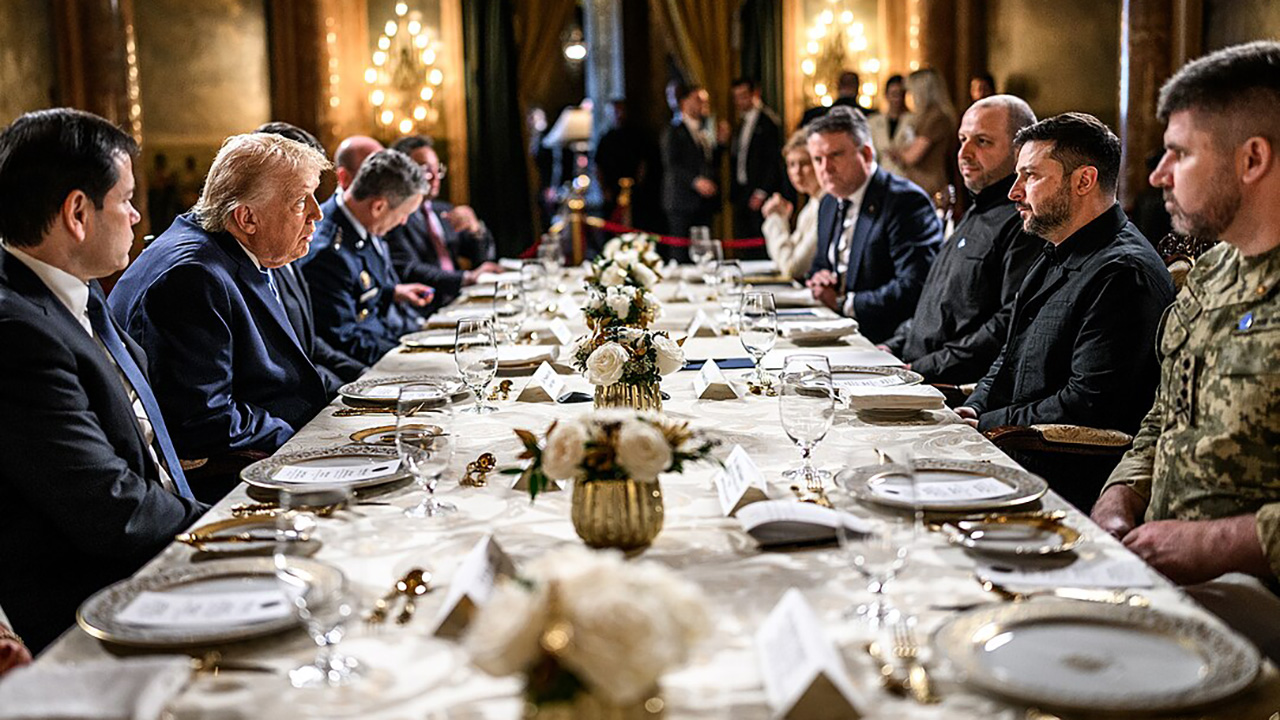
Zelenskyy, for his part, has claimed that Trump said the United States will consider giving Ukraine decades security guarantees, a phrase that, if accurate, would mark a significant shift from the initial 15 year offer and suggest that the White House is at least entertaining a much longer horizon. In the same account, U.S. President Donald Trump is described greeting Ukrainian President Volodymyr Zelensky at his Mar a Lago club, a setting that underlines how much of this diplomacy is being conducted through personal rapport as well as formal channels. For you, the political calculation is obvious: Trump is trying to keep Kyiv engaged with the promise of “decades” while reassuring domestic audiences that any final deal will be carefully calibrated.
Putin’s very different idea of “security guarantees”
When you hear Russian officials talk about “security guarantees,” they are not asking for the same thing Ukraine is. Reporting on the Kremlin’s position notes that What such guarantees look like remains a core sticking point among the parties to the conflict, with Moscow pushing for limits on NATO expansion, restrictions on Western weapons deployments near its borders and recognition of its control over occupied Ukrainian territories. For President Vladimir Putin, the phrase often means codifying a sphere of influence and constraining Ukraine’s sovereignty, not protecting it.
This clash of definitions is why the term itself has become so contested in the talks. Analysts describe how Western negotiators are trying to reconcile the Ukrainian vision of binding protection from future Russian attacks with the Russian one, which seeks assurances that Ukraine will not join NATO and that Western forces will not be permanently stationed there. When you see references to “security guarantees” in Russian statements, you should read them as demands for constraints on Kyiv and on NATO, a mirror image of the guarantees Ukraine is seeking from The United States and its partners.
Territory, Donbass and Zaporizhzhia: the other unresolved front
Even as security guarantees dominate the headlines, the map of Ukraine remains a second, deeply contentious track in the negotiations. Reports on the evolving 20 point US peace proposal say the initial draft was criticized in Ukraine for including language that demanded Ukraine give up the Donbass region, and that the text has since been changed with input from Ukraine, a reminder that Kyiv is not passively accepting whatever is put in front of it. You can see how sensitive this is in the way Ukrainian officials talk about Donbass and the southern front, insisting that any territorial concessions must be weighed against the security package on offer.
Another unresolved issue is the fate of the nuclear plant in southeastern Ukraine that Russia took control of early in this conflict, a facility that has become both a military asset and a symbol of occupation. One account of the talks notes that, Finally, there is a nuclear plant in southeastern Ukraine that Russia took control of early in this conflict, and that its status is one of the remaining points to be settled between Ukraine and Russia. Alongside this, coverage of the talks highlights how Sticking points over territory Kyiv and Washington have agreed on many issues, and Zelensky (Volodymyr Zelensky) said that the question of which areas will be ceded to Russia remains unresolved, underscoring that even if you solve the security architecture, the territorial puzzle is still incomplete.
How Kyiv and Washington frame “progress”
Despite the gaps, both capitals are working hard to project momentum, in part to keep domestic audiences on board. Zelensky, speaking at a press conference with Trump after one of their meetings, said they agreed on 90 percent of the peace proposal for the eastern European nation, a strikingly high figure that is meant to signal that only a narrow band of issues, including the length and shape of security guarantees, is still open. When you hear such precise numbers, you should understand them as political tools as much as negotiating metrics, designed to show that Kyiv is constructive while still holding firm on core interests.
On the U.S. side, President Trump has described his conversations with Russia’s Putin as “very productive” and has emphasized that Kyiv and Washington have agreed on many issues, even as he acknowledges that questions over territory and security guarantees remain. In another public message, President Trump and Ukrainian President Volodymyr Zelensky both highlighted that they discussed all the aspects of the peace framework and spoke of “great achievements” in shaping the 20 point plan, language that is clearly intended to reassure allies and markets that a chaotic war is moving toward a structured outcome. For you, the lesson is that both leaders are trying to balance candor about the remaining sticking points with a narrative of steady progress.
Peace talks under pressure from the battlefield and beyond
The diplomatic track is unfolding under intense pressure from events on the ground and from domestic politics in all three capitals. Coverage of recent developments notes that Peace talks under pressure as Russia’s full scale invasion of Ukraine approaches its fourth year, with Kyiv rejecting Russia’s claim of a Ukrainian strike on Putin’s residence and warning that Moscow may be using such allegations to harden its position in the talks. For negotiators, every new incident, whether a drone attack or a battlefield setback, can either narrow or widen the space for compromise on security guarantees and territory.
At the same time, the broader security environment in Europe is shifting in ways that shape your understanding of the stakes. Analysts warn that the proposed security architecture for Ukraine will have ripple effects for NATO’s posture and for how allies prepare for the possibility of renewed high intensity conventional warfare, a concern that has some officials privately alarmed. Even seemingly unrelated issues, such as the status of occupied regions or the control of strategic sites like the Zaporizhzhia nuclear plant, feed back into the debate over how robust and how long lasting any Western guarantees must be if they are to deter Russia from testing the settlement.
Why security guarantees will decide whether the war really ends
When you strip away the diplomatic language, the core question is brutally simple: will Ukraine be left to face Russia alone again once the ink is dry, or will it have enforceable backing from The United States and its allies for as long as it takes? Zelenskyy has framed the issue starkly, saying that without security guarantees the war will not end in any meaningful sense, and that Ukraine needs not just promises on paper but concrete measures like the presence of troops from NATO countries to make any ceasefire credible. That is why he keeps pressing for a decadeslong guarantee, arguing that a country that has been under attack for almost 15 years cannot trust a short term pledge.
For their part, U.S. officials are wrestling with how far they can go without triggering a direct clash with Russia or overextending American commitments elsewhere. The security architecture remains in flux, and some in Washington worry that a far reaching guarantee for Ukraine could lock the United States into a new era of high intensity conventional warfare planning in Europe, even as it faces other global challenges. As you weigh these arguments, it becomes clear why security guarantees are not just another item on a long agenda but the decisive test of whether this peace plan can deliver more than a pause in the fighting, and why both sides know that until they settle this question, nothing else in the deal will truly hold.
What it means for you and for Europe’s future
If you live in Europe or follow European security, the outcome of this argument will shape your world for years. A robust, long term guarantee for Ukraine would signal that the post Cold War order is being rebuilt around a clear line against territorial conquest, with The United States and its partners willing to underwrite that line with real resources. A weaker or shorter pledge, by contrast, could invite Moscow to test the settlement once Western attention drifts, turning Ukraine into a permanently unstable buffer and forcing NATO to live with a chronic security crisis on its border.
Even beyond the immediate region, the way Washington, Kyiv and Moscow resolve their competing visions of “security guarantees” will send a message to other actors watching how the West responds to aggression. From the vantage point of a city like Kyiv, which you can see mapped in tools that track the war’s geography, or from the corridors of power in Brussels and Berlin, the stakes are not abstract. They are about whether a country that chose a democratic path can count on sustained protection, and whether the promise of collective security still means something concrete when tested by a determined adversary.