Employee Gathered Written Statements From a Dozen Coworkers to Prove a Colleague’s Harassment After a Biased HR Rep Tried to Get Her Fired Instead
Photo credit: AI-generated image created using ChatGPT. Illustrative only.
When the employee walked into a meeting that could have ended her job, she didn’t come empty-handed. She came with screenshots, a supervisor by her side, and written statements from coworkers who said they’d experienced the same colleague’s behavior.
In an update shared in the source post, she described how a harassment complaint at work took a sharp turn after she realized an HR representative assigned to the matter wasn’t neutral—and appeared to be protecting the person she’d reported.
She realized the “neutral” process wasn’t neutral at all
Before the HR meeting, the employee said she went into “detective mode” and uncovered something that explained why the internal process felt stacked against her. One of the HR staffers involved, Dylan, was related to the coworker at the center of the complaints, Jake.
According to her account, Dylan and Jake didn’t share a last name, but she found a connection through family: their mothers are cousins. To back it up, she found Jake’s mother’s Facebook page and located a photo showing Jake’s mom, Dylan, and Dylan’s mom together. She took a screenshot.
Rather than walk into HR alone, she also looped in her supervisor and asked him to attend the meeting with her. That decision set the tone immediately.
The HR meeting turned into a showdown over bias
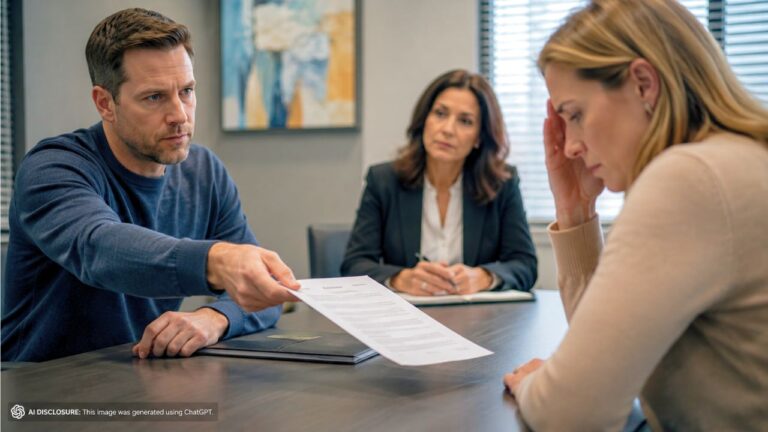
The meeting included Dylan, Dylan’s boss, Jake, the employee, and the employee’s supervisor. From the start, she said Dylan tried to drive the conversation toward “immediate termination,” aiming it at her.
Her supervisor pushed back and insisted they work with the other HR representative, arguing she deserved a neutral meeting. Then the employee showed both HR staffers the screenshot suggesting Dylan’s family relationship to Jake.
She said Dylan’s reaction was immediate—his “face dropped.” He didn’t argue the point. Instead, she wrote, he stopped participating and left the room.
At that point, the other HR representative took over the meeting. The employee gave her account of what had been happening at work and, crucially, handed over documentation: roughly 12 signed notes from coworkers describing their own experiences with Jake.
Twelve signed statements changed the balance of power
The employee didn’t just make a report—she built a record. The notes, she said, came from coworkers willing to put their names on what they’d seen and dealt with. It wasn’t one person’s word against another anymore.
After the meeting, the HR representative followed up by contacting some of the coworkers directly. The employee said the HR rep called a couple of them into his office, including a pregnant coworker who had also been affected.
By Friday, HR scheduled another meeting. This time, it was only the employee and the neutral HR representative in the room, and the tone sounded very different from the earlier push for termination.
She told HR how uncomfortable she felt, and said people had tried to do the right thing by reporting Jake before, but nothing had changed. The HR representative told her he understood and acknowledged that Dylan “was not impartial in his actions” and had been covering for Jake, but that it had been addressed internally.
Instead of getting fired, she was cleared—and told to keep it quiet
In that second meeting, the employee said HR confirmed she would not be written up and wasn’t in trouble. She described being told she was “in the clear.”
Still, there was a catch. HR asked her not to repeat what she had done. She said she wasn’t planning to do it again, and HR told her to come directly to him if anything else happened.
It’s a familiar tension inside workplaces: someone reports misconduct, the company steps in, but the person who raised the issue is also cautioned about how they talk about it afterward. In her case, the request came after she had already confronted the alleged conflict of interest head-on.
The next workday started normally. Then, around noon, her supervisor sought out both her and the pregnant coworker for an update.
The outcome was swift: Jake and Dylan were let go
Her supervisor told them that both Jake and Dylan had been terminated. He also said Dylan “might have some legal troubles with the company,” though he couldn’t share details.
At the same time, the supervisor asked them not to discuss it with others. He indicated people would realize Jake was gone anyway, but the specifics weren’t something the team was supposed to spread around.
The employee had expected the opposite result. In her update, she said she went into the process thinking she might be fired while Jake stayed. Instead, the documentation and the discovery of a family relationship inside HR appeared to flip the entire trajectory.
She credited that discovery—showing evidence of the connection—for helping her “tremendously,” because it forced the company to remove the person she believed was steering the process against her.
People focused on proof, witnesses, and not walking into HR alone
In her closing note, she thanked others for advice that helped her navigate the process. While she didn’t detail specific responses, her actions reflect the practical themes people often emphasize in workplace disputes: get witnesses, put concerns in writing, and bring support into high-stakes meetings.
Her approach hit several points that tend to matter when a workplace complaint turns into a credibility battle. She didn’t rely on a single conversation. She collected signed statements. She involved a supervisor. And when she suspected bias, she didn’t hint at it—she brought tangible evidence into the room.
Even the way the meeting shifted is telling. Once the screenshot was presented, the HR representative connected to Jake stopped leading the process and exited, leaving the neutral HR rep to evaluate the complaint with a paper trail and multiple corroborating accounts.
That kind of documentation can also protect coworkers who were afraid to speak up alone. A dozen statements makes it harder to isolate and retaliate against one person, and it makes it easier for management to justify serious employment action.
For the employee, the workplace may be calmer now, but the experience still left a mark. She said she has a second interview at another company next week and feels both hopeful and nervous after prior interviews didn’t pan out.
She got to keep her job—and saw both the alleged harasser and the compromised HR representative removed—but she also came away with a clear message about how fragile “process” can be when the wrong person controls it. Her update reads like relief mixed with exhaustion: she prepared for the worst, did the legwork anyway, and watched the whole thing turn more dramatic than she ever expected.
Check out more from Now Rundown:
- A Party of 12 Came Back a Month Later Demanding Their $80 Tip Refunded — My Restaurant Made Me Pay It
- Her Coworker Kept Filing the Same Complaint About Her After Being Warned — Then She Filed a Counter-Report With Every Email Documented
- Siblings Demanded Half of Their Sister’s $11 Million Inheritance — She Refused Because They Never Visited
- The Kid I Bullied in Middle School Just Interviewed for a Job on My Team — He Bombed It and I Didn’t Hire Him

Abbie Clark is the founder and editor of Now Rundown, covering the stories that hit households first—health, politics, insurance, home costs, scams, and the fine print people often learn too late.