Woman Refused to Hand Over Her Share of the Family Camp She Inherited After Her Aunts and Uncles Tried to Sell It Behind Her Back
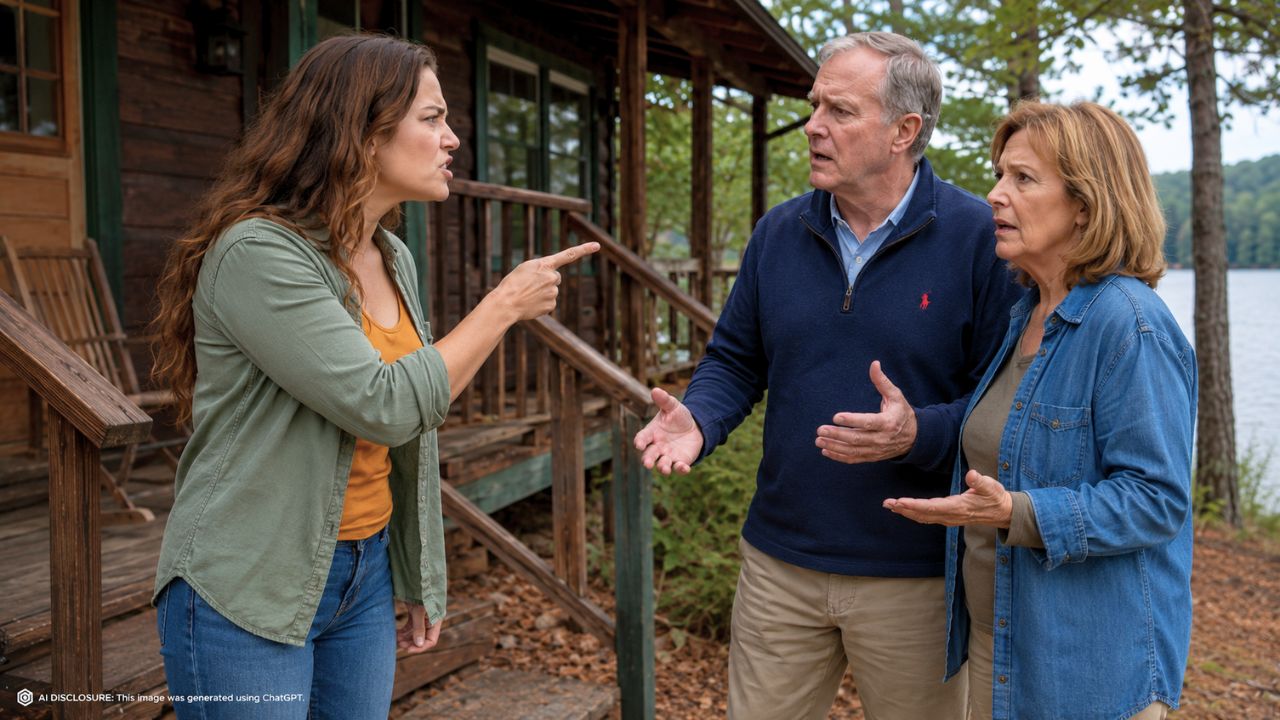
Photo credit: AI-generated image created using ChatGPT. Illustrative only.
It started with a phone call that sounded like a formality: a relative telling a woman she’d need to “sign off” on the family camp soon. Except she hadn’t been invited to the family meeting where the decision was made, and she didn’t even know she owned a piece of the property until that moment.
In the original post, she explains how an inheritance she didn’t learn about until years later turned into a full-blown legal fight—one that ended with a buyout, but left her family relationships in pieces.
The camp was transferred years earlier, but she didn’t find out until after the funeral
Back in 2019, her grandmother transferred the family camp into the names of her five living children. That structure gave each sibling a one-sixth share. But the woman’s father had died in 2012, so his portion didn’t simply vanish—his one-sixth was split between his two kids, leaving the woman and her brother with one-twelfth each.
She says she didn’t know any of this at the time. She only learned about it in 2023, after her grandmother passed away, when her Uncle Bob reached out and casually filled her in.
That’s when she heard the next part: the siblings had already held a meeting and agreed to “sell” the camp to another brother, Uncle Tom. She and her brother weren’t included in that meeting, but the family seemed to assume they could move forward anyway.
They thought “majority rules” meant she’d have to go along with it
According to her account, Uncle Bob told her the family believed the majority could decide what happened to the camp. A lawyer had been contacted, and she’d be told when to sign. She was stunned, and in the moment she didn’t push back—she just said okay and sat with it.
After thinking it through, she realized she didn’t want to sell or give away her share. Not without a real choice, and not without being treated like she actually mattered in the decision.
That’s when the tone shifted. What started as an informational call turned into a family blowup that dragged on for months.
“A grandchild shouldn’t own it” became the family’s main argument
Once she resisted the plan, she says she was told she shouldn’t own any part of the camp because she was a grandchild. The camp, she was told, was “just for the siblings.” But from her perspective, her inclusion wasn’t favoritism—it was what her grandmother chose to do after her father died.
She describes jealousy over the fact that she and her brother were part of the ownership and included in the will. She also points out that the aunts and uncles could have passed assets directly to their own children if they wanted a clean line to the next generation. Instead, the camp was structured to account for her dad’s death, and her grandmother had long told her she and her brother would inherit what their father would have.
The conflict got personal. She says her Aunt Karen spent nearly a year making phone calls filled with accusations and insults. One uncle didn’t voice an opinion. Uncle Bob, she says, was the only one who seemed okay with her owning a share.
Eventually, every other stakeholder—her aunts and uncles and even her brother—sold or gave their shares to Uncle Tom. That left her as the lone holdout with a small slice of ownership.
She tried to make a workable plan—then the sheriff served her lawsuit papers
With the camp consolidating under Tom’s control, he reached out to buy her out. She refused. She wanted to keep her share.
They agreed to meet at his house to talk about what co-ownership would look like. She proposed a compromise: she would put her own camp on the property, while Tom would have sole possession of the existing camp structure. She says he seemed open to it, and told her he’d be in touch.
Instead of a follow-up call or text, she says the next contact came through the sheriff’s department: legal papers showing Tom was suing her for a partition action.
She lives in Pennsylvania, where, as she describes it, a co-owner who doesn’t want to remain in shared ownership can ask the court to force a resolution. That typically means one side buys the other out, or the property is sold and proceeds divided. The key point in her story is that she wasn’t trying to force him out—she wanted to keep her share—but he moved to force a court-driven outcome.
Two years in court, dueling appraisals, and a fight over what the property was worth
What followed wasn’t a quick negotiation. She says they spent almost two years in court. Tom refused to sell his shares, but also refused to buy her out at what she considered fair market value.
Both sides obtained appraisals. She claims Tom withheld information about lots on the property that were rented out and generated yearly cash flow. His appraisal came in at $50,000, while hers valued the property at $75,000, with what she describes as strong explanations behind the number.
She tried to break the stalemate with offers. She offered Tom $10,000 to buy her out, or offered to buy him out at $100,000. She says he declined both, which only deepened her view that he wasn’t negotiating in good faith.
Eventually, the case moved to the point where the court would require a buy or sell arrangement—either someone buys the other out, or the property goes to the highest bidder. With her owning only one-twelfth, she says it wasn’t a fair fight. In the end, Tom agreed to buy her out for $13,000, or she would keep raising her bid.
People focused less on the camp and more on the betrayal
Even without a formal comment section included in the post, the practical pressure points are clear: co-owned property can become a weapon when the relationships sour, and “family” doesn’t stop someone from using lawyers to get what they want.
The other theme is documentation and disclosure. Her description of competing appraisals and alleged withholding of information highlights how quickly a sentimental piece of land turns into a numbers game—one where whoever controls the details, access, and process often has the advantage.
But for her, the hardest part wasn’t the appraisal gap or the court timeline. It was realizing how many relatives were comfortable cutting her out of the decision entirely, then acting shocked when she didn’t quietly sign her inheritance away.
She says the camp revealed “true colors,” including her mother’s. In a twist that stung the most, her mother sided with her late father’s family and told her she was wrong—that the camp was her dad’s inheritance, not hers. The woman rejects that outright: her father died in 2012, and her grandmother transferred the camp in 2019. In her eyes, it was a direct gift from her grandmother, made with full awareness that her father was gone.
She ultimately lost the share she fought to keep, and the buyout didn’t come with peace. What she got was a hard lesson about how fast family can turn transactional when land, legacy, and control are on the table—and how lonely it can feel to be the only one willing to say no.
Check out more from Now Rundown:
- A Party of 12 Came Back a Month Later Demanding Their $80 Tip Refunded — My Restaurant Made Me Pay It
- Her Coworker Kept Filing the Same Complaint About Her After Being Warned — Then She Filed a Counter-Report With Every Email Documented
- Siblings Demanded Half of Their Sister’s $11 Million Inheritance — She Refused Because They Never Visited
- The Kid I Bullied in Middle School Just Interviewed for a Job on My Team — He Bombed It and I Didn’t Hire Him

Abbie Clark is the founder and editor of Now Rundown, covering the stories that hit households first—health, politics, insurance, home costs, scams, and the fine print people often learn too late.