Woman Got a Groundskeeper Fired Right Before Christmas After He Blocked Her Path and Interrogated Her About Her Service Dog
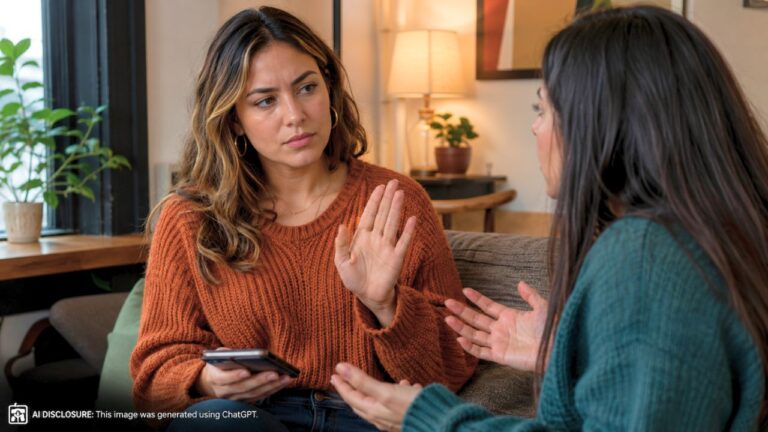
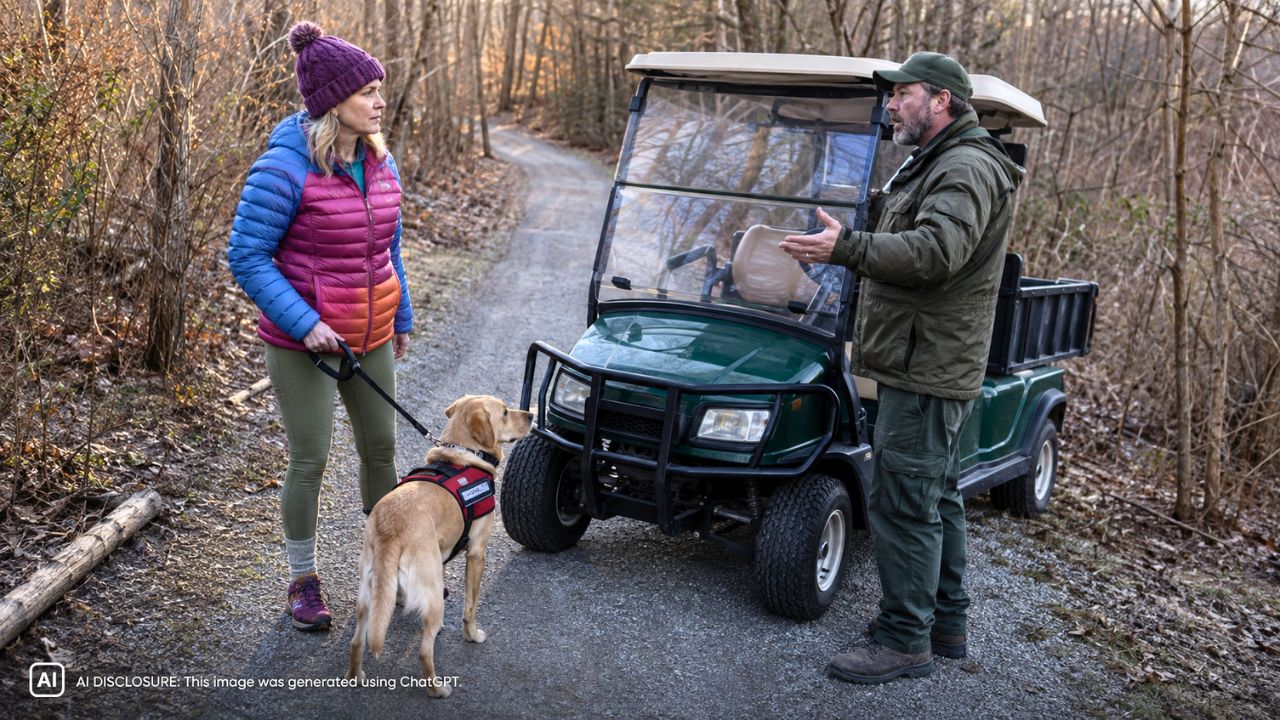
Photo credit: AI-generated image created using ChatGPT. Illustrative only.
It was supposed to be a routine morning walk: quiet woods, a service dog doing her job, and a little space to breathe after a family trip. Instead, a woman says she ended up cornered by a groundskeeper who used his vehicle to block her path, questioned her about her service animal, and then escalated into sexually inappropriate interrogation when she wouldn’t tell him where she was staying.
Her account, shared in the original post, lays out a sequence that didn’t just feel uncomfortable—it felt unsafe. And when she reported it and learned the man had been fired shortly before Christmas, the backlash didn’t come from management. It came from inside her own family.
A morning walk turned into a trap on a hill
A few days after Thanksgiving weekend, the woman says she took her service dog out for a walk. They were in a wooded area early in the morning, with no one else around. That’s when she noticed a groundskeeper following her up a hill.
She says he then used his van to block her path and started questioning her about her service dog. She answered what she could, but the interaction didn’t stay polite for long. According to her, he began trying to distract the dog—something service-dog handlers are trained to avoid because it interferes with the animal’s work.
She says she asked him, politely, to stop and explained the dog was working. He made it clear he wouldn’t, she wrote, and the tone shifted from annoying to alarming.
From “questions” about the dog to questions no stranger should ask
After refusing to stop interacting with the dog, the man asked where she was staying. She refused, explaining that he was a stranger and she wasn’t comfortable telling him where she lived or which house was hers.
That’s when she says the groundskeeper began asking sexually inappropriate questions. She describes repeatedly yelling “LEAVE ME ALONE” as loudly as she could while trying to figure out how to get away from him in an area with no other people nearby.
Then came the part that left her feeling boxed in even after she tried to end the conversation. She says the man told her he would sit there and wait to see which house she went into—and that he did exactly that.
Getting away meant going the wrong direction and waiting for help
With his van in the way, she says she eventually speed-walked around the back of his car and put distance between them, heading in the opposite direction from where she actually needed to go. It wasn’t a clean escape. It was a scramble to get out of his line of sight and get somewhere safer.
She and her service dog ended up waiting outside for about 15 minutes until someone else came outside. Only then did she feel able to get inside a house.
Once she calmed down, she made a report about what happened. She also emphasized later that she wasn’t looking for some dramatic punishment—she simply didn’t want anyone else treated the way she had been.
Management made a call, and the timing set off a family fight
After reporting the encounter, she says she was informed the groundskeeper had been let go. That might have felt like a clear, logical outcome—an employer reacting to a serious complaint involving harassment and safety. But the response she got from a cousin introduced a different kind of pressure.
When her cousin asked whether anything came of the report, she answered honestly. The cousin, she says, “went off” on her, accusing her of being horrible for getting someone fired so close to Christmas. The cousin also minimized what happened by saying “it wasn’t like he actually touched” her.
That comment stuck. The woman wrote that she knew in her heart reporting him was the right move, especially given the way he blocked her, questioned her, and refused to leave her alone. Still, she admitted the family criticism lingered in her head.
People pushed documentation, not silence
In an edit, the woman thanked those who responded with support and advice, noting how harassment can make a person feel isolated. The practical theme that came through was straightforward: don’t treat this like a misunderstanding, and don’t let the lack of physical contact erase the severity of being trapped, questioned, and sexually harassed while alone.
The guidance she referenced centered on safety and documentation. In her update, she said she took that advice and filed a police report. She didn’t sound overly optimistic about what would happen next, but even the officer she spoke with told her it was good to start a paper trail.
That paper trail matters in the real world because it creates a timestamped account outside of workplace channels—useful if the same person tries something again elsewhere, if other complaints surface, or if patterns need to be established. Even when consequences aren’t immediate, documentation can be its own form of protection.
Cutting off the cousin became the next step
The groundskeeper being fired wasn’t the end of the fallout. The next escalation was personal. The woman said she went “no contact” with the cousin who criticized her, and that decision came after another ugly turn.
She described an annual holiday market tradition where she takes a younger cousin—her critic’s daughter—along with another younger family member. But she says the cousin didn’t address her directly and instead called the woman’s mother and aunt to say she no longer “felt right about letting her children be around someone like her.”
In a detail that shows how quickly family disputes become confrontations, the woman said she was sitting right next to them when the call came in. She took the phone, told her cousin off, pointed out she wouldn’t say it to her face, and told her never to speak to her again.
The story ends with two parallel outcomes: a workplace taking action after a harassment report, and a family relationship breaking under the weight of blame-shifting and minimization. For the woman, the immediate danger may have passed, but the aftershocks—filing reports, replaying the morning in the woods, and drawing new boundaries with relatives—are still very much part of what happened.

Abbie Clark is the founder and editor of Now Rundown, covering the stories that hit households first—health, politics, insurance, home costs, scams, and the fine print people often learn too late.