Teenager Refused to Move Back In With Her Father After His Divorce — He Had Given Her Bedroom to His Ex-Wife’s Kids Years Earlier
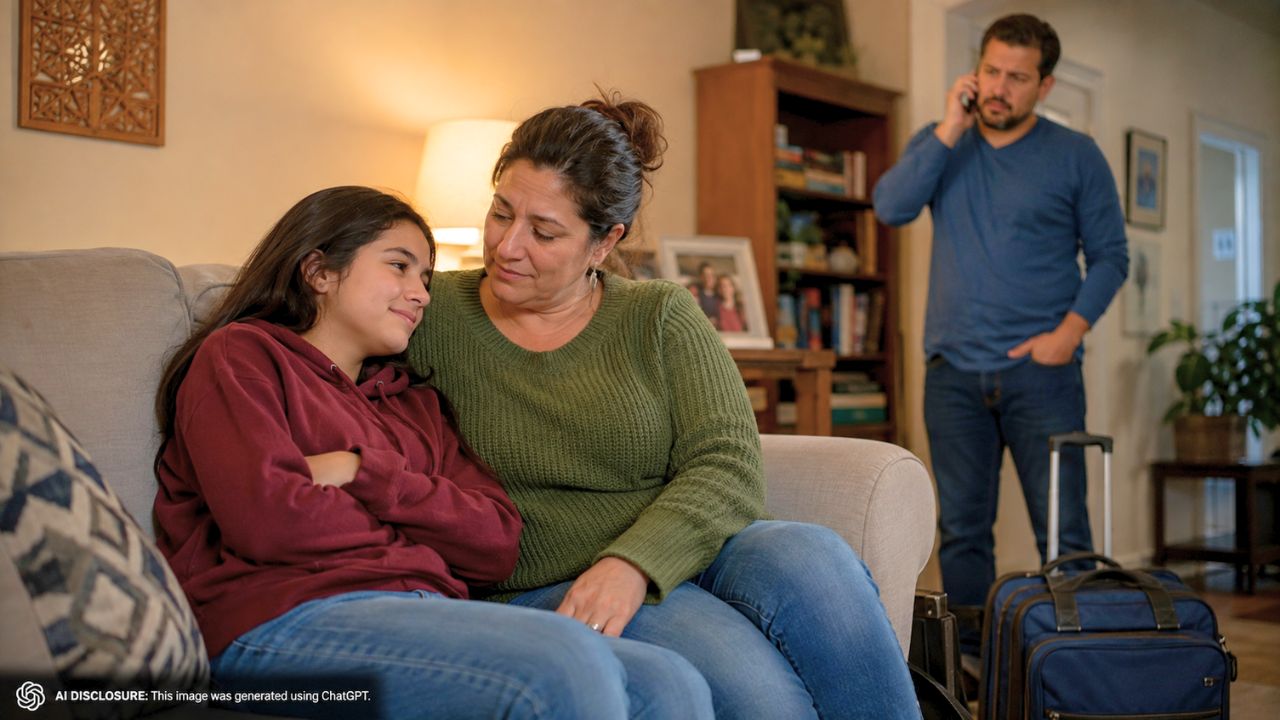
Photo credit: AI-generated image created using ChatGPT. Illustrative only.
By the time her father called asking her to come “home,” the 16-year-old already had a home — just not the one he meant. In a post laying out the family history and the sudden request, she described a childhood shaped by loss, a second parent stepping in, and a move that didn’t feel like a choice so much as self-preservation. The full account appears in the original post.
Her mother died when she was a baby, and her aunt — her mom’s sister — became a constant presence. For years, the aunt wasn’t just backup childcare; she was the person who showed up, stayed close, and helped raise her. Even after the aunt moved away for work, the relationship didn’t fade. The aunt kept visits frequent, flying the girl out one or two times a month, plus school breaks and a 50/50 summer split.
She didn’t “lose” her mom — she lost her place in her dad’s house
The turning point came when she was 12, after her father married a woman she calls Judy. The message she says she got was blunt: Judy was her “new mom,” and she didn’t need to keep traveling to see her aunt anymore. The visits that had been her normal were treated like something to grow out of.
Then came the bedroom. Her father gave her room — the bigger one — to Judy’s kids. She says she was expected to share instead, and she refused. To a teenager, a bedroom is more than square footage. It’s privacy, stability, and a signal that you still belong.
On top of that, she says her father and stepmother decided she couldn’t fly alone anymore. That meant her aunt now had to fly out to escort her or drive an all-day round trip. What had been a manageable routine suddenly became harder, more expensive, and more exhausting for the one adult she felt was still choosing her.
The move to her aunt’s wasn’t dramatic — it was quiet and final
A few months into her father’s new marriage, she decided to stay with her aunt. She describes it as an obvious call: it was “pretty obvious that he cared about his new family more than me.” In her mind, the bedroom switch, the pressure to stop visiting, and the travel restrictions added up to something larger than a rough adjustment period.
With her aunt, she had consistency. The schedule wasn’t a tug-of-war; it was a life with school, routines, and someone who felt like a better parent than the one she’d been born to. Over time, that choice became her reality, not a trial run.
Years passed with her father living his married life, building what she describes as his “new family,” while she built hers elsewhere. By the time she reached 16, she wasn’t a kid waiting to be picked up again. She was a teenager settled into a community.
Then the divorce hit, and her dad’s request sounded like an emergency plan
Her father’s call didn’t come with small talk. He and Judy are now divorcing after Judy cheated, and he learned that their new kids weren’t his. According to the teen, that revelation ripped away the family structure he’d been investing in — and suddenly he wanted her back under his roof.
He told her he missed her and that he didn’t have any family left. To him, the solution sounded simple: she should move back in. To her, it sounded like being summoned to fill an empty space.
She said no. Not with a long negotiation, not with conditions. Just a refusal based on the life she already has: she likes where she lives, she likes her school, and she has friends. She also says the location matters for her future, since she’s close to several good colleges and might be able to attend without moving away.
What she has now doesn’t sound temporary — it sounds like a real home
In her telling, her aunt isn’t just providing a roof; she’s providing the kind of parenting that feels chosen and steady. The teen also shared small details that make the household feel warm and rooted, including her aunt dating a man who comes over on weekends, cooks burgers and steaks, and fixes up cars as a hobby. She says he’s working on one for her.
Those details matter because they show what her father is asking her to leave behind. A stable routine. Support that feels earned. A school she enjoys. Friends she’s close to. And a future that looks logistically easier if she stays put.
Meanwhile, returning to her father’s house doesn’t sound like a return to her old room or her old role. Years ago, she says her space was already reassigned to someone else. Now she’s being asked to come back when the marriage has imploded, not because her father is rebuilding a relationship carefully, but because he feels alone.
Her dad’s side says he “needs” her — and that’s where the pressure lands
The backlash didn’t stop with her father. She says his side of the family is upset that she won’t move back because he’s her dad and he needs her. That framing shifts the responsibility onto a teenager: not “What do you need?” but “He needs you, so do it.”
From her perspective, that’s backwards. She points out that he chose his new family over her, and that his divorce isn’t her problem to solve. It’s a line in the sand, and it’s also a reminder that she already lived through being deprioritized once. She doesn’t want to volunteer for round two.
It also raises a practical question her father’s relatives may not be considering: if she moved back, what would her day-to-day life look like? Would she have a room of her own again, or would she be squeezed into whatever space is left? Would she be expected to provide companionship, emotional support, or even household help while her father processes betrayal and loss?
Most reactions centered on one idea: she’s not an emotional support plan
The post itself includes a clear judgment tag: “Not the A-hole.” While it doesn’t include a full comment thread, the thrust is easy to follow from the way she lays out the dilemma and the response she says she’s receiving. People tend to focus on the same pressure point her father’s family is pushing: the idea that a child is obligated to fix a parent’s loneliness.
The practical reaction in stories like this usually comes down to stability and autonomy. She’s 16, in school, and settled. Pulling her out to soothe an adult’s crisis could disrupt her education and friendships for reasons that aren’t about her well-being. And because her father already made choices that pushed her out — the bedroom, the “new mom” insistence, the visit restrictions — it’s hard to frame his request as a clean reset.
It’s also not lost on readers when a parent returns only after a marriage collapses. The timing can make the outreach feel less like accountability and more like scrambling for someone safe to lean on.
For now, the teen says she doesn’t plan to change her mind. Her father wants her back because his life blew up, but she’s already rebuilt hers somewhere else — in a home where she feels wanted, not repurposed. The tension is still there, especially with extended family applying pressure, but she’s treating her own stability as the priority, even if it means telling her dad no when he insists he needs her most.
Check out more from Now Rundown:
- A Party of 12 Came Back a Month Later Demanding Their $80 Tip Refunded — My Restaurant Made Me Pay It
- Her Coworker Kept Filing the Same Complaint About Her After Being Warned — Then She Filed a Counter-Report With Every Email Documented
- Siblings Demanded Half of Their Sister’s $11 Million Inheritance — She Refused Because They Never Visited
- The Kid I Bullied in Middle School Just Interviewed for a Job on My Team — He Bombed It and I Didn’t Hire Him

Abbie Clark is the founder and editor of Now Rundown, covering the stories that hit households first—health, politics, insurance, home costs, scams, and the fine print people often learn too late.