Woman Canceled Her Annual Christmas Hosting for Fifteen Family Members — After Years of Being the Default Organizer for Every Holiday and Family Crisis
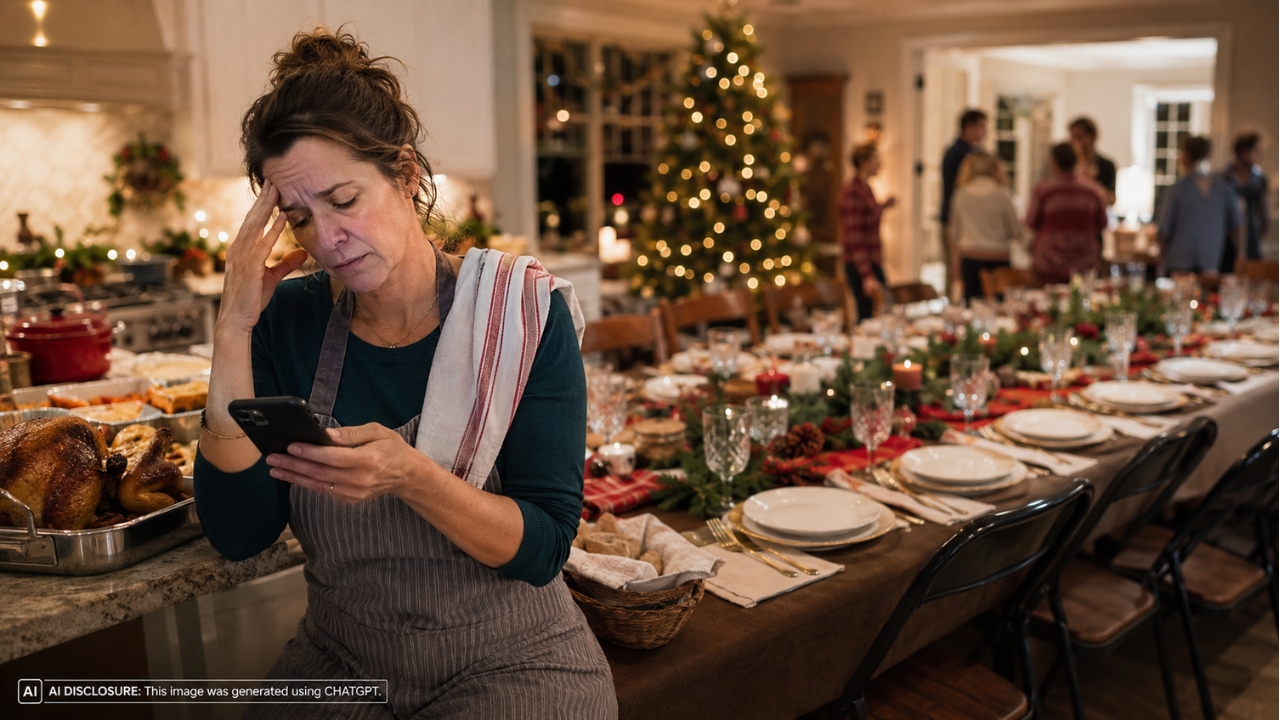
Photo credit: AI-generated image created using ChatGPT. Illustrative only.
For years, she’s been the person everyone counts on to make family life run on time: holidays, group meals, emotional support, even the everyday “can I vent?” phone calls. But when she finally said she didn’t want to host Christmas next year, her relatives reacted like she’d pulled the plug on the entire season. The story came from the original post, where she asked if stepping back made her the villain.
In her telling, this wasn’t a sudden whim. It was the result of years of being the default organizer, and the mounting exhaustion of hosting a crowd of 15-plus every Christmas in a house that’s become the family’s “neutral ground” for drama.
How she became the default for everything
She described herself as “the family Organiser,” the person relatives go to for holidays, advice, support, or simply somewhere to unload. She said she loves the role and hates it “equally,” which is what happens when being needed turns into being expected.
Her home, she explained, is large enough to fit everyone and “neutral” enough to avoid picking sides in longstanding tensions. She’s made a point of staying out of the interpersonal battles, but she still ends up hosting the gatherings where those dynamics show up anyway—just under her roof, on her schedule, with her groceries.
Christmas, in particular, has become an annual production. Hosting “upwards of 15 people” isn’t just setting out extra chairs. It’s planning, cooking, coordinating arrival times, smoothing over friction, and absorbing the stress so everyone else can relax.
This year’s Christmas felt like excitement and dread at once
Even before the blowup, she said she was already feeling the familiar mix: excitement about seeing everyone, dread about the work. It’s the kind of holiday anticipation that isn’t really anticipation at all—more like bracing.
The tipping point wasn’t a screaming match or a disaster dinner. It was a conversation with a friend about a completely different kind of Christmas—one with no big “Christmas meal,” just a normal lunch, and the rest of the day spent simply enjoying being together.
That simple description landed hard. She said it sounded so lovely she “felt like crying,” which suggests how far her own holidays have drifted from restful family time into something that feels like managing an event.
The decision: next year, no hosting—just rest
She didn’t say she was canceling Christmas altogether. She said she’s decided that next year she won’t host. Instead, she and her husband would either stay home and order takeaway or plan a long trip over the holiday.
In other words: no menu planning for a crowd, no coordinating logistics, no being the point person for everyone’s expectations. Just a quieter day that belongs to her household for once.
Her husband was surprised at first, she wrote, but ultimately agreed—and not in a reluctant way. He “would love a quiet Christmas,” which adds an important detail: this isn’t only her burnout. It’s shared fatigue inside the home that’s been doing the hosting.
Her family heard “no hosting” and responded like it was punishment
She raised the plan casually with her parents and in-laws during their daily check-ins, describing it as something mentioned “in passing.” That’s when the temperature changed.
She said their reaction was “incredible,” and suddenly she felt like the Grinch. The family, in her words, acted like she had “cancelled Christmas for everyone,” even though she was talking about one year, one house, and one decision about what she and her spouse could handle.
What seemed to upset them wasn’t just the loss of a location. She said she was called “selfish,” and one accusation went straight for the emotional jugular: that she was “excluding us from our grandchildren.”
That line also implies an expectation that her home is the gateway to family access—especially during the holidays—rather than simply the place she happens to live. And once those stakes got introduced, she said the backlash started bleeding into the present, too, with claims she was “ruining this years holiday too,” even though she still planned to host this year.
She says the options are there—just not on her shoulders
One reason she felt blindsided by the outrage is that, from her perspective, the family has alternatives. She wrote that she has siblings who can host. She also emphasized that everyone is “able bodied” and can cook for themselves.
Underneath that is a practical point: if 15 adults can show up to eat, they can also rotate houses, share cooking, or agree on a simpler format. But the pushback suggests the current setup is comfortable for everyone except the person doing the most work.
She framed it as a question of whether it’s time to “drop the rope”—not dramatically cut off family, but stop being the person who instinctively picks up every responsibility before anyone even asks.
What people focused on: boundaries, guilt tactics, and making the change real
The post itself carried a clear verdict label—“Not the A-hole”—which signals that many readers viewed her decision as reasonable, even overdue. The strongest practical theme in reactions to stories like this is usually the same: boundaries don’t work if they’re treated as a debate.
Her relatives’ comments also read like classic guilt tactics: framing her choice as harm to grandchildren, claiming she’s selfish, and insisting her future plan is already ruining the current holiday. Those aren’t logistical objections. They’re pressure campaigns designed to make saying “no” feel socially dangerous.
Another focus is often the shift from “hosting” to “owning.” If her home has become the default neutral site, the family may see it as a standing institution rather than a favor. Breaking that assumption can require repeating the plan calmly, early, and consistently—without over-explaining or negotiating against emotional threats.
And because she mentioned daily check-ins, some people would likely point out the risk of “death by a thousand conversations,” where relatives keep revisiting the topic until the organizer gives in. The practical workaround is limiting the discussion: one clear message, then redirecting future calls away from holiday planning.
For now, she’s still hosting this year, but the real fight has already started: not over a menu, but over whether her time and home are family resources by default. Whether she holds the line next year may determine if Christmas becomes a shared effort—or if her relatives keep treating her exhaustion as the price of admission.
Check out more from Now Rundown:
- A Party of 12 Came Back a Month Later Demanding Their $80 Tip Refunded — My Restaurant Made Me Pay It
- Her Coworker Kept Filing the Same Complaint About Her After Being Warned — Then She Filed a Counter-Report With Every Email Documented
- Siblings Demanded Half of Their Sister’s $11 Million Inheritance — She Refused Because They Never Visited
- The Kid I Bullied in Middle School Just Interviewed for a Job on My Team — He Bombed It and I Didn’t Hire Him

Abbie Clark is the founder and editor of Now Rundown, covering the stories that hit households first—health, politics, insurance, home costs, scams, and the fine print people often learn too late.