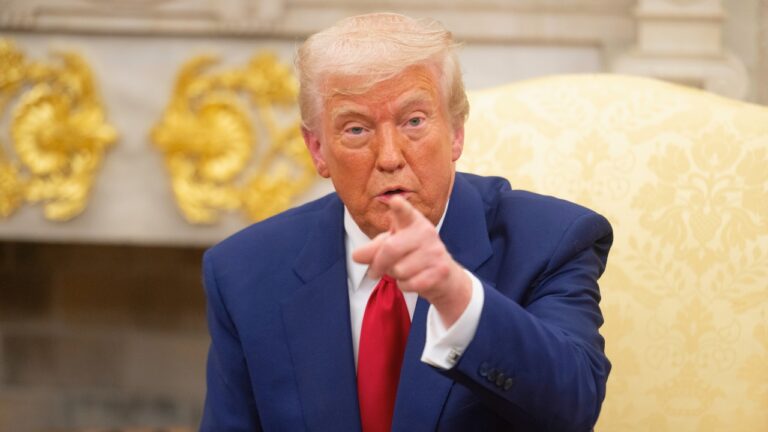
Warren claims Trump could use the Fed to enrich himself and punish enemies
Photo credit: noamgalai/Shutterstock.com
Sen. Elizabeth Warren is escalating her warning about President Donald Trump’s push to reshape the Federal Reserve, arguing that a president who gains tighter control of the central bank could steer policy to benefit himself, reward wealthy allies and retaliate against opponents — and she is urging Congress to step in.
In a Feb. 12 post, the Massachusetts Democrat said the consequences of a Trump-controlled Fed would ripple across the economy, affecting workers, families and small businesses, and she called on Congress to oppose what she described as an effort to take over the institution.
Warren’s message comes as Trump’s White House presses ahead with moves that critics and some economists say threaten the Fed’s long-standing independence, a principle widely viewed as central to keeping inflation expectations anchored and monetary policy insulated from election-cycle politics. A recent Congressional Research Service brief notes that Congress delegated monetary policy responsibilities to the Fed and that reduced independence could mean greater executive control over monetary policy — a shift that would raise oversight and accountability questions.
The political fight intensified in recent weeks as the administration moved toward installing a new Fed leader. Reuters reported that Trump has nominated former Fed governor Kevin Warsh to lead the institution, a choice that has fueled renewed debate over whether the central bank will face stronger political pressure to cut rates or change its approach to regulation and supervision.
At the same time, the confirmation path has become tangled in a separate dispute involving current Fed Chair Jerome Powell. The Associated Press reported that Sen. Thom Tillis, a Republican on the Senate Banking Committee, has publicly tied his willingness to proceed on Fed nominations to the status of a Justice Department investigation connected to Powell’s testimony regarding a costly renovation project at the Fed. Tillis has described the probe as political and has said he wants the situation resolved, while administration officials have indicated they want hearings to move forward.
Treasury Secretary Scott Bessent said the Senate Banking Committee had agreed to proceed with hearings for Warsh, even as lawmakers debate how the Powell investigation should be handled and whether it should shift to a Senate-led inquiry.
Warren has framed the moment as bigger than a personnel fight. In a Jan. 28 statement posted by Senate Banking Committee Democrats, she argued Trump’s economic agenda is driving costs and uncertainty and said the president is trying to seize control of the central bank to serve himself and “billionaire friends.”
Economists and international officials have also been paying attention. Reuters reported that Bundesbank President Joachim Nagel warned that a loss of Fed independence could have global consequences, potentially increasing inflation pressures and encouraging political interference with other central banks.
For Warren and other Democrats, the argument is straightforward: if the Fed becomes more directly influenced by the White House, monetary policy could be used as leverage — and the perceived neutrality that helps markets trust the institution could weaken. Republicans and the administration, meanwhile, have pointed to accountability concerns and have argued that the Fed’s decisions have broad impacts that justify greater scrutiny.
The clash is likely to sharpen as the Senate weighs what to do with a Fed nomination, the Powell investigation remains a live controversy, and the White House continues to push for a central bank posture more aligned with its economic and political goals.