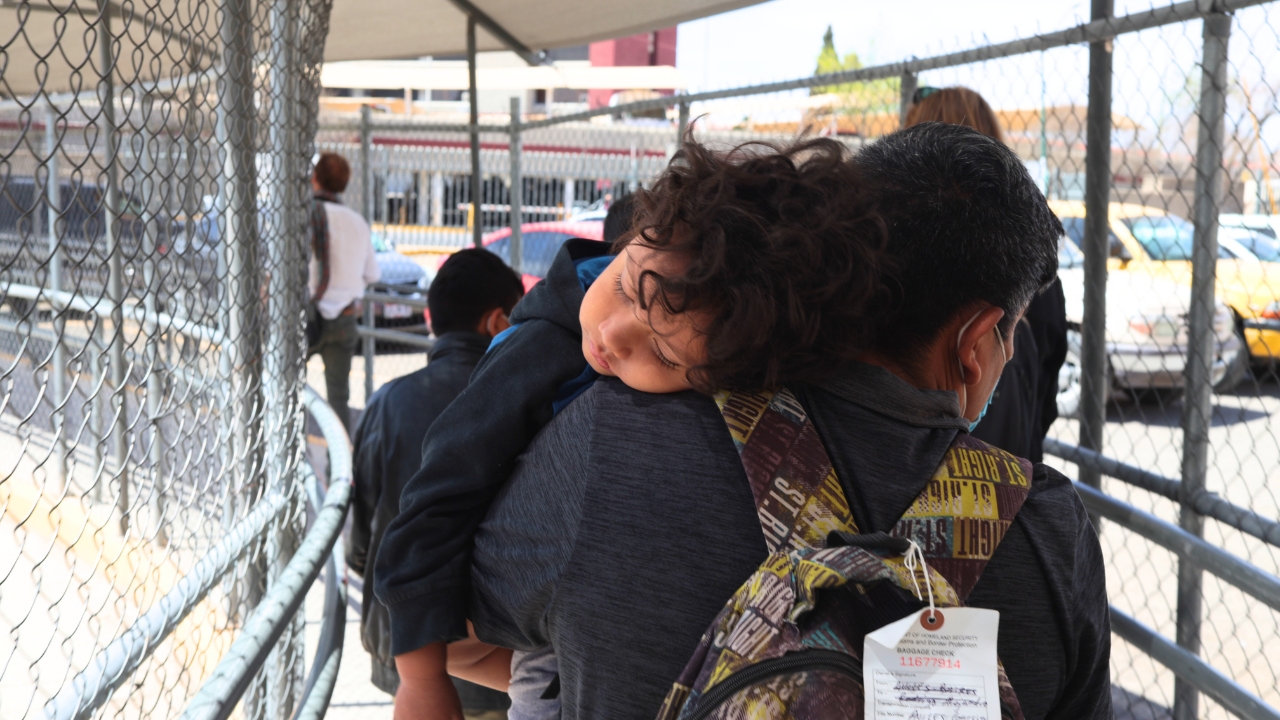
“They deported a 6-year-old deaf child without his hearing device.” -Yet, Trump’s deportation push promised criminals first
Photo credit: David Peinado Romero/Shutterstock.com
WASHINGTON — A California congressman’s claim that the Trump administration “deported a 6-year-old deaf child without his hearing device” has added to the growing debate over who is actually being swept up in the administration’s immigration crackdown. The broad outline of the case is not really in dispute: a Bay Area mother and her two young sons, including a 6-year-old boy who is deaf, were detained during an immigration check-in in San Francisco and deported to Colombia last week. What is disputed is why it happened, whether the family was denied due process, and how well the case matches President Donald Trump’s repeated promise to focus deportations on violent criminals.
Federal immigration officials say the mother, Lesly Rodriguez Gutierrez, was removed because an immigration judge had already ordered the family deported roughly two years ago. ICE said she was arrested on March 3 during a scheduled check-in and removed under that prior order. Advocates and the family’s lawyer tell a different story on procedure, arguing that officers gave misleading information about where the family was being held and prevented legal efforts to intervene before the deportation happened. California education officials and local advocates have also said the child was deported without critical assistive devices he relies on to communicate.
So the cleanest way to describe “what is actually happening” is this: this was not a case where the administration publicly accused the 6-year-old of wrongdoing, and it was not presented as a violent-criminal deportation. It appears to have been a family removal tied to the mother’s immigration case and a preexisting deportation order, with the children deported alongside her. The political controversy comes from the gap between that reality and the Trump administration’s public messaging, which has heavily emphasized removing dangerous offenders.
On paper, the administration says its priority is criminals and public-safety threats. The White House has described Trump’s immigration agenda as one focused on “deporting illegal alien criminals,” and a January White House statement on immigration enforcement said the priority would be “criminal aliens, public safety threats, and national security threats.” But that same statement also made clear that people in the country unlawfully remain subject to enforcement even if they do not fall into those highest-priority categories.
The numbers show why this has become such a politically charged issue. Reuters reported in February that the largest group of people detained by ICE during Trump’s second term was not people with criminal convictions or charges, but people with no criminal conviction or criminal charge. According to Reuters, the number of detainees in that category rose from about 860 when Trump took office to roughly 24,500 by early February. Reuters also reported earlier that about 41% of the roughly 54,000 people arrested by ICE and detained by late November had no criminal record beyond a suspected immigration violation.
A separate review by FactCheck.org, drawing on DHS and deportation data, found that from Jan. 20, 2025, through Oct. 15, 2025, about 36.5% of ICE arrests involved people with criminal convictions, 29.8% involved people with pending criminal charges, and about one-third involved people with neither. FactCheck also reported that by January 2026, only about 29% of those detained by ICE had criminal convictions, down sharply from about 54% the year before. That same analysis, citing outside reviews of ICE data, said only a small share of those arrested had violent convictions.
That does not mean the administration is not removing criminals. DHS has repeatedly publicized arrests of people convicted of rape, assault, child sex crimes, gang activity and drug trafficking, and the White House continues to frame the crackdown as a public-safety campaign. But the available data suggest the enforcement net is much wider than that message alone would imply. In practice, it includes not only people with serious criminal histories, but also many with no criminal record beyond alleged immigration violations, as well as families and asylum-seekers whose cases have reached removal orders.
That broader enforcement approach helps explain why cases like this one keep drawing attention. Critics say it shows that “deport violent criminals first” has, in reality, become a much larger deportation campaign touching families, children and people without violent records. Supporters of the administration counter that once a final removal order exists, enforcement is lawful and necessary, and that failing to carry out those orders would undermine the immigration system. Both arguments are now colliding in public through emotionally powerful cases like the Bay Area boy’s.
For readers asking who Trump is actually trying to remove from the country, the most accurate answer is: officially, the administration says it is targeting criminal offenders, gang members and public-safety threats first. In reality, the enforcement data and recent cases show it is also going after a much broader group of removable noncitizens, including people without criminal convictions, asylum-seekers whose claims failed, TPS holders who lose protection, and families subject to existing deportation orders. That is why the administration’s message and the real-world outcomes often look different from each other.