Teenager Was Stuck With $20,000 in Car Loan Debt His Mother Signed Him Up For — He Refused to Drain His Savings Over Her Mistake
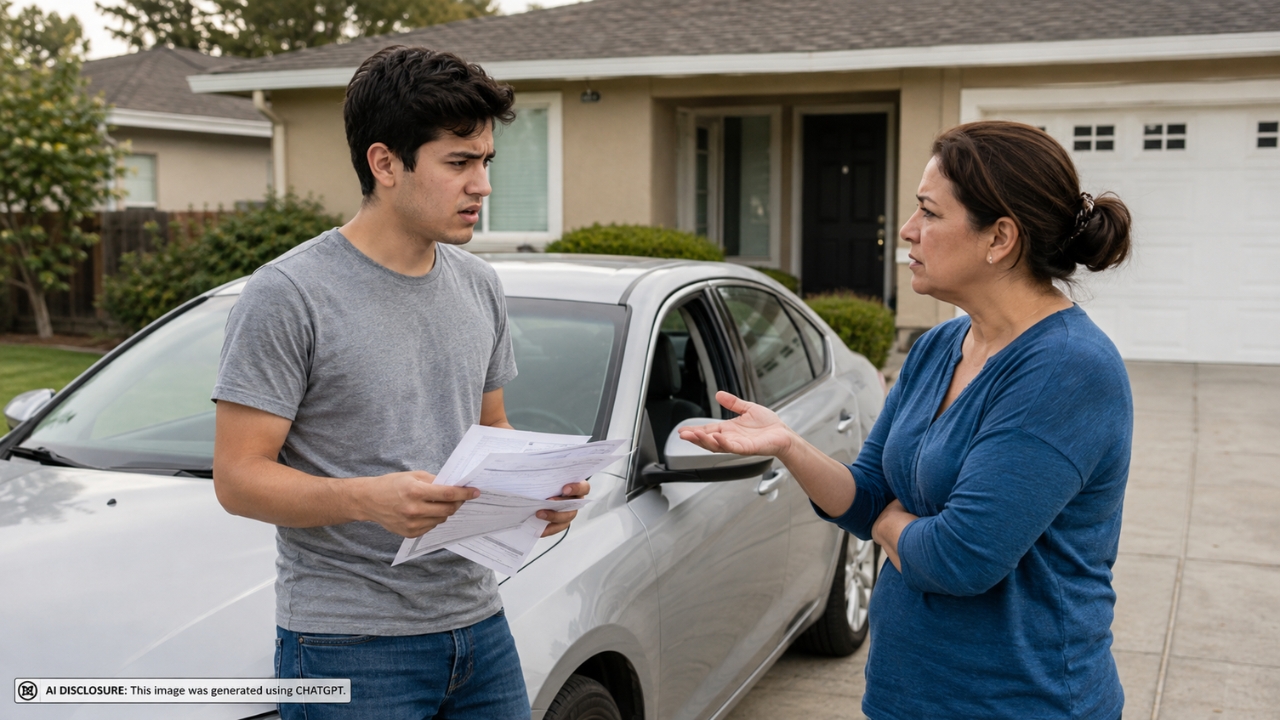
Photo credit: AI-generated image created using ChatGPT. Illustrative only.
At 16, he thought he’d gotten the kind of birthday present most teenagers only daydream about: a brand-new 2022 Nissan Sentra sitting in the driveway. At 19, he says that “gift” has turned into years of payments and a loan balance that never seemed to match the car’s value.
In the original post, the 19-year-old explains how he ended up covering a car note tied to his mother’s name, and why he’s now refusing to drain his savings to clean up what he calls a terrible dealership decision made by the adults around him.
The “gift” came with a loan that didn’t add up
He says his mom, 40, and her boyfriend at the time handled the purchase. He didn’t ask many questions back then, assuming the boyfriend was financially savvy and had things under control at the dealership.
But when he later looked at the numbers, he says they didn’t make sense. The Sentra’s MSRP, he wrote, “capped at around $20,000,” yet his mom and her boyfriend walked out with a $40,000 loan, no down payment, and a 10% interest rate. He says his mom had bad credit and no job at the time, which he believes contributed to the terms.
The monthly payment was $510. Even that seemed high for a compact sedan, but the bigger issue was the agreement he says was made: he and his mom’s boyfriend would split the payment.
The split lasted three months, then the bill became his
According to the post, that arrangement fell apart almost immediately. After three months, he says he was “stuck paying the entire thing” and kept paying from that point on.
He describes it as something that slowly became normalized—just a bill that had to be covered to keep the car and keep life moving. He started paying at 16, and by 18 he had moved out and was living with a roommate, which made money tighter and the car payment feel even heavier.
It’s the kind of expense that limits everything else: rent choices, savings, the ability to handle emergencies. And because the loan wasn’t in his name, he was essentially shouldering the cost without owning the financing decisions that created it.
Trying to transfer the loan only made things worse
About a year before his post, he says he and his mom went to the bank to explore transferring the loan into his name. That could have simplified ownership and responsibility—one person, one loan, clean and clear.
Instead, the transfer came with another shock. He says the interest would be recalculated, adding about $10,000 to the loan. Both of them agreed not to proceed.
That decision kept the status quo in place: the loan stayed in the mother’s name, while the son kept making payments so the car wouldn’t be repossessed and his transportation wouldn’t disappear. He also notes that his mom later framed the non-transfer as something she did for him—saying she “saved” him money by not doing it.
To him, the bigger picture was that he was still paying for a deal he never negotiated, on a loan he didn’t sign.
A cheaper replacement car brought the argument to the surface
The turning point came when he started thinking about replacing the Sentra with something more affordable. He says his girlfriend’s mom suggested he look for a car that better fit his budget, and he found a used 2025 Corolla with 10,000 miles for $18,000.
In his eyes, the comparison was obvious: a reliable used car for less than what he believed he was still paying down on the current loan. He told his mother he planned to get the other car, and that if she wanted to sell the Sentra, that would be her decision.
That’s when he says she “lost her” temper. His mom insisted the Sentra was his responsibility because it was a “gift.” She also argued that by not transferring the loan earlier, she had already protected him from an even worse financial hit.
He countered that he never agreed to be locked into a badly structured loan, and he didn’t want to drain his savings to make it right. He suggested the Sentra could be sold for around $14,000 to $15,000, but he says she refused to sell and instead demanded he cover the debt fully.
Now the stakes include divorce, younger siblings, and a financial cliff
The argument isn’t happening in a vacuum. He says his mother is freshly divorced and looking for a job while supporting two younger girls. That context is part of why he feels torn, even as he resists taking on more of the burden.
From his perspective, paying the loan has already been a major contribution—one he’s been making since he was a minor. But he also admits guilt at the idea of leaving his mom with the debt and a car loan she may not be able to handle alone, especially during a time when her household is in flux.
At the same time, he describes a strained relationship with her even before this. The way he tells it, the car purchase wasn’t a thoughtful financial plan that went sideways; it was an adult decision made quickly, with long-term consequences pushed onto him once the boyfriend stopped paying.
And because the loan is tied to his mother, any default would land on her credit and finances—while his day-to-day life would still be affected by losing the vehicle and whatever family fallout comes next.
Many people zeroed in on responsibility and paperwork, not guilt
The post was labeled “Not the A-hole,” reflecting the dominant reaction to his question about whether he was wrong to leave his mom holding the debt. The focus, based on that judgment, was less about emotions and more about the structure of the deal: whose name is on the loan, who agreed to what, and what a “gift” really means when it comes with a massive payment obligation.
A key theme in reactions to stories like this is that a loan isn’t a present just because someone hands over keys. If the recipient didn’t sign the paperwork and wasn’t part of the terms, the debt remains the signer’s legal responsibility—even if a family expectation develops over time.
People also tend to emphasize how quickly informal family arrangements can collapse, especially when relationships end. In his case, he says the boyfriend’s contribution vanished after three months, leaving him stuck with a payment sized for an entirely different plan.
And the resale math matters too. If the car sells for $14,000 to $15,000 but the loan is much larger, that gap doesn’t disappear—it becomes a real debt someone has to cover. His refusal to liquidate savings is, in his telling, a boundary: he’ll pay for his own future transportation, but he won’t bankroll what he sees as someone else’s mistake.
For now, the standoff is simple and brutal. He wants out of an expensive arrangement and into a cheaper car that matches his life at 19. His mother wants him to keep paying what she considers his obligation, even though the loan is in her name and the original deal involved another adult who is no longer paying. And with a divorce and two younger kids in the background, the pressure on both sides isn’t easing—it’s building.
Check out more from Now Rundown:
- A Party of 12 Came Back a Month Later Demanding Their $80 Tip Refunded — My Restaurant Made Me Pay It
- Her Coworker Kept Filing the Same Complaint About Her After Being Warned — Then She Filed a Counter-Report With Every Email Documented
- Siblings Demanded Half of Their Sister’s $11 Million Inheritance — She Refused Because They Never Visited
- The Kid I Bullied in Middle School Just Interviewed for a Job on My Team — He Bombed It and I Didn’t Hire Him

Abbie Clark is the founder and editor of Now Rundown, covering the stories that hit households first—health, politics, insurance, home costs, scams, and the fine print people often learn too late.