Teenager Told Her Stepdad He Was Never Her Choice, Only Her Mother’s — After Years of Him Forcing His Way Into the Father Role
Photo credit: AI-generated image created using ChatGPT. Illustrative only.
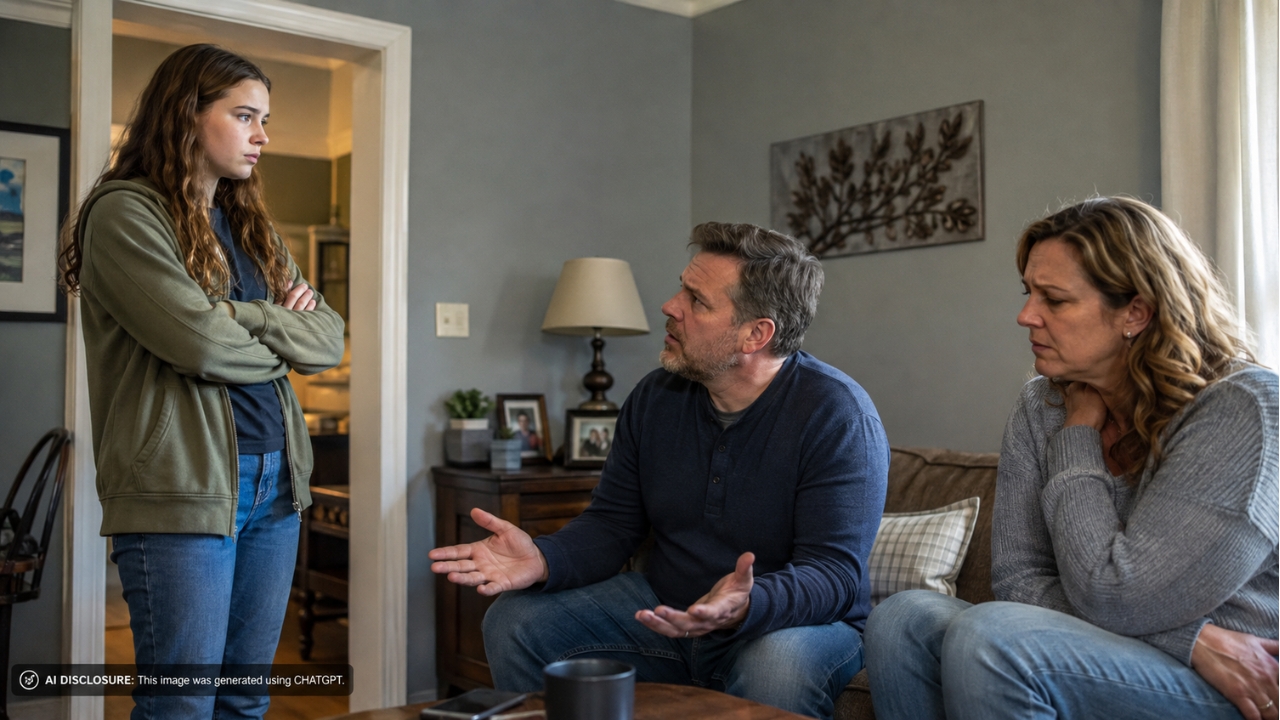
A 17-year-old says she finally said the quiet part out loud after years of feeling like her stepfather was trying to replace her dad, not join the family. The comment landed hard: she told him she and her brothers never chose him—her mother did.
In the original post, the teen describes a long-running tug-of-war that started when she was a little kid and never really let up. Her parents divorced when she was a baby, and she and her two older brothers grew up splitting time evenly between their mom and dad, switching houses every week. That structure, she says, worked—until her mom’s boyfriend began pushing for a bigger role.
It got awkward fast, and it didn’t stay small
The teen says her mom met her future stepdad when she was 4, and introduced him to the kids a couple years later. By then, she and her brothers already had a routine with their father, and they were used to their parents showing up to events without trying to “win” the moment.
But she remembers the new adult in the picture acting possessive in public, especially when her dad was around. At a school talent show, she says she ran toward her dad after winning, only for her mom’s boyfriend to intercept her, pick her up, and press for a hug. When she didn’t hug back, he reportedly told her he wanted a hug from “his girl,” and she responded that she wanted her dad instead.
That kind of friction kept showing up at sports games and school events. She says he would get visibly angry when she held her dad’s hand, and tried to get her to do the same with him—something she resisted even as a child.
Before the wedding, the “role” argument turned into open conflict
One moment stuck with her: shortly before her mom and stepdad got married, he referred to the children as “his and mom’s kids.” Her dad rolled his eyes, which escalated things. The stepdad accused her father of disrespecting and dismissing his role.
Her dad didn’t take the bait, at least not in the way her stepdad wanted. He reportedly said the kids didn’t stop being “his and mom’s kids” just because their mother moved on. The teen describes her stepdad reacting like he was being shoved out of a position he believed he deserved.
From there, she says everyday milestones became a competition. Father’s Day was especially tense: her stepdad wanted the attention and activities, while the kids wanted to celebrate with their actual dad. Their mother pushed them to do something for their stepdad too, framing it as appreciation for someone who “showed up.” The teen says they did one reluctant activity a year, but it never satisfied him.
When he couldn’t be the only “dad,” he watched what their father got
The teen claims her stepdad didn’t just want to be included—he wanted equal billing, and sometimes more. She says he “cyber stalked” her father to see what the kids did with him and compared it to what he got. That tracking fed resentment, especially around Father’s Day.
In one example, she says her grandparents took the kids out close to the holiday, and her grandmother brought her to buy something meant for her dad. Her stepdad saw it, assumed it was for him, and later had a meltdown when her dad posted about receiving it.
Then, when the teen was 10, her mom was hospitalized for more than a month with the flu and another infection. Her stepdad attempted to take over the mother’s custody time, but her dad refused, telling him the kids were not his. The teen says she and her brothers didn’t try to stay with their stepdad either, and he blamed their father for “poisoning” them against him.
The push got more aggressive: portraits, cards, and forced traditions
After that hospitalization, the teen says her stepdad intensified his efforts to be seen as the other father in the family. She describes him insisting on professional family portraits and trying to physically position the kids around him in ways that signaled closeness and authority, rather than an even family grouping with their mom.
He also pushed to turn birthdays at their mom’s house into broader “family parties” that included his relatives. Cards began showing up signed as “dad,” and the teen says her oldest brother even saw him scratch out his own name on a card and replace it with “dad.”
Her brothers were pressured into tennis, with her stepdad trying to act as their trainer. For her, it was father-daughter dances—she says he tried to make it happen, and she repeatedly refused and found ways to avoid being paired with him.
The siblings raised concerns with their mother more than once. But according to the teen, their mom consistently defended her husband, saying the kids were rude, that he felt “othered,” and that the teen could be “blessed with two dads” if she gave it a chance. The teen’s response was blunt: she believed if her stepdad had his way, she would only have him.
Moving out changed the power dynamic, but not the pressure
By 16, the teen chose to live with her dad full-time. Now she only visits her mother’s home for a few hours each month, and she doesn’t sleep over. If the mood turns tense or “weird,” she leaves.
That distance didn’t end the emotional conflict—it just relocated it. During a recent visit, her stepdad brought up feeling ignored and unappreciated, and told her her decision to live with her father hurt him. Then he framed it as a choice the kids made: he suggested they should be more loving to the person they “chose to add to the family.”
That’s when she corrected him. “Mom chose you not us,” she said, and she says he immediately started crying. He told her she wanted to crush his spirit, and asked what he did to make her “hate” him. Her mother then became angry too, especially because the comment left her husband in tears.
The teen left without apologizing—and says she doesn’t regret it. Her mom has continued texting, urging her to apologize and make more effort, arguing it’s unfair that her husband keeps trying while the kids don’t reciprocate.
What people focused on: consent, boundaries, and the difference between love and control
While the teen asked whether she went too far, the core issue she raised is one many families recognize: a stepparent can’t force a bond by declaring it, or by competing with an involved parent. The teen’s account paints her stepdad’s behavior as less about building trust over time and more about trying to claim a title.
The big distinction people tend to make in cases like this is between being supportive and being possessive. Showing up to school plays is support. Cutting into a child’s moment with their parent, insisting on being called “dad,” monitoring the other parent’s life online, and rewriting cards to change who the child addressed—that reads more like control.
Practically, the teen has already taken the step that gives her the most stability: she lives with the parent she feels safest with. The unresolved part is her connection to her mother and younger half siblings, and whether future visits will come with boundaries her mom will actually enforce. If not, the pattern she describes suggests she’ll keep shortening those visits until they disappear.
For now, she’s standing by the sentence that made everyone upset: a marriage is a choice adults make. Kids don’t get a vote, and they shouldn’t be punished for telling the truth about that.
Check out more from Now Rundown:
- A Party of 12 Came Back a Month Later Demanding Their $80 Tip Refunded — My Restaurant Made Me Pay It
- Her Coworker Kept Filing the Same Complaint About Her After Being Warned — Then She Filed a Counter-Report With Every Email Documented
- Siblings Demanded Half of Their Sister’s $11 Million Inheritance — She Refused Because They Never Visited
- The Kid I Bullied in Middle School Just Interviewed for a Job on My Team — He Bombed It and I Didn’t Hire Him

Abbie Clark is the founder and editor of Now Rundown, covering the stories that hit households first—health, politics, insurance, home costs, scams, and the fine print people often learn too late.