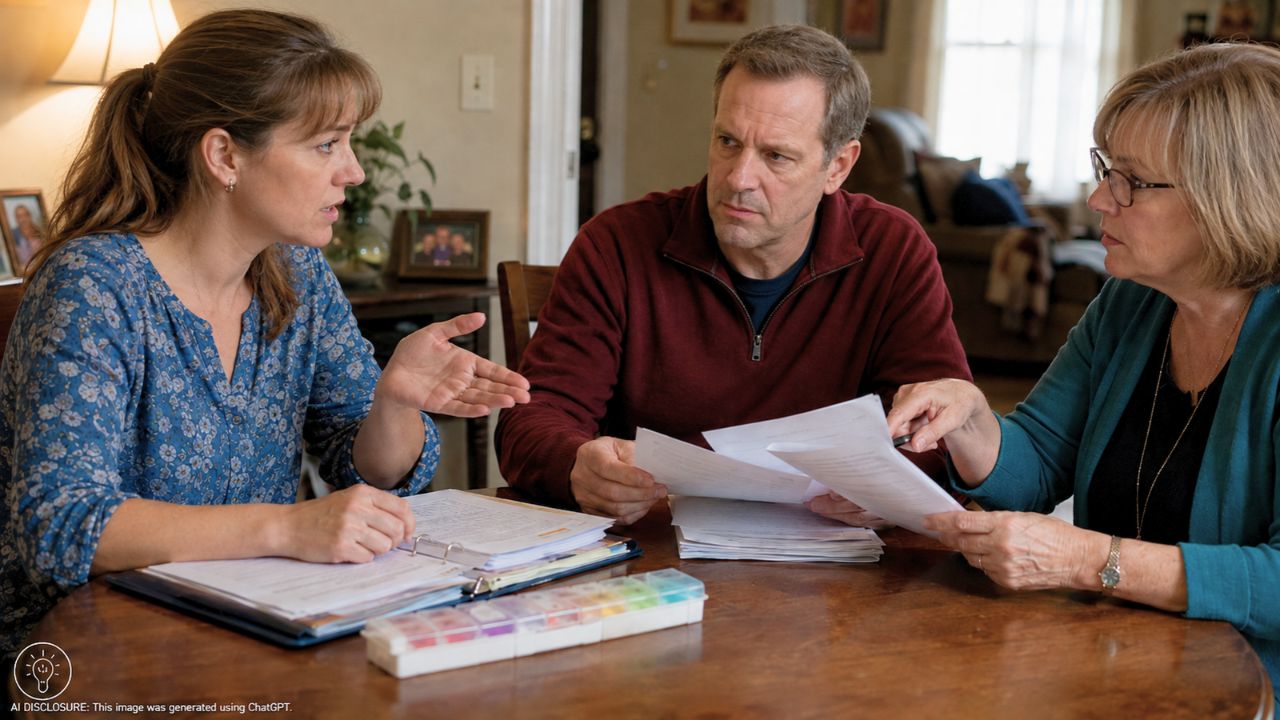
Siblings Insisted on an Equal Inheritance Split Despite Their Younger Sister Providing Years of Unpaid Caregiving for Their Parents
Photo credit: AI-generated image created using ChatGPT. Illustrative only.
It started with a practical problem: rising costs, big repairs, and a family property that suddenly felt like a ticking clock. Three siblings were staring down the sale of their parents’ aging apartment building near Eugene, Oregon—likely worth more than $500,000—and the money attached to it.
But in the original post, the real fight wasn’t just about a sale price. It was about what “fair” means after one sister spent years providing hands-on care for their mother, while the other two lived across the country.
Years of caregiving collided with a will that kept things simple
The writer explained that their youngest sister lived in their parents’ 10-unit apartment building for nearly 20 years and wasn’t charged rent. Over time, she also took on increasing responsibility: helping manage the building and working part-time in the family’s small grocery store.
When their mother’s health declined in the last five years of her life, the youngest sister became the primary caregiver. The writer and their older sister lived on the East Coast, and they said their youngest sibling was the only one truly positioned to handle day-to-day care.
The mother died three years ago, and the father had died a decade earlier. Even after their mother’s death, the youngest sister continued managing the apartment building and the grocery store, with the store’s earnings going to her as her main income.
The sale wasn’t optional, and that’s when the resentment surfaced
According to the writer, the family reached a breaking point last year: property taxes rose and major repairs piled up. They said those pressures forced them to put the building up for sale, even though the youngest sister wanted to keep the properties because she believed their parents wouldn’t have wanted to sell.
For her, the sale wasn’t just an emotional loss. It was personal housing instability. She still lived in the building, and selling it meant she’d have to find a new place to live.
That’s when the longstanding resentment became explicit. The youngest sister argued that after years of caregiving, she deserved more than an equal third. She wanted about 40% of the proceeds.
One sibling saw “equal” as the only clean answer
The writer didn’t dispute that their sister’s caregiving was difficult. But they framed the past two decades as a complicated exchange, not a one-way sacrifice. In their view, the youngest sister benefited financially through free rent and income tied to the family property and store.
They also pointed out that neither they nor their older sister had received money generated by the apartment building or grocery store over the years. So, to the writer, the will’s equal split felt like the appropriate finish line—especially since, they argued, the youngest sister had already been compensated in real-time.
The question they posed was blunt: Were they wrong to insist on dividing the sale proceeds equally, despite the caregiving history? And if the youngest sister was entitled to more, how much would actually be fair?
Even the “compromise” split raised the stakes
The older sister didn’t line up behind the equal-split argument. Instead, she told the writer she was willing to give their youngest sister a large portion of her own share. Guilt was a factor, the writer said, and so was a sense that the youngest sister deserved help getting established after losing her housing.
Then came a detail that sharpened the disagreement: the youngest sister’s proposed arrangement wouldn’t just give her a little more. In the writer’s edit, they said the plan would leave the writer and the older sister with about 20% each, while the youngest sister would receive 40%, and the remaining 20% would go to other family members their parents wanted to help.
In other words, it wasn’t just a debate about giving the caregiver an extra slice. It was a proposal that would reduce the other siblings’ shares significantly, at a time when they also had serious financial pressures.
The older sister had three kids, with two nearing college age. The writer said they had two younger children and were going through a divorce. The youngest sister, by contrast, was unmarried but in a long-term relationship, and the writer believed marriage was likely within a year.
The backstory got messier once “choice” entered the conversation
In an edit, the writer pushed back on the idea that the two East Coast siblings simply opted out. They said they took turns traveling to Oregon, taking months-long leaves from their jobs—one a nurse, the other a teacher—to help when things became more intense.
They also said that as their parents needed more assistance, the family hired people for day-to-day care. And they emphasized that for much of the two decades the youngest sister lived with their parents, both parents were in good health and able to run their business.
Still, the writer added a more personal assessment that hinted at deeper family tension. They described the youngest sister as “spoiled” and said she never learned to stand on her own, relying on their parents because it was easier. They acknowledged caregiving was “really rough,” but said she “complained a lot,” suggesting that even during the hardest stretch, the support didn’t come quietly or without conflict.
It’s the kind of detail that changes how siblings hear each other. What one person calls unpaid labor, another frames as a long-term arrangement built on free housing and family-provided income.
Reactions centered on sweat equity, paperwork, and what “equal” ignores
The writer’s post included a clear judgment label—“Asshole”—signaling that many readers didn’t buy the argument that free rent and a grocery-store income erased years of hands-on care. A recurring theme in these disputes is that caregiving often comes with invisible costs: stalled careers, limited mobility, burnout, and the grind of being on-call when others can go home.
At the same time, practical-minded responses in cases like this tend to focus on what can be documented. If the youngest sister truly did years of uncompensated work managing the building in addition to caregiving, that raises questions about whether she was functioning as a property manager without market-rate pay. On the other hand, if she received below-market rent and ongoing income tied to the family business, that’s also part of the financial picture—especially when two siblings received none of the ongoing cashflow.
There’s also the reality that the parents’ estate planning matters. The writer said the properties didn’t go through probate because a trust was set up, and the will left the properties to the three siblings equally. That creates a clean legal roadmap, but it doesn’t solve the emotional math of who carried what load, for how long, and at what personal cost.
By the end of the post, the writer wasn’t just worried about money. They were worried about the after-effects: a family that had been close-knit, now staring at a decision that could permanently change how they see each other. Equal on paper is simple. Living with it is the hard part.
Check out more from Now Rundown:
- A Party of 12 Came Back a Month Later Demanding Their $80 Tip Refunded — My Restaurant Made Me Pay It
- Her Coworker Kept Filing the Same Complaint About Her After Being Warned — Then She Filed a Counter-Report With Every Email Documented
- Siblings Demanded Half of Their Sister’s $11 Million Inheritance — She Refused Because They Never Visited
- The Kid I Bullied in Middle School Just Interviewed for a Job on My Team — He Bombed It and I Didn’t Hire Him

Abbie Clark is the founder and editor of Now Rundown, covering the stories that hit households first—health, politics, insurance, home costs, scams, and the fine print people often learn too late.