Husband Set Boundaries With His Elderly Parents After They Booked a Holiday Dinner Reservation for Their Newborn Without Asking First
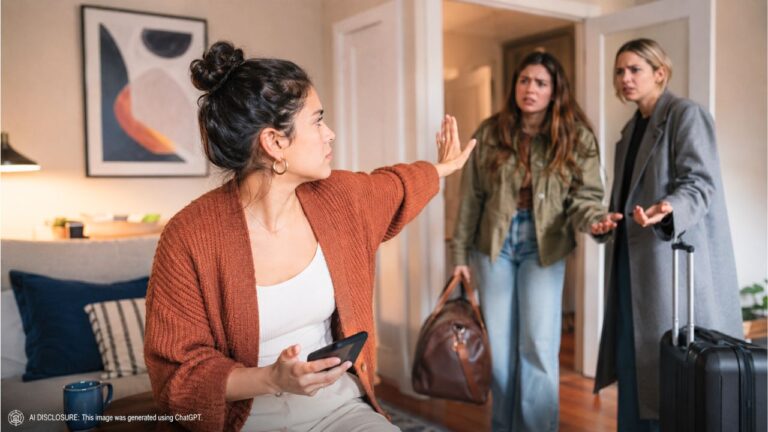
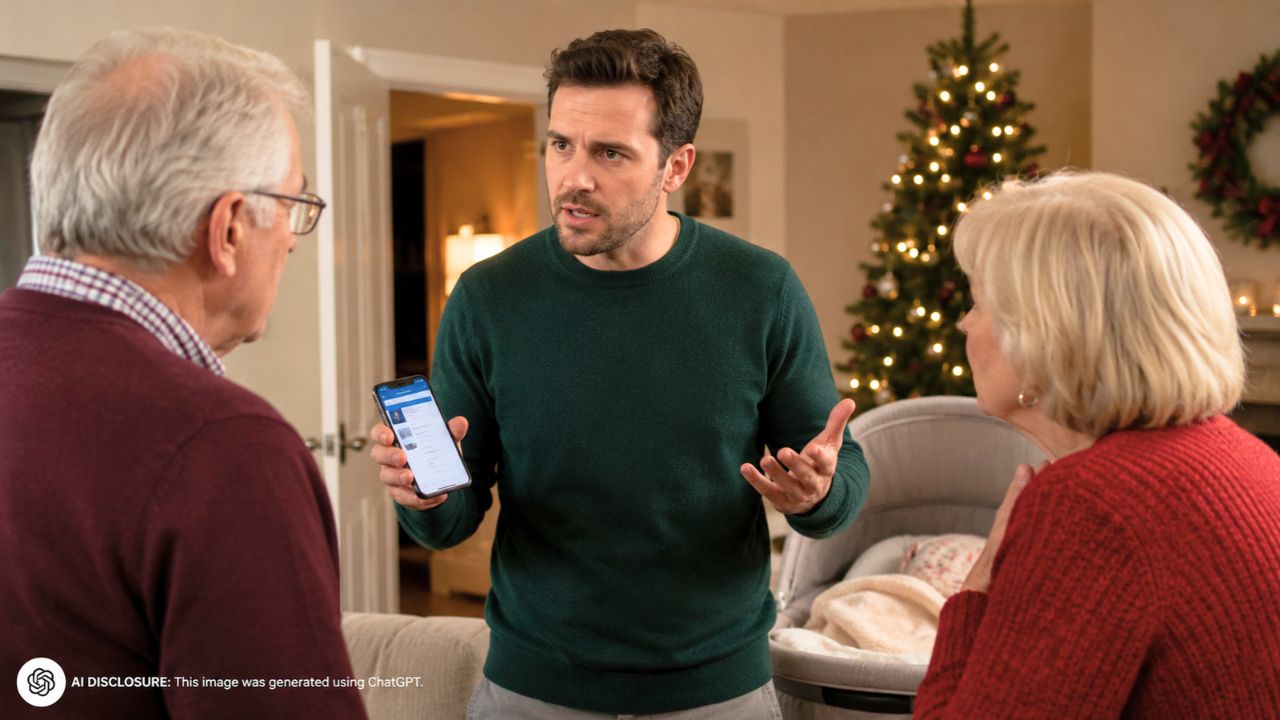
Photo credit: AI-generated image created using ChatGPT. Illustrative only.
Three weeks before Christmas, a first-time mom-to-be realized her holiday plans weren’t just being discussed without her—they were being locked in. With a due date in early December and a delivery window stretching from late November to as late as December 21, she and her husband were trying to keep expectations flexible, not formalized.
Then her mother-in-law booked a private room at a “very fancy restaurant” for Christmas Eve and started emailing her husband and her own mother to coordinate it. The pregnant woman wasn’t included, even though the reservation was supposedly for her, her husband, their newborn, her in-laws, and her parents, as described in the original post.
The reservation that assumed a baby would be ready for a night out
The plan wasn’t casual: a private dining room, a set holiday date, and an expectation that a brand-new baby could simply be brought along. The mother-in-law framed it as “her year” for Christmas, referencing an alternating tradition between the couple’s families.
The problem was timing. The baby could arrive days before Christmas, or not even be born yet. And even in the best-case scenario, the mom could be anywhere from one to four weeks postpartum—still healing, still adjusting, and likely running on little sleep.
Instead of asking what the new parents felt capable of, the older couple’s dinner plan treated attendance like a given. When the husband pushed back, his mother responded that the private room solved everything because “the infant” could attend too.
He said no, and that’s when the pressure kicked in
The husband, in his wife’s telling, has gotten much better at setting boundaries. He told his parents clearly that they likely wouldn’t attend due to the baby’s arrival and the uncertainty around recovery and newborn care.
That boundary didn’t end the conversation—it escalated it. The mother-in-law continued to press for the Christmas Eve dinner and argued that, because she and her husband are in their late 70s to 80s, the family should prioritize being together for major holidays while they’re still able.
It wasn’t just about one meal. It was an attempt to define what the holiday would look like before the new parents had even gotten through the birth. The couple offered an alternative: meeting the baby for a couple of hours on Christmas Day instead.
Even that compromise didn’t satisfy the mother-in-law. She kept pushing for the more formal plan, a move that left the pregnant woman feeling like she was being cornered into a scenario she didn’t agree to.
Being left off the emails made it feel even more personal
One detail stung in a way that went beyond logistics: the mother-in-law had been emailing the husband and the pregnant woman’s own mother, but not the pregnant woman herself. On paper, that could be framed as “giving her space.” In reality, it made her feel excluded from decisions about her own postpartum period and her own child.
She wasn’t sure if the omission was meant to reduce her stress or to avoid having to deal with her directly. But it had the opposite effect—she felt more anxious watching plans get made around her, especially with a history of conflict.
That history matters here. She said her mother-in-law has “historically antagonized and vilified” her. Because of that pattern, both her husband and her own mom advised her to stay out of direct communication so the mother-in-law couldn’t turn it into another round of blame.
So the couple’s current strategy has been to let the husband handle the pushback. The issue is that the pushing hasn’t stopped, and the pregnant woman is now wondering whether stepping in herself is the only way to make the boundary stick.
The real stakes: postpartum recovery, germs, and a public holiday setting
A Christmas Eve dinner at a restaurant isn’t just inconvenient when you’re newly postpartum—it can be physically unrealistic. The first month after birth can involve pain, bleeding, breastfeeding challenges, stitches, sleep deprivation, and the basic reality that leaving the house with a newborn is rarely smooth.
There’s also the question of health exposure. Holiday dining means busy parking lots, staff moving in and out, and people circulating through the same building. Even with a private room, the family would still be in a public setting at a time when many parents try to minimize contact for newborns.
The mother-in-law’s argument—private room equals problem solved—didn’t match how the expecting mom saw it. In her mind, privacy doesn’t erase the pressure of dressing, traveling, feeding, and soothing a newborn on a schedule built for adults.
And the emotional piece is heavy too. When someone “books first” and then argues later, it shifts the burden onto the couple to either comply or be cast as the ones ruining the holiday. That dynamic is exactly what the expecting mom seemed to be fighting against.
Commenters were blunt: a boundary isn’t a boundary if it can be negotiated
The post was labeled “Not the A-hole,” and the feedback centered on something practical: it’s not unreasonable to skip a formal holiday dinner when you’re due any day or newly postpartum. Many readers treated the reservation as the in-laws’ choice—and therefore their risk—rather than an obligation the couple needed to absorb.
People also zeroed in on the communication tactic. Leaving the pregnant woman out of planning emails while scheduling her presence was seen as a control move, not a courtesy. To commenters, the clean fix was to stop debating the details and give a firm answer: they wouldn’t commit to Christmas Eve, and any visit would depend on how mom and baby were doing.
Another theme was consequence. If the mother-in-law chose to keep the reservation anyway, that was on her. The couple didn’t need to “make it worth it” by showing up, especially when the decision was made without their input.
And while the expecting mom wondered whether she should email her mother-in-law directly, the general tone favored keeping the husband as the messenger—precisely because the mother-in-law has a track record of blaming her. Commenters tended to see that as a trap: the minute she engages, the conflict becomes “her fault” again.
Where it’s left: a baby coming soon, and a holiday plan still hanging
The couple has already offered what they can realistically handle: a short Christmas Day visit so the grandparents can meet the baby. But the mother-in-law’s insistence on the Christmas Eve dinner keeps the pressure on, and the calendar isn’t slowing down.
For the expecting mom, the question isn’t just whether to attend—it’s how to stop the bulldozing without getting painted as the villain. She’s weighing whether to stay silent and let her husband enforce the boundary, or to speak up and risk becoming the target again.
Either way, the baby’s arrival will make the final call. And if there’s one thing this couple seems determined to protect, it’s the right to decide what their first holiday as parents actually looks like—without a reservation making the decision for them.
Check out more from Now Rundown:
- A Party of 12 Came Back a Month Later Demanding Their $80 Tip Refunded — My Restaurant Made Me Pay It
- Her Coworker Kept Filing the Same Complaint About Her After Being Warned — Then She Filed a Counter-Report With Every Email Documented
- Siblings Demanded Half of Their Sister’s $11 Million Inheritance — She Refused Because They Never Visited
- The Kid I Bullied in Middle School Just Interviewed for a Job on My Team — He Bombed It and I Didn’t Hire Him

Abbie Clark is the founder and editor of Now Rundown, covering the stories that hit households first—health, politics, insurance, home costs, scams, and the fine print people often learn too late.