
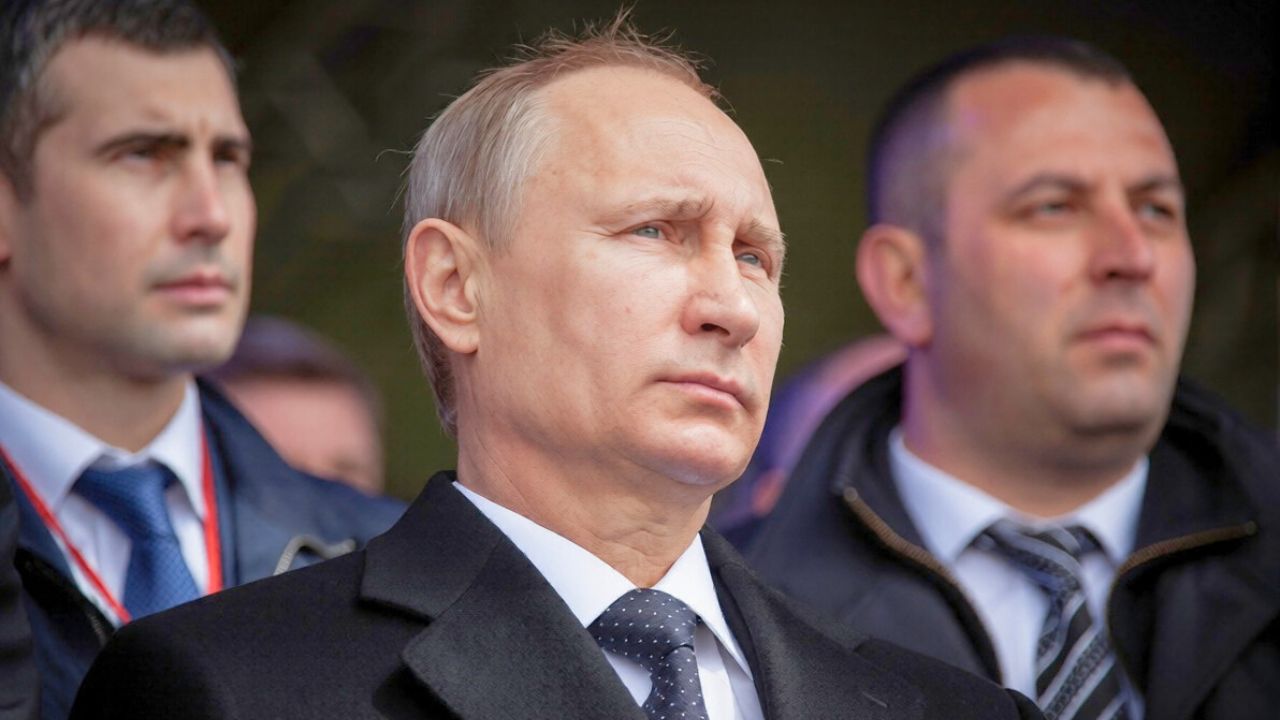
Russians feel Putin war pain as mobile internet goes dark nationwide
Photo credit: Sebastian Castelier/Shutterstock.com
Across Russia, the war that the Kremlin promised would be distant is now cutting directly into daily life, as mobile internet connections vanish without warning and entire regions are pushed offline. What began as targeted disruptions around military sites has widened into a rolling blackout that affects commuters, shopkeepers, students and soldiers’ families alike. The result is a new kind of wartime hardship, in which the pain of President Vladimir Putin’s campaign is measured not only in casualties and sanctions but in dropped calls, frozen apps and streets where navigation and payments suddenly stop working.
These shutdowns are no longer isolated glitches but part of a deliberate strategy to tighten information control and shield the home front from the realities of the battlefield. Officials frame the outages as a security necessity, yet the scale, frequency and growing legal architecture around them point to a broader project to build a digital curtain around the country. As mobile internet goes dark, Russians are discovering how deeply their lives depend on a network the state now treats as a battlefield tool.
The war comes home through a dead signal
The most immediate way Russians now feel the war is not through air raid sirens but through the spinning wheel on a smartphone that will not load. In cities far from the front, people report losing mobile data for hours or days, cutting off banking apps, ride hailing, food delivery and even basic messaging. Reporting has described how outages have forced residents to carry cash, abandon card payments and stay close to home where fixed connections are more reliable, a daily disruption that ties directly back to the Kremlin’s military choices and the need to shield critical infrastructure from Ukrainian strikes linked to mobile networks, as detailed in recent war coverage.
Officials insist these blackouts are temporary and targeted, but the pattern tells a different story. Since the first waves of disruptions, lawmakers and security agencies have moved to formalize their power to pull the plug, with the State Duma advancing legislation that would let the Federal Security Service, or FSB, order shutdowns across entire regions in the name of protecting the state. That bill, described by press freedom advocates as a step toward legalizing nationwide outages, is part of a broader push documented by press monitors to give security services sweeping control over connectivity.
From sporadic cuts to a nationwide pattern
What began as sporadic disruptions around sensitive facilities has evolved into a systematic policy that touches more than half of Russia’s regions. Investigations into regional outages describe how, since mid 2025, mobile internet shutdowns have swept across the country, often justified as measures to protect air defenses and oil refineries from Ukrainian drones but implemented in ways that also silence dissent and limit access to independent news. One detailed account of life under these conditions notes that residents are forced to move “from Wi Fi to Wi Fi,” hunting for rare pockets of connectivity while authorities quietly expand so called whitelists of approved sites, a pattern laid out in depth by regional reporting.
By late 2025, the constant cuts had become a defining feature of wartime life. Accounts from major cities describe how mobile data can vanish for hours without explanation, leaving commuters unable to pay for public transport or navigate with mapping apps and forcing businesses to improvise offline workarounds. One extensive report on these disruptions notes that the repeated outages are now one of the clearest ways the population experiences the long conflict, as people lose access to services that residents of other countries take for granted, a trend captured in detail by foreign correspondents.
Everyday life under rolling blackouts
For ordinary Russians, the technical language of “traffic filtering” and “network management” translates into missed doctor appointments, stalled deliveries and anxious waits for news from the front. Residents describe how banking apps fail at supermarket checkouts, taxi services stop mid route and parents cannot reach children when school messaging platforms go offline. One widely cited account from TALLINN, Estonia, based on interviews with people inside the country, recounts how cellphone internet outages have disrupted daily life across Russia, with users suddenly unable to access popular apps that underpin everything from payments to social contact, as documented in detail by wire reports.
The frustration is not limited to big cities. The Associated Press has described how widespread cellphone internet shutdowns in Russia began in May and persisted through summer and into the autumn, affecting regions far from the front and compounding the economic and psychological strain of the war. Those reports, based on interviews and data, show that outages have become a routine part of life, with people learning to anticipate dead zones and adjust their routines accordingly, a pattern that analysts at one conflict research group summarized using the phrase “widespread cellphone internet shutdowns” in their summary.
Legal tools for a digital clampdown
As the outages spread, lawmakers have moved to give security agencies explicit authority to shut down the internet in the name of national defense. A bill advanced in the State Duma would allow the FSB to order providers to cut access or throttle traffic across entire regions, with minimal transparency and limited judicial oversight. The Committee to Protect Journalists has warned that this proposal is not only an attempt to legalize nationwide shutdowns but a deliberate step toward further isolating the country’s online space, a concern spelled out in a detailed statement that is accessible through their analysis.
Another passage of that same statement highlights how the bill would entrench control by linking shutdown powers to the promotion of a government backed messaging app called Max, effectively steering users toward platforms that authorities can more easily monitor. The organization’s Europe and Central Asia program coordinator warned that “this bill is not only an attempt to legalize nationwide internet shutdowns, but a deliberate step toward further isolating internet users and forcing them onto the government backed messaging app Max,” a line quoted directly in a separate section of the same document that can be found via this link.
Counting the shutdowns and the economic cost
Behind the individual stories lies a staggering set of numbers that show how aggressively the state is wielding its new powers. One comprehensive tally found that Russia recorded nearly 12,000 internet shutdowns between May 2025 and the end of that year, with The Nizhny Novgorod region topping the list by days with shutdowns at 202, followed by the Rostov region with 200 and Moscow with slightly fewer days of disruption. A separate overview of 2025 restrictions notes that internet restrictions in Russia began in May 2025 and became a regular occurrence, with In June alone there were 655 shutdown incidents recorded across the country.
The economic fallout is equally stark. One analysis of state ordered blackouts calculated that Russia lost close to 12 billion dollars in economic activity in 2025 because of these disruptions, a figure that underscores how the leadership is willing to sacrifice growth for control. That same report described the emerging regime as a “16 kilobyte curtain,” a reference to the painfully slow speeds that remain when most traffic is blocked, a phrase that appears in a detailed breakdown of how Russia lost close to 12 billion dollars in internet blackouts that can be accessed via this analysis.
Regions on the front line of disconnection
Some regions have become laboratories for the most extreme forms of shutdown. The Ulyanovsk region in central Russia, for example, has been singled out as the first in the country to officially suspend access to mobile Internet indefinitely, a move that turned a temporary wartime measure into a semi permanent condition. A detailed report on that decision notes that The Ulyanovsk authorities framed the step as necessary to protect critical infrastructure, but residents quickly found themselves cut off from services that had become essential to modern life, a development chronicled in coverage that can be reached through this account.
Residents themselves describe the human cost in stark terms. In the Volga River city of Ulyanovsk, one woman told reporters that “the loss of information, the loss of freedom, essentially, is the most depressing thing for me,” capturing how a technical measure feels like a personal confinement. That quote comes from a broader feature on how outages have drawn angry and sarcastic comments across social media, as people in Ulyanovsk and other cities vent about being unable to use navigation, banking or messaging apps, a mood captured in the story available via this link.
Digital sovereignty and the “iron curtain” strategy
Behind the legal changes and regional experiments lies a broader doctrine that Russian officials describe as “digital sovereignty.” Rather than investing in a competitive technology sector that can thrive in an open global internet, the Kremlin is choosing to construct a controlled national network that can be isolated at will. One policy analysis argues that Instead of building a strong national IT sector, the Kremlin is choosing the path of constructing a digital iron curtain that isolates the country from the outside world and centralizes control over information flows, a critique laid out in detail in a paper accessible via this analysis.
That strategy is visible in the campaign against virtual private networks, or VPNs, which many Russians use to bypass blocks and access foreign news or banned platforms. Thanks to the passing of Government Decree No 1667 in late October 2025, the regulator Roskomnadzor is now capable of blocking content directly at the level of individual applications and services, rather than relying solely on internet service providers. A detailed technology report explains how this decree has given Roskomnadzor new tools to disrupt VPNs and remove them from app stores, tightening the noose around digital workarounds, a development described in depth at this link.
Russia as a global leader in internet cuts
On a global scale, Russia has become one of the most aggressive users of internet shutdowns as a tool of state policy. One data driven investigation concluded that Russia Cuts the Internet More Than Any Country on Earth in 2025, Far Beyond Iran or Venezuela, highlighting how the number and duration of its disruptions outstripped those of other authoritarian states. That finding is part of a broader series on digital repression that can be explored through the report hosted by UNITED24 Media, which is accessible via this link.
Another analysis framed the 2025 blackout campaign as a “Blackout” that cost the country 12 billion dollars and represented a major hit to the Russian economy, underscoring how unusual it is for a state to impose such costly restrictions on its own digital infrastructure. That piece, which described the shutdown as Putin’s 12 Billion Internet Shutdown Strikes Russia, emphasized how the leadership appears willing to accept long term damage to competitiveness in exchange for short term control, a tradeoff explored in detail in the article available via this analysis.
Public resignation, quiet resistance
Despite the scale of the disruption, the public response has often been muted, shaped by years of propaganda and the risks of open protest. One feature on wartime attitudes described how Russians confront internet cuts with a kind of public shrug, accepting the outages as another sacrifice demanded by the conflict even as they grumble in private. That account noted that the constant cuts in mobile internet are now one of the clearest ways Russia’s population is feeling the effects of nearly four years of full scale war, a dynamic described in detail in a report accessible via this link.
At the same time, many people quietly look for ways around the restrictions, installing VPNs, sharing offline copies of news articles and coordinating via less monitored platforms. A detailed study of how Russians evade censorship notes that Since May 2025, mobile internet shutdowns have rolled across more than half of Russia’s regions, from border areas to places far from the front, often lasting days or weeks, yet users continue to find technical and social workarounds. That pattern of adaptation and low level resistance is explored in depth in a report that can be accessed via this analysis.


