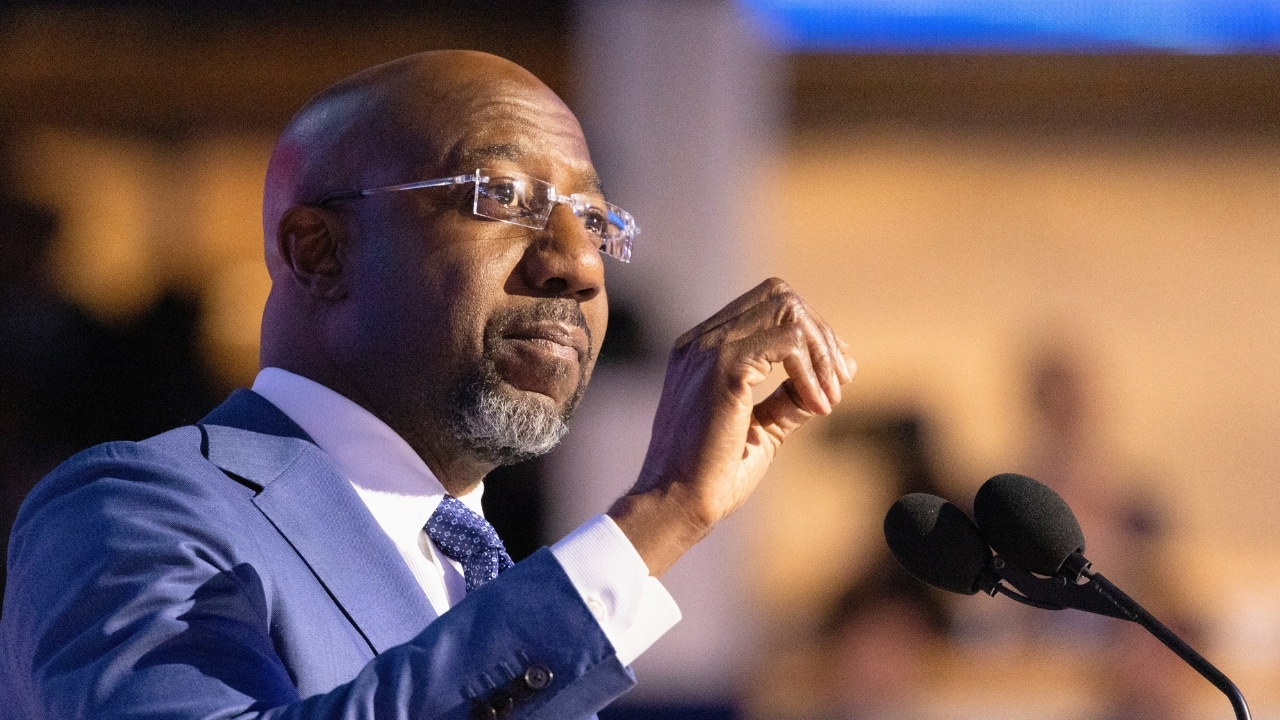
“The Trump-Vance regime majors in cruelty,” Warnock says, as he escalates multi-front attack on the administration
Photo credit: Maxim Elramsisy/Shutterstock.com
WASHINGTON — Sen. Raphael Warnock is escalating his criticism of the Trump-Vance administration, accusing it of embracing “cruelty” as a governing strategy as Democrats intensify their attacks on immigration enforcement, economic messaging and cultural policy in the early weeks of the new term.
The Trump-Vance regime majors in cruelty. We must fight this kind of vicious cruelty and its corrosive impact on the soul of our nation.https://t.co/bBCVKRDyOr
— Senator Reverend Raphael Warnock (@SenatorWarnock) February 6, 2026
“The Trump-Vance regime majors in cruelty. We must fight this kind of vicious cruelty and its corrosive impact on the soul of our nation.” — Sen. Raphael Warnock
Warnock, a Georgia Democrat and senior pastor at Ebenezer Baptist Church, posted the message as social media users and advocacy groups circulated reports about a contested asylum case involving a young child and a push by federal officials to narrow or terminate certain claims. The specifics being debated have varied across commentary and reporting, but the episode has become a flashpoint for critics who argue the administration is using high-profile cases to project deterrence. Supporters of the administration have argued that stricter enforcement is necessary to reduce fraudulent claims and restore order at the border.
The senator’s language placed the dispute in moral terms rather than procedural ones. “Cruelty,” in his framing, is not an unintended consequence but a defining feature of the administration’s approach.
Warnock’s post was not isolated. In earlier messages, he pressed a separate critique aimed at the administration’s economic narrative and its posture toward Black History Month, part of a series that suggests a broader Democratic push to cast the administration as punitive and indifferent to the consequences of its policies.
In one post, Warnock said he questioned Treasury Secretary Scott Bessent about manufacturing job losses since what he called “liberation day,” asserting the answer was 72,000 and arguing that “freedom” that leaves people unemployed is “a curious kind of freedom.”
I asked Scott Bessent how many manufacturing jobs we've lost since liberation day.
— Senator Reverend Raphael Warnock (@SenatorWarnock) February 5, 2026
The answer: 72,000.
I would submit that it's a curious kind of freedom that leaves you unemployed. pic.twitter.com/6UeP8h38Qw
“I asked Scott Bessent how many manufacturing jobs we’ve lost since liberation day. The answer: 72,000. I would submit that it’s a curious kind of freedom that leaves you unemployed.” — Sen. Raphael Warnock
In another, Warnock accused the administration of “erasing” Black History Month while claiming to celebrate it, as online debate has intensified over changes to agency language, public materials and references to civil rights history.
This administration is celebrating Black History Month by erasing it. We won't let them get away with it. https://t.co/AGWKl8GyxS
— Senator Reverend Raphael Warnock (@SenatorWarnock) February 5, 2026
“This administration is celebrating Black History Month by erasing it. We won’t let them get away with it.” — Sen. Raphael Warnock
Taken together, the posts reflect a strategy Democrats have used in past clashes over immigration and cultural issues: elevate a case with emotional resonance, tie it to broader themes about values and governance, and force the White House to defend not only policy choices but the tone and intent behind them.
The administration has defended its approach to immigration as a necessary response to what it describes as years of lax enforcement and rising caseloads, and has argued that stricter rules are required to deter unlawful entry and speed processing. Democrats have countered that the measures sweep too broadly and risk harming vulnerable families, including children, while shifting the burden onto courts and local communities.
The dispute is likely to intensify as lawmakers and outside groups press for more details about the underlying immigration case and as additional court filings and public statements clarify what federal officials are seeking. At the same time, Warnock’s economic claim and the administration’s handling of Black History Month are likely to draw separate scrutiny, including challenges to the job-loss figure and questions over what specific changes prompted his accusation of “erasing” history.