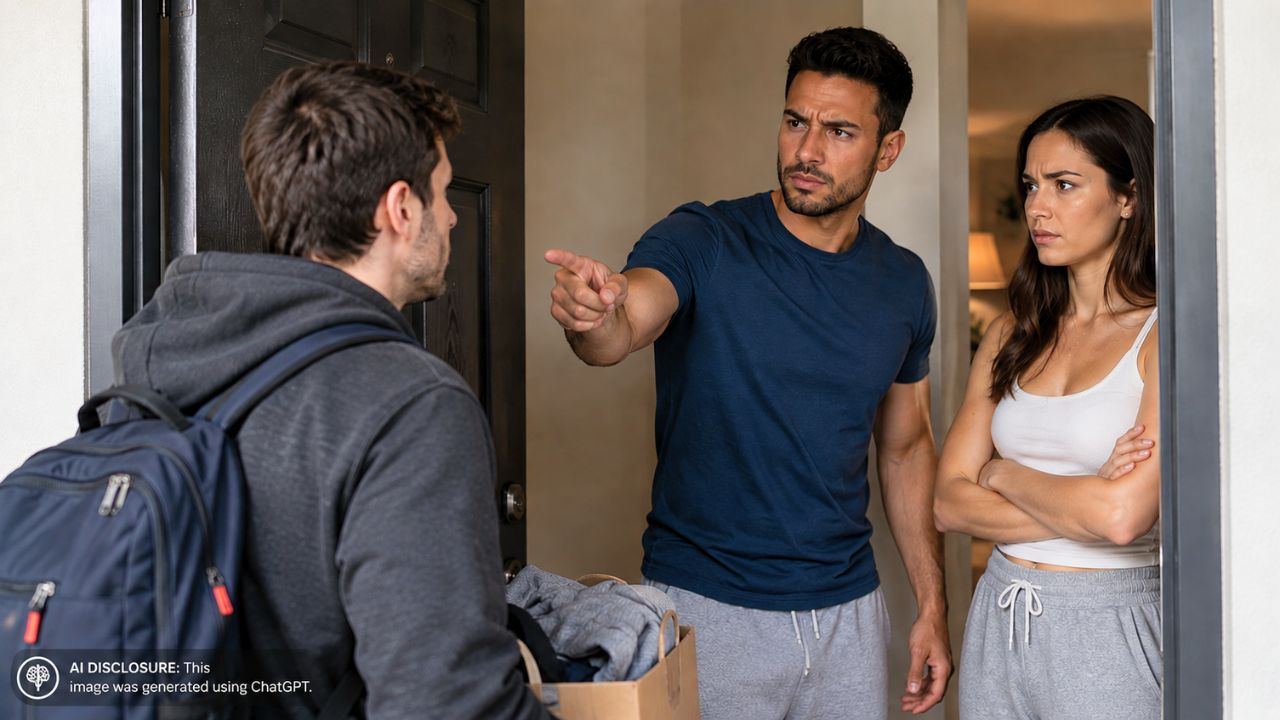
Roommate Kicked Out a Financially Struggling Friend Who Caused Problems for Him and His Girlfriend — The Friend Was Later Arrested for Selling Stolen Items
Photo credit: AI-generated image created using ChatGPT. Illustrative only.
When expensive gear started disappearing from a small Hong Kong apartment, the first instinct wasn’t to call the police—it was to assume it was a mistake. A filmmaker who runs a small production agency said he and his girlfriend kept trying to give their houseguest the benefit of the doubt, even as the losses piled up.
But after installing cameras and catching what he described as undeniable footage, the filmmaker said he contacted authorities, and the friend he’d taken in during a rough patch was arrested. The full account was shared in the original post, framed around one question: was it wrong to kick someone out when they were financially struggling, even if they’d caused major problems at home?
Letting a friend stay “for a few months”
The filmmaker said he lives with his girlfriend in a four-room apartment: a main bedroom for them, plus an office room, an equipment room, and a spare guest room. That extra space made it possible to say yes when a friend—he called him Carl—asked for a place to land.
Carl, he wrote, had lost his job nine months earlier and told him he was struggling. The offer came with minimal pressure: stay for a few months, and don’t worry about rent unless you can pay. It was framed as a lifeline, the kind of arrangement friends make when someone’s trying to get back on their feet.
For a while, it was just a shared apartment with one more person in it. Then the weird stuff started.
The missing items weren’t small—and they weren’t random
Over roughly three months, the filmmaker said items began vanishing from the home. The list read like a nightmare for anyone who makes a living off equipment: two lenses, three wireless audio microphones, various cables, and two vintage Hasselblad cameras.
At the same time, his girlfriend noticed her own things disappearing—makeup and jewelry. Taken together, it didn’t feel like normal clutter or misplacement, and it wasn’t limited to one person’s belongings. It looked like someone was systematically picking off valuables from different rooms.
They confronted Carl multiple times, he said. Each time, Carl denied taking anything and suggested other possible culprits: the filmmaker’s helper, crew members, or even the girlfriend’s colleagues. The couple didn’t buy it, but they also didn’t have proof. Not yet.
Cameras turned suspicion into a timeline
Instead of another argument, the filmmaker said he and his girlfriend decided to document what was happening. While Carl was out for a job interview, he set up small security cameras, connected them to Wi‑Fi, and configured the system to record to the cloud.
Later that day, with the cameras running, Carl came home and relaxed. Nothing seemed off on the surface, and the filmmaker said Carl didn’t appear to notice any new devices.
Then came a convenient opening: the filmmaker told Carl they needed to travel to China the next day for a two-day shoot and asked if he could stay alone in the apartment. Carl agreed. The couple left—but they didn’t go far. They stayed at a nearby hotel, with remote access to the live footage.
According to the post, it didn’t take long. Almost immediately after they were gone, Carl tried to open the equipment room, even though the filmmaker had changed the lock password.
What the footage allegedly showed
The cameras, he said, captured Carl going through drawers and cabinets. When he couldn’t get into the equipment room, he moved elsewhere—into the office. That’s where the story turns from suspicion to something much harder to explain away.
The filmmaker wrote that Carl took Tiffany bracelets and a necklace, plus one of his lenses from the desk. He put the items into his bag and eventually left the apartment with them.
For the couple watching from a hotel room, it wasn’t a vague “maybe.” It was the kind of moment that forces an immediate choice: confront him directly and risk escalation, or bring in authorities and preserve the evidence. The filmmaker said he called the police and showed them the footage.
A few hours later, Carl returned and acted confused about why police were there, according to the account. When officers reviewed the videos, Carl claimed it was “AI footage.”
The arrest and the messages on his phone
The filmmaker said the denial didn’t hold. After checking Carl’s phone, police allegedly found WhatsApp messages with buyers discussing purchases of the same items—sold for about 50% less than their original price. At that point, the filmmaker wrote, Carl was arrested.
The post didn’t specify what Carl was charged with, and the court date hadn’t been set. But the immediate consequence was clear: the friend who had been allowed to stay rent-free during unemployment was now facing the legal system for what the couple believed had been happening inside their home for months.
It also reframed the earlier losses. Those missing lenses, microphones, and vintage cameras weren’t just expensive; they were tools tied directly to the filmmaker’s work. In that light, the alleged theft wasn’t only personal—it threatened his ability to do his job.
Where people landed: “helping” versus protecting your home
In the filmmaker’s circle, not everyone agreed with how it played out. He said some friends thought he was wrong—an “asshole,” in his phrasing—for kicking out someone who was financially struggling, especially a friend. To them, the rough patch might have warranted more patience, more private handling, more chances.
But his girlfriend’s reaction was simpler: relief that he got caught. And in practical terms, the couple’s approach followed a clear sequence—confrontations first, then documentation, then police after they had video and a clear trail.
The details people focused on weren’t abstract. They were concrete: install cameras, use cloud recording, change lock codes, don’t leave valuables accessible, and involve authorities once you have proof rather than getting pulled into a shouting match. The “AI footage” claim, in particular, stood out as a moment that signaled Carl wasn’t just denying—he was trying to undermine the evidence itself.
Now, with a court date still pending, the filmmaker is left with a mess that’s both emotional and logistical: missing gear, violated trust, and the uncomfortable reality that the person they tried to help may have been using their home as a source of inventory to sell.
He didn’t describe what happens next in the apartment—whether locks were changed beyond the equipment room or what was recovered—only that his girlfriend is glad it’s over and he doesn’t believe he did anything wrong. In his version of events, kicking a friend out wasn’t the betrayal. Letting the theft continue would have been.
Check out more from Now Rundown:
- A Party of 12 Came Back a Month Later Demanding Their $80 Tip Refunded — My Restaurant Made Me Pay It
- Her Coworker Kept Filing the Same Complaint About Her After Being Warned — Then She Filed a Counter-Report With Every Email Documented
- Siblings Demanded Half of Their Sister’s $11 Million Inheritance — She Refused Because They Never Visited
- The Kid I Bullied in Middle School Just Interviewed for a Job on My Team — He Bombed It and I Didn’t Hire Him

Abbie Clark is the founder and editor of Now Rundown, covering the stories that hit households first—health, politics, insurance, home costs, scams, and the fine print people often learn too late.