Roommate Demanded Rent the Moment It Was a Single Day Late — Then Got Accused of Having No Compassion for Emergencies
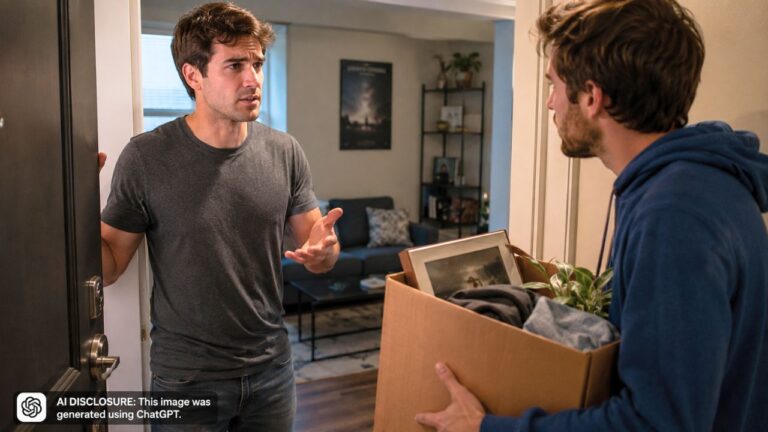
Photo credit: AI-generated image created using ChatGPT. Illustrative only
When one roommate volunteers to be the “rent person,” they’re usually doing everyone a favor. But it also means they’re the one on the hook if anything goes sideways—especially when the rent is set to autopay in full from their own bank account.
That’s the bind one tenant described in the original post, after months of chasing down one roommate for money that was supposed to be routine. The question wasn’t whether rent should be paid. It was whether it was wrong to request it mid-month after realizing it hadn’t been paid at all.
They handled the lease logistics—and took on the risk
The tenant explaining the issue said they’re in charge of the account used to pay rent. Their bank information is attached, and the system requires the full rent amount to be paid each month. To keep things simple, they set the rent to autopay.
In theory, that setup should make the household run smoothly: rent comes out on time, and the roommates reimburse their shares. In practice, it meant the person managing the account had zero wiggle room if a roommate decided to stall.
One roommate paid like clockwork. The other had to be chased
According to the post, one roommate reliably pays every month without any drama. The other roommate, though, reportedly doesn’t pay unless specifically asked—and even then, payment can take a few days.
The frustrating part is that the math never changes. Rent is always the same amount, so it’s not like the roommate needs a new number each month. Still, the tenant said they’d been willing to nudge and request the money, as long as it eventually came through.
That tolerance worked when the delays were short. What changed was the pattern—and how long the money stayed outstanding.
Two months turned into a quiet pileup of unpaid rent and utilities
The tenant said that for the last two months, the slow-paying roommate hadn’t paid at all. It wasn’t an argument on the first or a late-night blowup. It was worse in a different way: the tenant simply noticed, mid-month, that the money never arrived.
On the 15th, they requested rent and utilities because it had “escaped” their notice that the roommate hadn’t paid. That detail matters. This wasn’t a scheme to charge early or ambush someone; it was a catch-up request after realizing the payment never happened.
They said they reminded the roommate several times through the payment app. The following month played out similarly. They requested rent three days before posting, sent reminders, and even texted. This time, there was no response at all.
Autopay meant the consequences landed on one person
With autopay pulling the full amount from the tenant’s bank account, the roommate’s delay wasn’t just annoying—it potentially shifted the financial burden onto the person who happened to manage the payment system.
That’s the real stakes underneath the question they asked. If the roommate doesn’t pay, the tenant can’t simply “wait it out” without taking on risk: overdraft issues, late fees if autopay fails, or the anxiety of watching their own account absorb someone else’s share.
In many shared housing setups, the person paying the landlord is also the one left to smooth things over when someone else is flaky. And once a roommate learns that rent still gets paid even when they stall, the behavior can become a habit.
The core question: is it wrong to request rent mid-month?
The tenant framed their dilemma simply: were they wrong for requesting rent “late,” in the middle of the month instead of on the 1st?
From their perspective, the request wasn’t “late” at all—rent was already late. They weren’t changing the rules or adding surprise fees. They were asking for money that should have already been sent and, in their mind, shouldn’t require a monthly prompt in the first place.
Still, the discomfort is familiar to anyone who’s had to collect money from a peer. The more you ask, the more you risk being painted as harsh, overly strict, or—especially when someone cites unexpected problems—unsympathetic to emergencies.
Most reactions centered on accountability and a paper trail
The post included the judgment “Not the A-hole,” signaling that readers largely sided with the tenant who was trying to get reimbursed. The theme running through that kind of reaction is usually straightforward: if someone owes rent, they owe rent, and failing to communicate is what pushes it from “life happened” into “taking advantage.”
What people tend to focus on in scenarios like this is the practical side: keep requests and reminders in writing, make sure amounts are clearly documented, and don’t rely on vague verbal agreements when real money is leaving one person’s bank account.
There’s also an unspoken line many roommates recognize: being understanding about a one-time emergency is different from absorbing silence. If a roommate can’t pay on time, most people expect a message—some acknowledgment, a date, a plan. Here, the tenant said they got none.
And when the rent payer is the one whose account is attached to the lease payment method, commenters often urge them to protect themselves first, because the landlord and payment system won’t care which roommate caused the shortfall.
The standoff in this household wasn’t about a single day. It was about a pattern of nonpayment, delayed responses, and the imbalance created when one person’s finances are used as the buffer for everyone else. If the roommate continues not paying—and not responding—the next step stops being a moral question and becomes a logistical one: how long can one person float the apartment before something breaks?

Abbie Clark is the founder and editor of Now Rundown, covering the stories that hit households first—health, politics, insurance, home costs, scams, and the fine print people often learn too late.