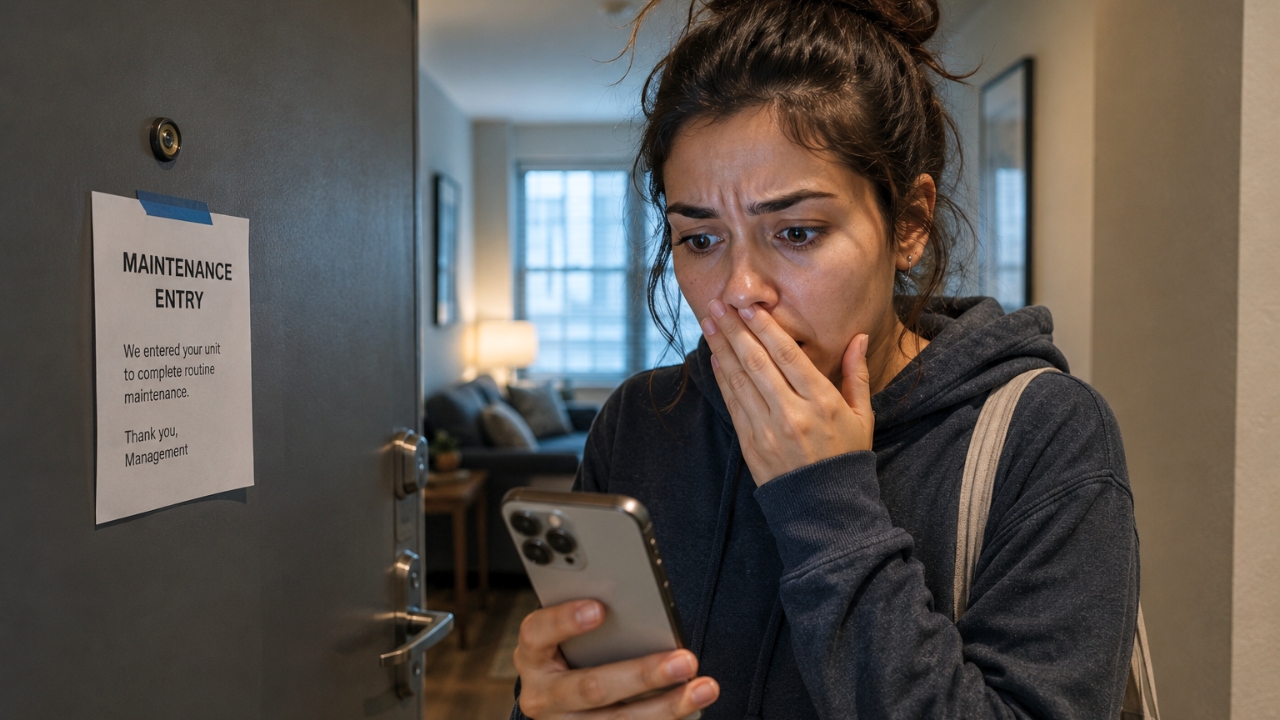
Renter Says Neighbor Mentioned the Landlord Entered Her Apartment — Then She Realized Nobody Had Told Her
Photo credit: Now Rundown
A renter said she only found out her landlord had entered her apartment while she was at work because a neighbor casually mentioned seeing it happen.
The renter shared the situation in a post on r/legaladvice, explaining that she had been away from home when the landlord allegedly went into her apartment. According to the renter, she had not received advance notice, had not agreed to the entry, and had not been told afterward that anyone had gone inside.
The discovery came from someone else entirely.
The neighbor apparently mentioned that the landlord had entered the apartment, which immediately raised questions for the renter. If the neighbor had not said anything, she may never have known someone had been inside her home.
That detail made the situation feel more unsettling than a normal maintenance visit. A tenant may understand that a landlord sometimes needs access for repairs, inspections, emergencies, or other legitimate reasons. But notice matters. So does transparency. When a tenant comes home and learns from a neighbor that the landlord entered while they were gone, it can make the apartment feel less private and less secure.
The renter’s concern was not only about whether the landlord had a legal reason to enter. It was about the way it happened. There was no warning before the entry, no explanation afterward, and no clear emergency described in the post.
That left the renter trying to figure out what her rights were and what she should do next.
The situation also raised a practical problem: how could she prove it? The neighbor had mentioned seeing the landlord enter, but the renter did not describe having camera footage, a written admission, or a notice from the landlord. That put her in a difficult spot. She believed her home had been entered without proper notice, but she still needed a way to document it if the issue continued.
Unauthorized landlord entry can feel especially invasive because the landlord has access in a way most people do not. A stranger cannot normally walk through a locked apartment door. A landlord often can. That creates a power imbalance. The tenant has to trust that the person with the key will follow the lease and the law.
When that trust breaks, ordinary routines can start to feel different. A tenant may wonder if the landlord has entered before. They may check whether anything was moved. They may feel uneasy leaving personal items out, working long shifts, or being away for the day. Even if nothing was stolen or damaged, the feeling of privacy has already been shaken.
The renter wanted to know whether the entry was legal and what kind of response made sense. Should she confront the landlord? Put the concern in writing? Install a camera? Ask the neighbor to confirm what they saw? Contact a tenant-rights group? File a complaint?
Those questions mattered because the next move could affect the landlord-tenant relationship. A renter may not want to create conflict with the person who controls repairs, lease renewals, deposits, and housing stability. At the same time, ignoring an unauthorized entry could make it easier for it to happen again.
The post ended at that uneasy point where the renter knew enough to be concerned, but not enough to feel fully prepared.
Commenters focused on documentation. Several people told the renter to start by checking the lease and local landlord-tenant laws, especially the section about notice before entry. The rules can vary by location, but many leases and state laws require reasonable notice unless there is a true emergency.
Others suggested contacting the landlord in writing rather than starting with an emotional confrontation. A message could be simple: the renter had been told the landlord entered while she was away, she had not received notice, and she wanted to know the reason for the entry. That would force the landlord to either explain the situation or deny it.
Commenters also said the renter should save any response. If the landlord admitted entering without notice, that written message could matter later. If the landlord denied it, the renter would at least have started a record.
Some people recommended asking the neighbor, calmly, whether they would be willing to confirm what they saw. That could be useful if the landlord tried to claim nothing happened. But commenters also warned the renter not to put the neighbor in the middle more than necessary, especially if they still had to live nearby.
A common suggestion was to install a camera inside the apartment facing the entry door, if allowed. A small indoor camera could show whether anyone entered again while the renter was gone. Commenters said that kind of proof can be much stronger than suspicion or secondhand information.
Others suggested using a door wedge or portable security device while home, though that would only help when the renter was inside. It would not solve the concern about entry while she was at work.
There was also advice to keep the tone calm and factual. If the renter eventually needed to break a lease, file a complaint, or speak to a tenant-rights attorney, a clear paper trail would be more useful than a heated argument.
The renter’s situation did not end with a lawsuit, a police report, or a formal complaint. It ended with a tenant trying to understand what had happened inside her own apartment while she was gone.
That is what made the incident feel so uncomfortable. The landlord may have had a reason to enter, but the renter had not been told that reason. She learned about it from a neighbor, not from the person who had the key.
Commenters did not tell her to panic. They told her to document, ask in writing, check the law, and consider a camera if she wanted proof of future entries.
Because once a tenant finds out someone entered their apartment without notice, the issue is not only what happened that day. It is whether they can trust that it will not happen again.
Check out more from Now Rundown here.

Abbie Clark is the founder and editor of Now Rundown, covering the stories that hit households first—health, politics, insurance, home costs, scams, and the fine print people often learn too late.