
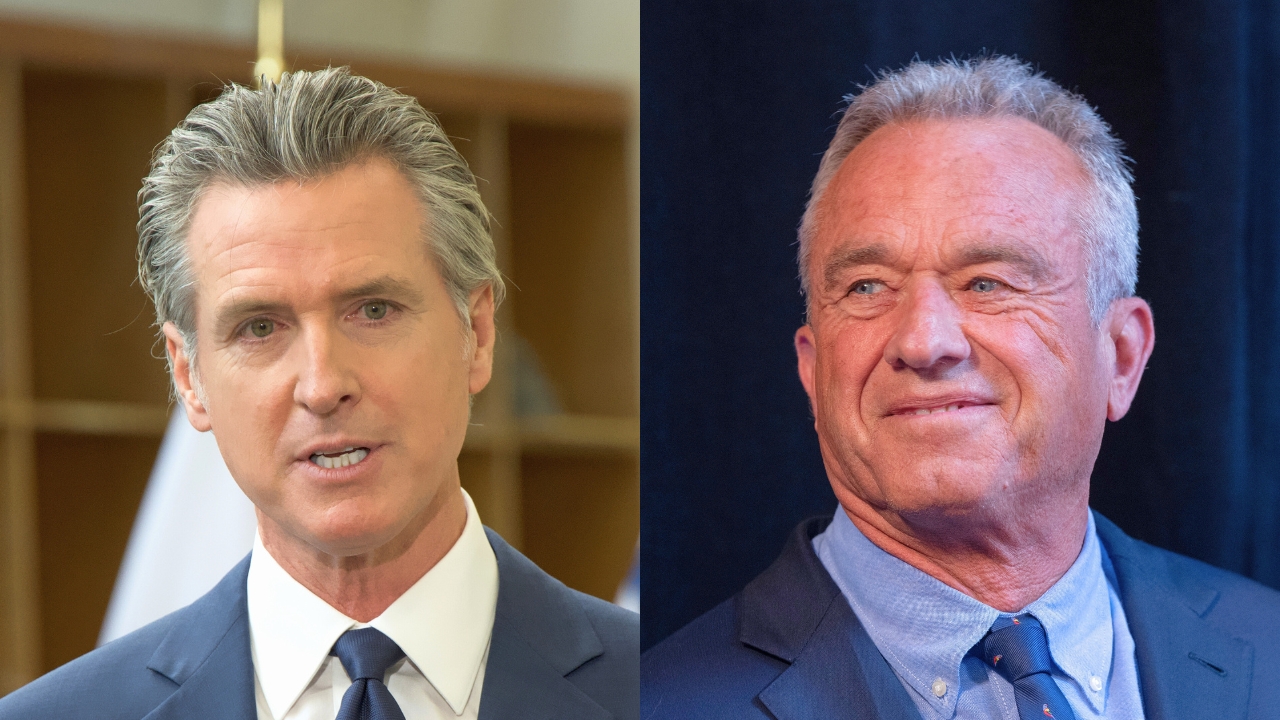
Newsom says RFK Jr. “illegally” removed 7 childhood vaccines — but the key question is what the CDC actually changed, and whether the process holds up in court
Photo credit: Sheila Fitzgerald and lev radin/ Shutterstock.com
California Gov. Gavin Newsom is escalating a growing legal fight over U.S. vaccine guidance, saying the state is helping lead a multi-state lawsuit against Health Secretary Robert F. Kennedy Jr. and the CDC for “illegally removing 7 childhood vaccines from the federal list of universally recommended shots.” In a post circulating online, Newsom framed the move as a direct threat to kids and said California and allied states aren’t waiting around.
What’s actually happening (and what “removed” means here)
This isn’t a ban, and it isn’t a claim that the vaccines no longer exist. The dispute is over CDC recommendation status—specifically, whether certain vaccines remain universally/routinely recommended for all children versus being shifted to “shared clinical decision-making” (more individualized) or limited to high-risk groups.
According to reporting on the policy shift, the CDC guidance was changed so that several vaccines are no longer recommended universally for all kids. The vaccines named across major coverage include influenza, rotavirus, hepatitis A, hepatitis B, meningococcal disease vaccines, RSV, and COVID-19 (the exact list varies by source summaries, but those are the recurring ones tied to the “seven” figure).
Did RFK Jr. “illegally” remove them?
Right now, “illegal” is an allegation, not a court finding.
The lawsuit from states argues the administration’s changes were unlawful on process grounds—generally: that the federal government didn’t follow required procedures for changing nationwide guidance, and that RFK Jr.’s overhaul of the CDC’s vaccine advisory structure (ACIP) was itself improper. Reuters reports the multistate suit also targets Kennedy’s replacement of ACIP members.
Separately, medical organizations have also sued, alleging violations of the Administrative Procedure Act and challenging how the new guidance and advisory processes were handled. Those cases were still in motion as of recent coverage.
So the cleanest, most accurate framing is: States and medical groups say the changes were unlawful; the administration says it had authority; courts haven’t settled it yet.
What was the stated reasoning for changing the recommendations?
The administration’s defense, as described in reporting, is that the new approach emphasizes individualized decision-making between families and clinicians, and that it better aligns U.S. policy with what it calls international standards in some cases. Reuters also describes the revised guidance as shifting away from universal recommendations toward parent-doctor decisions.
Supporters of the shift argue this is about choice, tailoring, and risk-based guidance rather than “one-size-fits-all.” Critics argue universal recommendations exist because they’re designed to keep population-level coverage high and prevent outbreaks—especially for diseases that spread easily in schools and daycare settings.
Why this is blowing up now
Two things are colliding at once:
- Big policy changes to the childhood schedule (and how they’re justified).
- A process legitimacy fight after major shake-ups around the advisory committee system that traditionally informs CDC recommendations.
That’s why this isn’t just a vaccine debate—it’s also a who-gets-to-set national medical guidance, and how debate.


