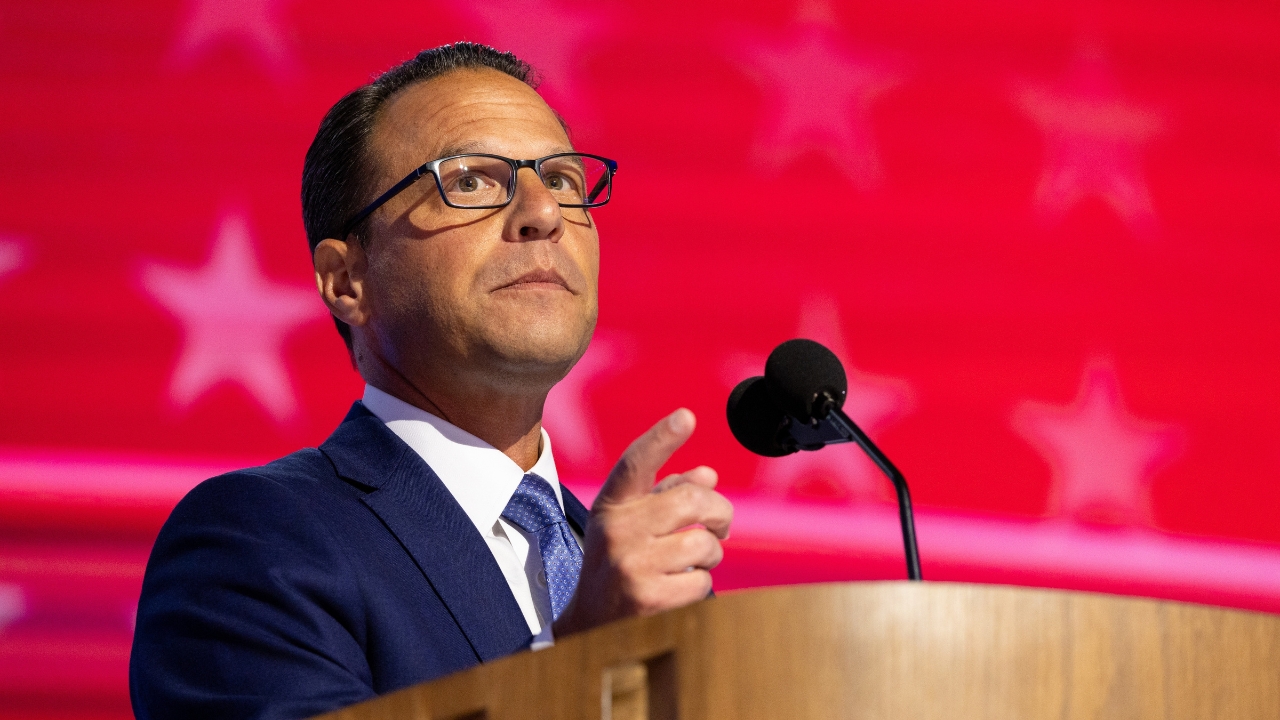
“I’m suing the Trump Administration…” Shapiro announces legal fight over CDC’s new childhood vaccine guidance — here’s what actually changed
Photo credit: Maxim Elramsisy/Shutterstock.com
Pennsylvania Gov. Josh Shapiro says he’s suing the Trump administration over what he calls an “illegal overhaul” of the CDC’s long-standing recommendations for children’s vaccinations, framing it as a public-health and trust issue — and accusing the White House and Health and Human Services Secretary Robert F. Kennedy Jr. of putting politics ahead of medical experts.
The lawsuit threat lands in the middle of a much bigger fight playing out nationally: the Trump administration says it has updated the CDC childhood immunization schedule to “align” the U.S. with peer countries, while critics say the move risks confusion, lower vaccination rates, and more outbreaks of preventable diseases.
What changed in the CDC schedule under the Trump administration?
HHS announced Jan. 5, 2026 that the CDC would continue using three categories for childhood vaccines:
- Recommended for all children
- Recommended for certain high-risk groups
- Based on shared clinical decision-making (SCDM)
In HHS’s announcement, the agency said the “recommended for all children” category would include vaccines protecting against MMR (measles, mumps, rubella), polio, pertussis/tetanus/diphtheria, Hib, pneumococcal disease, HPV, and varicella (chickenpox) — and that other shots would shift into the “high-risk” or “shared decision” buckets.
A legal/medical policy summary of the changes has specifically pointed to vaccines such as meningococcal ACWY, hepatitis B, seasonal influenza, and rotavirus moving out of the “recommended for all children” category into the other categories (high-risk or shared decision-making), which is a major reason clinicians and public-health leaders say the change could be confusing for families.
HHS also emphasized that vaccines on the schedule would remain available and that, under its framework, they would remain covered without cost-sharing.
So… did Trump “say vaccines were unnecessary”?
Based on the administration’s own written announcement, the argument wasn’t “vaccines are unnecessary.” It was: some vaccines should no longer be routinely recommended for every child, and instead should be targeted to risk groups or decided case-by-case between parents and clinicians.
HHS says the move followed an assessment comparing the U.S. schedule to other developed nations, alongside a stated goal of rebuilding trust and improving “informed consent.”
Why the administration says the change is good for the country
Supporters of the shift argue it could:
- Reduce confusion and improve compliance by focusing the “routine” list on what HHS calls the most serious diseases.
- Align the U.S. schedule more closely with peer nations, which HHS claims recommend fewer routine vaccines while maintaining strong child health outcomes.
- Increase parental trust by moving more decisions into doctor-parent conversations, rather than treating everything as one-size-fits-all.
Why critics say it’s bad — and why Shapiro is suing
Shapiro’s announcement frames the change as an “illegal overhaul” and says Pennsylvania will keep relying on outside pediatric experts — naming the American Academy of Pediatrics (AAP) — as it fights the policy.
More broadly, critics argue the change could:
- Lower vaccination uptake by signaling that certain shots are optional or less important, even if still available.
- Create chaos for doctors and schools that have relied on the CDC “routine” label as the default standard.
- Raise access and payment questions over time, especially if insurers or programs eventually tie coverage more tightly to what’s “routine” versus “shared decision.” (Some payer groups have said they’ll keep coverage in place through 2026, but concerns remain about longer-term knock-on effects.)