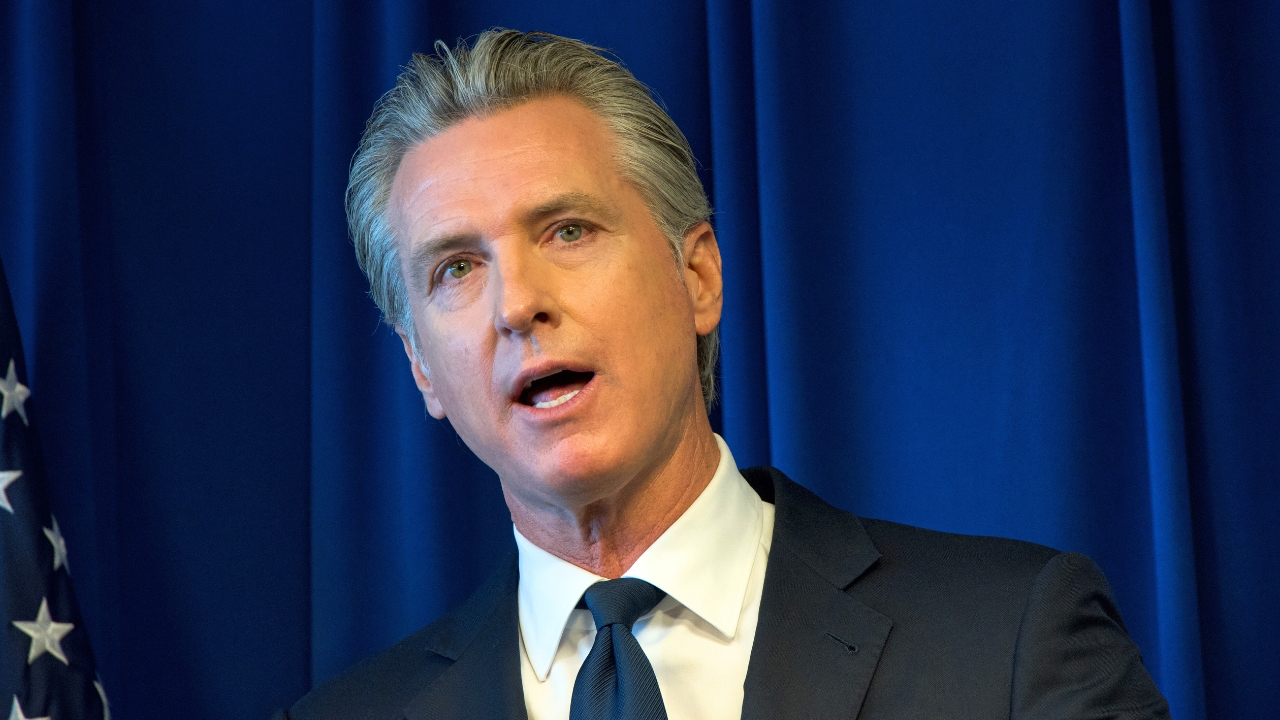
Newsom calls Trump a “weak, weak president” — and Trump allies try to flip the tariffs loss into a win
Photo credit: Sheila Fitzgerald/Shutterstock.com
California Gov. Gavin Newsom is calling President Donald Trump “a weak, weak president” after the Supreme Court’s 6–3 decision striking down Trump’s broad emergency tariffs — and the online reaction is exactly as loud as you’d expect.
In a video clip shared by Newsom, he argues Trump’s “weakness is now on display globally,” saying the tariffs were “the only card he had left,” and tying Trump’s broader economic posture to immigration enforcement and personal business interests. The clip was posted by Acyn and widely reposted as debate over the ruling spilled into social media.
The backdrop: The Supreme Court held that the International Emergency Economic Powers Act (IEEPA) does not authorize a president to impose tariffs, undercutting the legal foundation for Trump’s sweeping “emergency” tariff approach. The case, Learning Resources, Inc. v. Trump, became a referendum on how far the White House can stretch emergency economic powers to reshape trade policy without Congress.
The ruling Newsom is reacting to — in one sentence
The Court didn’t say “tariffs are unconstitutional” across the board. It said IEEPA isn’t a tariff power, and if presidents want to impose massive, economy-wide duties, they need clear authority from Congress — not a creative reading of emergency law.
That distinction matters because the administration is already signaling a fast pivot. Treasury Secretary Scott Bessent has argued the Court “did not rule against this Administration’s tariffs,” saying it only rejected using IEEPA “to raise revenue,” and promising to shift to other trade tools such as Sections 232, 301, and 122.
Why the clip is getting traction
Newsom’s message is designed for a moment like this: it turns a technical Supreme Court loss into a character indictment — “weak” leadership, a collapsing strategy, and a claim that the tariff push was more leverage play than coherent policy.
Supporters in the replies amplified the “Congress owns tariff power” argument and framed the decision as a check on executive overreach. Trump supporters and allies pushed back, arguing the ruling only closes one lane and that the White House still has multiple legal pathways to pressure trading partners.
And hovering over all of it is the real-world mess: importers, businesses, and lawyers are watching what happens next with refund claims and ongoing tariff collection, while the White House tests whether other statutes can replicate the same impact — at least temporarily.