Metals Manufacturer Paid $2.8 Million After Steering Women Into Lower-Paying Jobs While No-Experience Men’s Positions Paid More for Similar Work
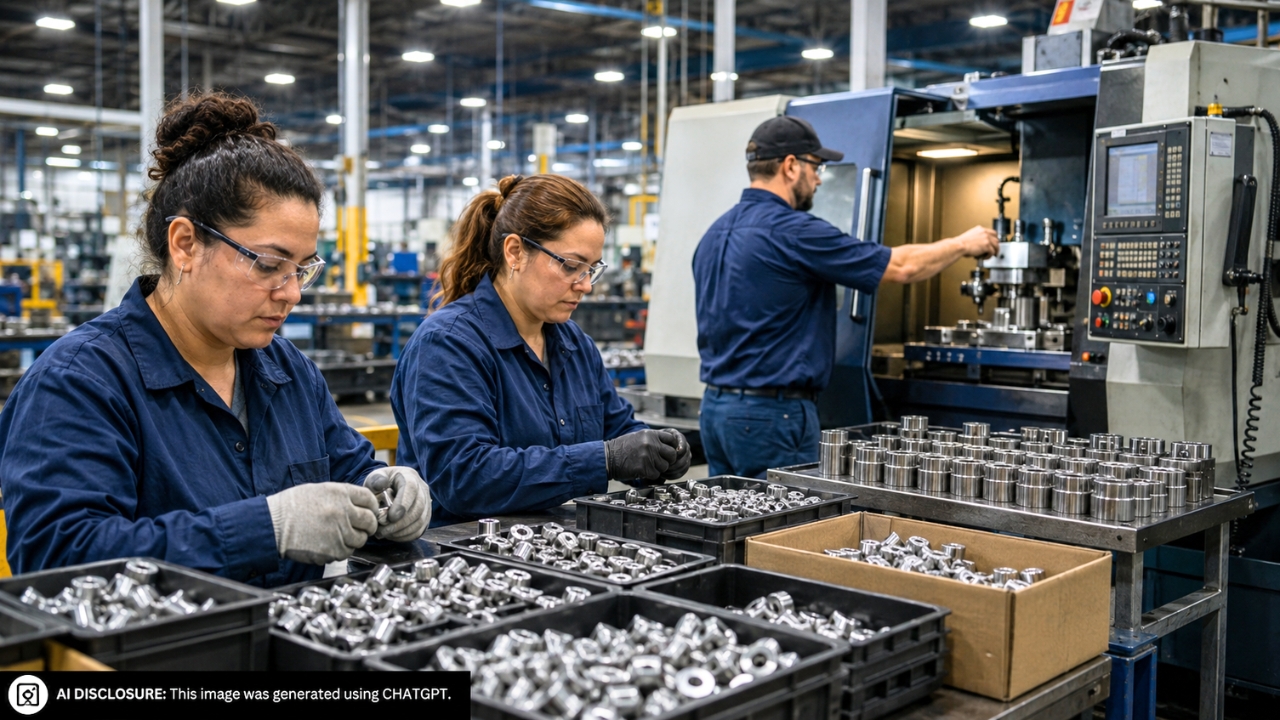
Photo credit: AI-generated image created using ChatGPT. Illustrative only.
A pay gap can hide in plain sight when everyone is busy keeping a factory moving. At LeachGarner’s Attleboro, Massachusetts facility, the U.S. Equal Employment Opportunity Commission says the pattern wasn’t subtle once you looked at where people were being placed—and what they were being paid for similar work.
Now the metallurgical manufacturer and supplier has agreed to pay $2.8 million to resolve a federal lawsuit accusing the company of steering women into lower-paying departments while men were funneled into higher-paying manufacturing roles that required no prior experience. The terms were announced in the EEOC’s press release.
Women ended up in the lower-paying departments
The EEOC’s suit described a long-running routine: female manufacturing employees were assigned to lower-paying jobs, while the better-paying manufacturing positions were held nearly exclusively by men. The agency said the pay difference wasn’t justified by skill barriers the way employers often argue in these cases.
In fact, the EEOC alleged the male-dominated positions required no prior experience and involved similar work. That detail matters, because it undercuts the usual explanation that one job “deserves” more pay because it requires special training or a rare certification.
The result, according to the lawsuit, was that women were effectively boxed into a lane with lower wages built in. Not because they couldn’t do the other roles, but because they weren’t being put there in the first place.
The hiring pipeline was part of the allegation
The complaint didn’t focus only on what happened after someone was hired. The EEOC also alleged LeachGarner told staffing agencies it preferred men for certain vacancies.
That’s the kind of behind-the-scenes directive that can shape an entire workplace without ever showing up in a job posting. If a staffing agency is nudged to send men for certain openings and women for others, the split can become self-reinforcing fast—especially in manufacturing, where departments and shifts can determine everything from overtime to promotions.
The EEOC framed the alleged practice as part of a broader pattern: women routed to lower-paying departments, men routed to higher-paying roles, and pay differences that followed the departmental divide even when the work was similar.
How it turned into a federal case
The agency brought the case under two major federal laws: Title VII of the Civil Rights Act of 1964 and the Equal Pay Act. Both prohibit sex-based discrimination, and the Equal Pay Act specifically targets paying employees differently for equal work based on sex.
The EEOC filed the lawsuit—EEOC v. LeachGarner d/b/a LeachGarner, a Berkshire Hathaway Company, Case No. 23-cv-11014—in the U.S. District Court for the District of Massachusetts. The agency said it first attempted to resolve the dispute through its conciliation process before filing in court.
EEOC officials used the settlement announcement to underline that pay discrimination hasn’t disappeared. “Pay discrimination against women continues to be a problem in some parts of the economy, and eliminating sex-based discrimination remains a priority for the EEOC,” said Kimberly Cruz, regional attorney of the EEOC’s New York District.
Acting EEOC General Counsel Catherine L. Eschbach also emphasized the agency’s position that pay and opportunities should be tied to merit rather than sex, saying the EEOC is committed to ensuring workers “have equal opportunity to compete for good jobs, and are paid based on their work and not their sex.”
The $2.8 million isn’t the only part that matters
The headline number is $2.8 million, and the press release says that money will go as “monetary relief to affected employees.” But the settlement also includes a three-year consent decree that forces changes inside the company—where the real day-to-day impact shows up.
Under the decree, LeachGarner must evaluate its hiring, job assignment, and compensation practices. It also must take steps to ensure those practices promote equal employment opportunity and are based on legitimate, job-related criteria.
The decree requires periodic reporting to the EEOC, which is the kind of accountability measure employees rarely get to see. It also requires the company to ensure internal policies require equal pay for equal work, and to conduct annual training on employee rights under Title VII and the Equal Pay Act.
Arlean Nieto, acting director of the EEOC’s New York District, put it bluntly: “Title VII and the EPA require equal pay for equal work. All employers should take steps to ensure that they are allowing men and women an equal chance to earn good wages.”
What people tend to focus on in cases like this
When a case revolves around “similar work” and department-based pay gaps, the practical questions usually come down to paper trails: job postings, staffing agency communications, pay records, and written descriptions of duties. That’s because employers often argue the jobs weren’t truly comparable, or that the pay difference had some neutral justification.
The EEOC’s allegations point to two things that typically matter a lot in these disputes: the “no prior experience” detail for the higher-paid roles, and the claim that women were routinely assigned elsewhere. If those claims are supported by documentation, it paints a picture of segregation by job assignment rather than a handful of one-off pay decisions.
The other pressure point is the pipeline. If staffing agencies were being told to prioritize men for certain openings, it suggests the sorting started before an employee ever had a chance to bid into better-paying work. That’s the kind of detail that can turn a pay complaint into a broader case about systemic access to jobs.
The tension doesn’t end when the check is written
For the workers who were affected, a settlement can bring overdue compensation, but it doesn’t rewind years of earning less or being tracked into lower-paying departments. It also doesn’t automatically rebuild trust on the floor, where employees watch who gets trained, who gets asked to cover a higher-paying role, and who gets tagged as “a good fit” for the jobs that lead somewhere.
For LeachGarner, the agreement locks in three years of oversight-style requirements: evaluations, policy commitments, reporting, and annual training. That’s a long stretch in a manufacturing environment where staffing needs shift, turnover happens, and “how we’ve always done it” can creep back in unless the changes stick.
The EEOC’s announcement makes clear what the agency expects next: job assignments and pay that follow job-related criteria, not gender. The next chapter, for the people working there, is whether the company’s day-to-day decisions start matching what’s now on paper.
Check out more from Now Rundown:
- A Party of 12 Came Back a Month Later Demanding Their $80 Tip Refunded — My Restaurant Made Me Pay It
- Her Coworker Kept Filing the Same Complaint About Her After Being Warned — Then She Filed a Counter-Report With Every Email Documented
- Siblings Demanded Half of Their Sister’s $11 Million Inheritance — She Refused Because They Never Visited
- The Kid I Bullied in Middle School Just Interviewed for a Job on My Team — He Bombed It and I Didn’t Hire Him

Abbie Clark is the founder and editor of Now Rundown, covering the stories that hit households first—health, politics, insurance, home costs, scams, and the fine print people often learn too late.