Man Ended a Five-Year Relationship Over His Girlfriend’s Refusal to Address Her Spoiled Daughter’s Behavior Despite Him Paying for Family Therapy
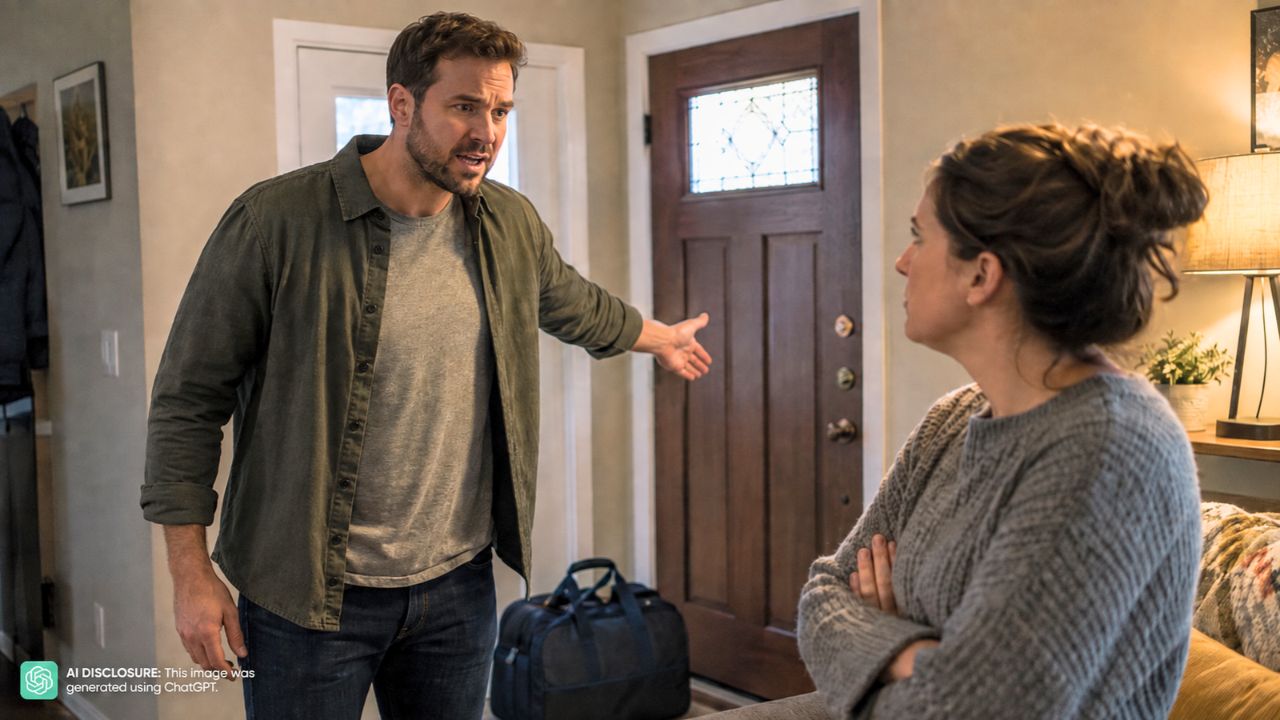
Photo credit: AI-generated image created using ChatGPT. Illustrative only.
Five years into a relationship, a 33-year-old father thought moving in together would finally help the family feel like a team. Instead, living under one roof made one problem impossible to ignore: his partner’s daughter was running the house, and no one was stopping her.
In the original post, he explains that he and his 32-year-old partner each have a daughter from previous relationships, roughly the same age. The girls “generally get along,” but their time in the home isn’t equal. His daughter lives with her mother most of the time, while his partner’s daughter is there full-time—meaning the day-to-day atmosphere is shaped by his stepdaughter’s behavior.
It wasn’t just “kid stuff,” and it didn’t stay small
He says the warning signs were there early. Since they started dating, his partner’s daughter struggled with sharing and especially struggled with sharing her mom’s attention. He describes her as “very spoiled,” and says setting boundaries was difficult both because she resisted him being in her mother’s life and because her behavior didn’t improve as time passed.
That kind of dynamic can be easy to rationalize at first—blended families are messy, kids test limits, and adults try to avoid making things worse. But he makes it clear this wasn’t occasional acting out. He says the rudeness, misbehavior, and constant lying became a pattern that followed them through the relationship.
Moving in made the entitlement feel louder
The couple moved in together two years ago, and that’s when the conflict started to hit daily life. With everyone in the same space, he wasn’t just dropping by or helping occasionally—he was living inside the consequences of whatever rules were (or weren’t) being enforced.
He also began contributing financially to the household. With a good salary, he says he went big for both kids: “amazing birthday parties” and “great vacations.” He intended it as family building—shared experiences, equal treatment, a sense that both girls mattered.
But instead of gratitude or improved behavior, he says his stepdaughter’s entitlement “only gotten worse.” In his view, giving more didn’t create more stability; it created a child who believed she “deserves everything” and felt no reason to listen.
He pushed for boundaries, but consequences never came
For him, the breaking point wasn’t simply that a child was difficult. It was that the adults weren’t on the same page. He says he repeatedly asked his partner to address her daughter’s behavior and had “many conversations” with both of them.
He describes his stepdaughter as a “compulsive liar,” someone who will deny what she’s doing even when he says he can plainly see it happening. That matters in a household because it turns every correction into an argument about reality—what happened, who did it, whether anyone is “telling the truth.” It also makes it harder to enforce rules fairly, because the behavior becomes slippery and the adult response becomes inconsistent.
And that inconsistency is exactly what he says he’s been watching. According to him, his partner’s approach to discipline is essentially a warning: she tells her daughter not to do it again, but there are no meaningful consequences. Without consequences, he believes nothing changes, and the child learns that lying and misbehaving are low-risk.
He paid for therapy, but the home environment didn’t shift
Trying to solve it in a bigger, more structured way, he says he paid for therapy to help his stepdaughter develop better behavior and social skills. He doesn’t frame therapy as a punishment; he frames it as a support, something that could give the child tools and give the adults a plan.
But he says things “only escalated,” suggesting that whatever was discussed in therapy wasn’t translating into daily life. In most families, therapy works best when it’s paired with consistent follow-through at home—clear rules, predictable responses, and united parenting. In his telling, that follow-through never arrived.
Instead, he felt stuck in the worst version of the dynamic: he was investing money, time, and emotional labor, while his partner still wasn’t willing to implement boundaries that would make therapy effective. For him, paying for sessions didn’t matter if the moment-to-moment parenting remained unchanged.
The real fear: his own daughter getting the message that rules don’t matter
One detail he returns to is his own daughter and what she’s absorbing when she visits. Because his daughter doesn’t live with them full-time, her time in the household is concentrated—she shows up for weekends or stretches of time and immediately steps into whatever the climate is.
He says he doesn’t want her to live under a double standard. If his daughter is punished for misbehaving while his stepdaughter “gets away with everything,” he sees that as unfair and potentially damaging. It’s also the kind of dynamic that can blow up sibling relationships: resentment builds fast when one kid feels like the other can do whatever they want.
He’s also thinking longer-term. Children learn what works. If one child sees lying and rudeness met with little more than “don’t do that again,” and the other sees consequences, the lesson isn’t just about behavior—it’s about whose feelings matter and whose don’t.
Most reactions centered on the partner’s parenting, not the child
While he frames his frustration around his stepdaughter’s behavior, the way he tells it puts the spotlight on the adult choices behind the scenes. The practical reaction many people tend to have to stories like this is that you can’t “out-spend” a parenting problem, and you can’t fix a household dynamic alone.
The child’s entitlement may be the daily stressor, but the core issue is that he and his partner don’t share enforcement. When one adult tries to create rules and the other adult undermines them—whether intentionally or through avoidance—the kid quickly learns who will fold. And if the relationship depends on him tolerating a home where he has responsibility but no authority, it becomes unsustainable.
Even without a transcript of the responses, the usual focus in similar disputes is straightforward: therapy is not a replacement for consequences, and a stepparent shouldn’t stay in a home where their own child is exposed to unfairness. In other words, the problem isn’t that he “doesn’t like” his partner’s daughter. It’s that he believes the current setup teaches both kids the wrong lessons.
By the end of his post, he says he’s accepted that nothing is going to change and that it “may be best to walk away.” It’s not a dramatic exit over a single blowup. It’s a slow conclusion after years of conversations, escalating behavior, and a growing sense that he can’t protect his own child from a double standard inside the same home.
Check out more from Now Rundown:
- A Party of 12 Came Back a Month Later Demanding Their $80 Tip Refunded — My Restaurant Made Me Pay It
- Her Coworker Kept Filing the Same Complaint About Her After Being Warned — Then She Filed a Counter-Report With Every Email Documented
- Siblings Demanded Half of Their Sister’s $11 Million Inheritance — She Refused Because They Never Visited
- The Kid I Bullied in Middle School Just Interviewed for a Job on My Team — He Bombed It and I Didn’t Hire Him

Abbie Clark is the founder and editor of Now Rundown, covering the stories that hit households first—health, politics, insurance, home costs, scams, and the fine print people often learn too late.