Hotel Guest Says Police Entered Room With a Key After Staff Made a False Report
Photo credit: Now Rundown
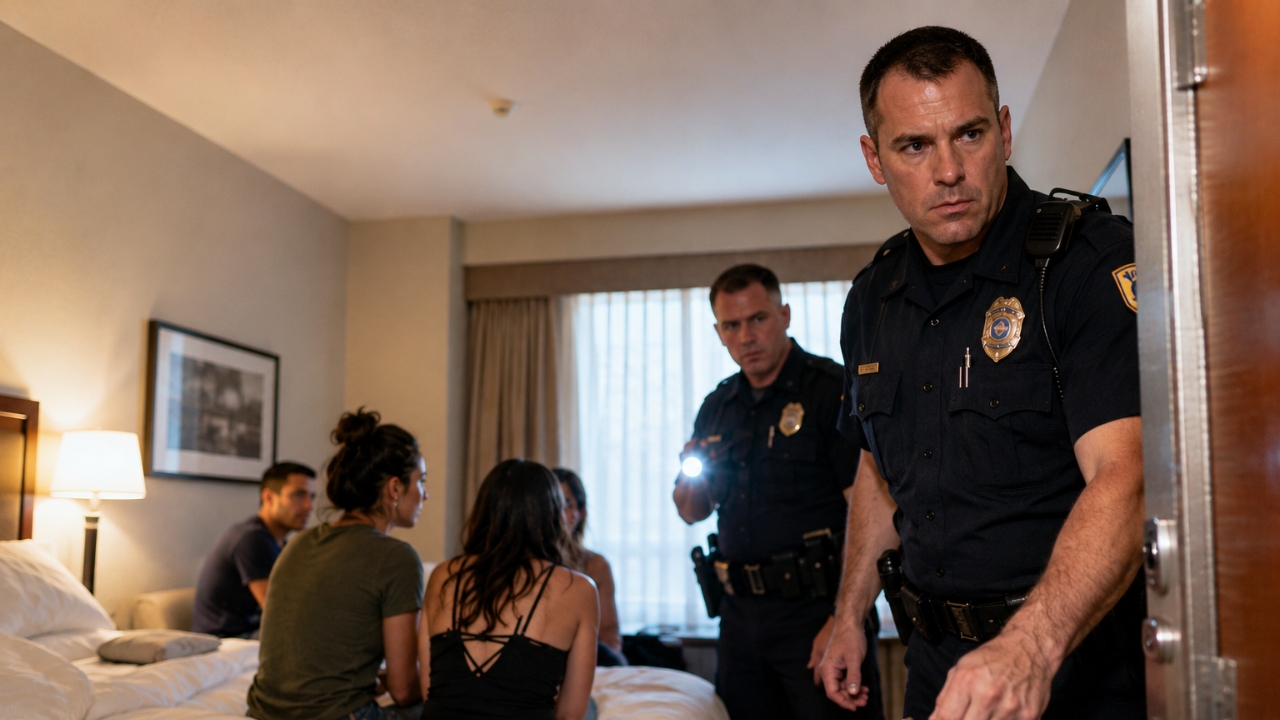
A hotel guest said a stay turned into a frightening legal situation after hotel staff allegedly called police with a report the guest says was false, then officers entered the room with a key and searched the people inside.
The guest shared the situation in a post on r/legaladvice, saying the incident began after his girlfriend had a friend come by the hotel room in the morning. According to the guest, the friend stopped at the front desk first. The front desk then called the room and told him it was protocol for him to come downstairs to get the guest.
The guest said he thought that was strange. In his telling, he told the desk that if they did not think it was safe to send the woman up, they should not send her up. Then he hung up and went back to sleep.
About 20 minutes later, he said, he woke up to his girlfriend, the friend, and police officers in the room.
The guest claimed the hotel had reported possible human trafficking and “excessive traffic” to the room. He strongly denied both accusations. He said there had not been a stream of visitors coming and going, and he later claimed the only person who had come by was the girlfriend’s friend.
According to the post, the guest listened to the call between hotel staff and police afterward and believed the hotel had lied about what was happening. He said a hotel employee told police there had been guests coming every 20 to 30 minutes, but he claimed that was not true.
He also said the police questioned the front desk about how many people had actually been in the room. According to the guest, the front desk then told officers there had been no guests since he checked in the previous afternoon, which he saw as a contradiction.
The guest also claimed he heard an officer refer to a “4th waiver” while they were heading to the room. The guest believed that meant officers knew there was no reason to “harass” him. Later in the thread, commenters explained that a Fourth Amendment waiver can apply to some people on probation and may affect search rules, depending on the terms and circumstances.
The guest said the officers entered after knocking and announcing, searched him, and searched several women who were present. He said they searched purses and bags, and one of the women allegedly had cocaine in her purse.
That changed the situation fast. The guest said he was arrested and taken to the police department along with two of the women. He described hearing them crying and said none of them had been in trouble before.
The guest said his own probation was for a misdemeanor and was not drug-related. He claimed he was not told why he had been arrested at first and assumed it might have been tied to the drugs allegedly found in the woman’s purse and his probation status.
He also said that once he was in an interrogation room, he asked to speak to his lawyer. According to the post, an officer then tested whether he was under the influence and wrote that he was not.
The guest claimed the paperwork he eventually received included drug allegations he said were not true, including claims involving cocaine, heroin, and meth. He said his current lawyer had told him the situation was difficult to challenge because drugs had been found on one of the women, but he wondered if he needed a different attorney.
The post was messy, emotional, and difficult in places, but the core concern was clear: the guest believed the hotel made a false report, police entered the room with a key, people were searched, drugs were found on someone else, and he ended up arrested.
The hotel piece is what made the story especially tense. Hotels are temporary homes. Guests expect staff to handle safety concerns, but they also expect a certain level of privacy once they are checked into a room. When police enter with a key provided by the hotel, it raises immediate questions about consent, probable cause, emergencies, and what staff told officers before they went upstairs.
The guest believed the whole chain of events started because he refused to come down to escort the friend up. He thought the hotel escalated the situation after that phone call, and he wanted to know whether the hotel or police could be challenged legally.
Commenters Told Him to Focus on a Lawyer, Not Reddit
Commenters were skeptical of parts of the guest’s story, but they were still clear about one thing: he needed a criminal defense attorney.
Several commenters said the post was hard to follow and suggested there was likely more to the story than the guest had shared. They pointed out that the guest first framed the visit as one friend coming by, but later described multiple women in the room. Others said the hotel may have seen enough unusual circumstances to be concerned, even if the guest believed the report was exaggerated or false.
Some commenters focused on the Fourth Amendment issue. One noted that police generally cannot search a hotel room simply because hotel staff allows them in. Another said hotel management’s consent is not usually the same as a guest’s consent. But commenters also explained that probation terms, possible exigent circumstances, and the presence of other people in the room could complicate things.
The “4th waiver” comment became a major point in the discussion. Some commenters said that if the guest was on probation with a Fourth Amendment waiver, officers may have had broader authority to search him or areas connected to him. Others said the details mattered too much for Reddit to answer reliably.
Several commenters told him that if the hotel really made false statements that led to his arrest, he could discuss a possible civil claim with an attorney later. But they warned that the criminal case had to come first. If he was facing drug charges or probation consequences, fighting with the hotel could wait.
Others pushed him to ask his lawyer very specific questions: Was the room search legal? Did probation terms allow it? Was the search of the women’s purses lawful? What evidence did prosecutors actually have? Were the drugs found on someone else being attributed to him? Was there body camera footage, hotel security footage, dispatch audio, or police reports that could clarify the timeline?
A few commenters suggested getting a different lawyer if he felt his current one was not explaining the defense clearly. But the advice was not to walk into court alone or rely on internet opinions. The situation involved police entry, hotel staff statements, probation, alleged drugs, and possible constitutional questions. That was well beyond casual advice.
The guest’s post did not end with charges dropped or a lawsuit filed. It ended with a man trying to understand how a hotel call turned into police entering his room, searching people’s bags, and taking him to jail.
For readers, the uncomfortable part is how fast the situation moved. One minute, the guest said he was asleep in a hotel room. The next, officers were inside, people were being searched, and the entire stay had become a criminal case.
Commenters did not fully accept every detail of the guest’s version, and many said the story had gaps. But even with that skepticism, they treated the legal stakes as serious. The guest needed counsel, records, reports, footage if it existed, and a clear explanation of how probation affected the search.
The strongest advice was to stop trying to solve the case through Reddit and push his attorney for real answers. Because once an arrest, alleged drug evidence, and a possible probation issue are involved, the question is no longer only whether the hotel overreacted.
It becomes whether the search was lawful, what the state can prove, and whether the guest has a defense that can survive in court.

Abbie Clark is the founder and editor of Now Rundown, covering the stories that hit households first—health, politics, insurance, home costs, scams, and the fine print people often learn too late.