Man Denied His Stepmother and Her Kids Were His Family — He Reminded His Father He Never Got a Say in the Marriage
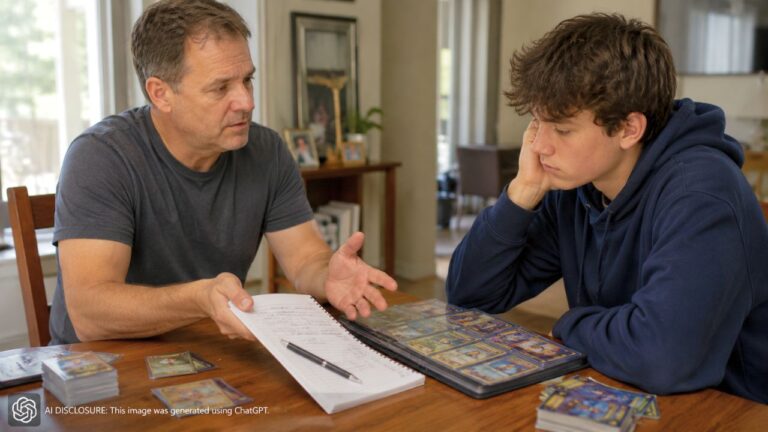
Photo credit: AI-generated image created using ChatGPT. Illustrative only.
By the time he was old enough to leave, a 20-year-old man says he’d already learned the rules of the house: keep your head down, don’t expect to be included, and don’t call people “family” just because adults decided it should be that way. Now his dad wants him back at the table for a big dinner with his stepmother’s relatives—and the son isn’t interested.
In the original post, the man explains why he refused the invite and why he finally said out loud what he’d been swallowing since childhood: his father chose that marriage, but he didn’t. And after years of being treated like an unwanted extra in his own home, he’s not going to pretend a bond exists just to make the adults feel better.
A blended family on paper, a divide at home
He was 5 when his father married Ellen, a widow with five children. The age spread mattered immediately: her oldest four were already late teens to 20s, while the youngest was 7—close enough in age that it looked, from the outside, like the two boys might grow up like brothers.
That never happened, he says. His biological mother left when he was 3, so he wasn’t coming into the new marriage with another parent actively in his corner. He also says Ellen didn’t step into a motherly role for him, and more importantly, her kids made it clear he was “less than a stranger.”
It wasn’t just awkwardness or a slow adjustment period. He describes a household where the relationship lines were drawn early and reinforced constantly—by the step-siblings’ behavior, by who got included, and by who got ignored.
The youngest stepbrother wasn’t just distant—he was rejecting
The closest-in-age stepbrother was the obvious place a connection might have formed. The man says he tried at first, assuming living together would lead to playing, hanging out, and eventually feeling like siblings.
Instead, he says the younger boy would move away when he approached, tell him to go away, and ignore him the rest of the time. Sometimes, he claims, the child would refuse to respond at all when spoken to. Over time, that kind of everyday rejection didn’t just sting—it set the tone for the entire home.
With no other kids his age to lean on and no extended family described as being available, he says he “had to suck it up.” That meant learning to live around someone who shared his space but treated him as if he didn’t belong there.
Holidays turned into a recurring reminder of where he stood
The worst moments weren’t subtle. When Ellen’s older children visited, they focused on their younger brother and treated him like the only child who mattered. He says they brought presents, candy, and experiences—movies, treats, and outings—specifically for their brother.
He wasn’t simply overlooked. He says he was explicitly not welcome, and when adults suggested including him, the older step-siblings pushed back hard. He recalls being told directly that he wasn’t their brother, so he couldn’t come. Worse, he says they warned him not to get upset about it, because then they’d be asked again.
Christmas and other holidays followed the same pattern. His father would try to compensate by cheering him up or spending more on him, but the man says material gestures didn’t touch the real problem: he was living in a house where “family” gatherings made him feel like an intruder.
Over time, he started avoiding celebrations when he could. Not because he didn’t want a family, but because being present meant watching everyone else bond while he was treated like an inconvenience.
“Better without me”: the comments that pushed him toward the exit
Eventually, he says, he stopped trying to break into a closed circle and focused on himself. That shift didn’t bring peace so much as it brought clarity. He recounts hearing Ellen’s kids say things were “better without me ruining everything,” and that “if only dad was gone it would be perfect.”
That kind of talk, he suggests, didn’t feel like normal sibling sniping. It sounded like a household where he and his father were considered outsiders in Ellen’s children’s world, even though they all shared an address.
By 18, he was determined to get out as quickly as possible. He says he couch-surfed for months after turning 18 before landing a more stable living situation with friends. He still talks to his dad, but not much, and the distance seems tied to more than just adulthood and moving out—it sounds like self-protection.
The dinner invitation, and the line he refused to cross
The immediate blowup came when his father invited him to a “family dinner” with his dad, Ellen, her kids, and some of Ellen’s extended family. The man refused, telling his father that Ellen and her children are not his family—and that he wouldn’t be welcome anyway.
His father pushed back, saying that even if they didn’t always get along, they were still family. That’s when the son says he reminded his dad of the part that never changed: his father made a choice to stay in that marriage while knowing his child was being rejected. The son didn’t get a vote, and he’s done pretending the outcome was something he agreed to.
His father argued it “wasn’t fair” because he made sure his son didn’t miss out on things. But the son rejected that framing too, saying that being ostracized in his own home couldn’t be “made up for with a few material things.”
Underneath the argument is a very real, practical question: what does “family” mean when the people involved spent years treating you like you were in the way? For him, it means he’s not putting himself back into a room where he expects to be sidelined again.
Where outside reactions tended to land
The post didn’t include a full comment thread in the source material, but the conflict itself points to the reactions people typically focus on in these family blowups: whether the father intervened enough, whether Ellen ever addressed her children’s behavior, and why the son is being asked to perform closeness now when he was denied it as a kid.
There’s also the practical angle—what the invite is really for. A dinner with extended family can be a pressure-cooker setting where people expect polite stories and togetherness, not an honest recap of years of exclusion. Some readers tend to see invitations like this as an attempt to rewrite the past without actually repairing it.
And then there’s the boundary issue. Even if the father wants the optics of a unified family, the son is an adult with his own housing and support system now. Agreeing to attend would mean opting back into a dynamic he says damaged him, without any sign that the people who excluded him have changed or even acknowledged what they did.
For now, the son’s stance is simple: he’ll keep whatever relationship he can with his dad, but he won’t call Ellen’s children his siblings, and he won’t show up to be treated like an accessory. The father may still hope a single dinner can smooth over years of hurt, but the son seems to be saying the window for that kind of easy fix closed a long time ago.
Check out more from Now Rundown:
- A Party of 12 Came Back a Month Later Demanding Their $80 Tip Refunded — My Restaurant Made Me Pay It
- Her Coworker Kept Filing the Same Complaint About Her After Being Warned — Then She Filed a Counter-Report With Every Email Documented
- Siblings Demanded Half of Their Sister’s $11 Million Inheritance — She Refused Because They Never Visited
- The Kid I Bullied in Middle School Just Interviewed for a Job on My Team — He Bombed It and I Didn’t Hire Him

Abbie Clark is the founder and editor of Now Rundown, covering the stories that hit households first—health, politics, insurance, home costs, scams, and the fine print people often learn too late.