Employee Reported a Coworker to HR for Misusing the Office Fridge — The Coworker Retaliated by Trying to Get Her Fired
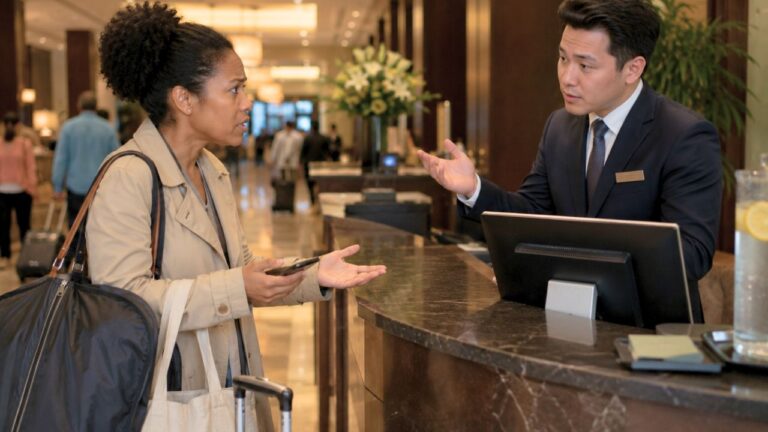
Photo credit: AI-generated image created using ChatGPT. Illustrative only.
It started as a small, everyday annoyance: a shared office fridge that suddenly felt impossible to use. One employee said she kept showing up with her lunch only to find the shelves jammed, and after days of playing “fridge Tetris,” she realized the crowding wasn’t random—it had a source, detailed in the original post.
According to her account, a coworker she calls Anna had been using the communal refrigerator as storage for a side hustle at work. Anna reportedly brought in around 15 pre-made homemade meals each day, keeping them cold until other employees came by to buy and pick them up.
The fridge wasn’t just full—it was being used like a storefront
The employee said she didn’t initially care that Anna sold lunches around the office. In fact, she described Anna as a great cook whose meals were popular. The problem, she said, was the scale: daily batches large enough to squeeze out everyone else.
Over time, it became harder to find space for a single personal lunch. Then it became routine. She said there were several days in a row where she couldn’t fit her food in the fridge at all, which turned the issue from mildly irritating into something that affected her workday.
In her mind, the refrigerator wasn’t meant to support one person’s mini business. It was shared space—an office resource meant for everyone to store their own meals, not a holding station for product inventory.
A direct conversation went sideways fast
Before going formal, she said she tried to address it like an adult: a direct conversation with Anna. She suggested practical alternatives—using a cooler, limiting fridge use, or finding another way to store the meals so the rest of the staff could still fit their lunches.
But she says Anna didn’t take the feedback well. Anna reportedly became defensive and insisted she had every right to use the fridge, pointing to how many coworkers wanted her food.
Then came the line that changed the tone. The employee said Anna hinted that if she wanted more space, she should buy Anna’s lunches instead of bringing her own. What might have been a shared-space issue suddenly felt like pressure—and a warning that Anna wasn’t going to budge.
HR stepped in, and that’s when the retaliation began
After multiple days of not being able to store her lunch, the employee reported the problem to HR. HR spoke to Anna and told her to limit how much space she used in the refrigerator. On paper, that’s the kind of low-stakes workplace fix that should end there.
Instead, the employee said it lit a fuse. She described Anna as furious and determined to make her regret escalating it. The retaliation, she wrote, started socially—rumors and reputation damage that made the workplace feel hostile even without a formal complaint.
Anna allegedly told others the employee was jealous and trying to sabotage her “success.” And because Anna’s lunches were popular, the employee felt like she was immediately outnumbered in the court of office opinion.
Then came the move that could have ended her job
The employee said the rumors were bad enough, but Anna didn’t stop at whisper campaigns. She claims Anna went to HR and accused her of harassment and creating a hostile work environment.
To make it worse, she wrote that Anna brought in support—coworkers who allegedly backed up the claims and lied about things the employee supposedly said or did. That turned it from “she’s being mean to me” into something that could carry real consequences.
HR called the employee in for a meeting, and she said she was blindsided. In her telling, she hadn’t realized Anna was building a case that could potentially get her fired. At that point, it wasn’t about fridge space anymore; it was about job security and being labeled as a workplace problem.
Documentation saved her, but it didn’t fix the aftermath
What kept the complaint from sticking, she said, was that she had documentation of her interactions with Anna. She didn’t spell out exactly what that documentation included, but she said it was enough to prove Anna’s claims were false.
HR ultimately dismissed the complaints against her. That’s the best possible outcome on paper—no discipline, no termination, no official black mark for harassment.
But the employee said the damage lingered anyway. She described feeling isolated and painted as the villain, with coworkers viewing her through the lens of Anna’s story rather than the original issue: one person taking up most of a shared fridge with meals meant for sale.
Even with HR siding against the retaliation attempt, she’s left working in an environment where trust has been shaken, alliances have formed, and a basic workplace convenience became a dividing line.
What people tend to focus on in workplace blowups like this
While the post centered on whether reporting Anna was the wrong move, the details point to a bigger workplace reality: informal conflicts don’t always stay informal, especially when money, popularity, and access to shared resources get tangled up.
In stories like this, readers often zero in on two practical themes: boundaries and paper trails. The employee’s account suggests she tried a boundary-setting conversation first, but once retaliation entered the picture, documentation became the difference between “he said, she said” and a defensible timeline.
There’s also the thorny issue of HR’s role. HR can address the refrigerator policy, but it can’t instantly repair how coworkers treat someone after rumors spread. Even when a complaint is dismissed, the social fallout can stick—especially if the person who started it is popular or has allies willing to echo their version of events.
At the center of it all is a simple question with an outsized impact: who gets to use shared space, and how much? When one employee treats a communal fridge like business storage, everyone else ends up negotiating for what should have been a basic perk of being at work.
The employee’s biggest regret doesn’t seem to be speaking up—it’s that speaking up triggered an escalation she couldn’t control. HR may have closed the file on Anna’s claims, but she’s still walking into the same break room, opening the same fridge, and working alongside people who may never fully believe she was just trying to store her lunch.
Check out more from Now Rundown:
- A Party of 12 Came Back a Month Later Demanding Their $80 Tip Refunded — My Restaurant Made Me Pay It
- Her Coworker Kept Filing the Same Complaint About Her After Being Warned — Then She Filed a Counter-Report With Every Email Documented
- Siblings Demanded Half of Their Sister’s $11 Million Inheritance — She Refused Because They Never Visited
- The Kid I Bullied in Middle School Just Interviewed for a Job on My Team — He Bombed It and I Didn’t Hire Him

Abbie Clark is the founder and editor of Now Rundown, covering the stories that hit households first—health, politics, insurance, home costs, scams, and the fine print people often learn too late.