Divorced Father Refused to Give Up His Custody Weekends So His Kids Could Spend More Time With Their Dying Grandfather in Hospice
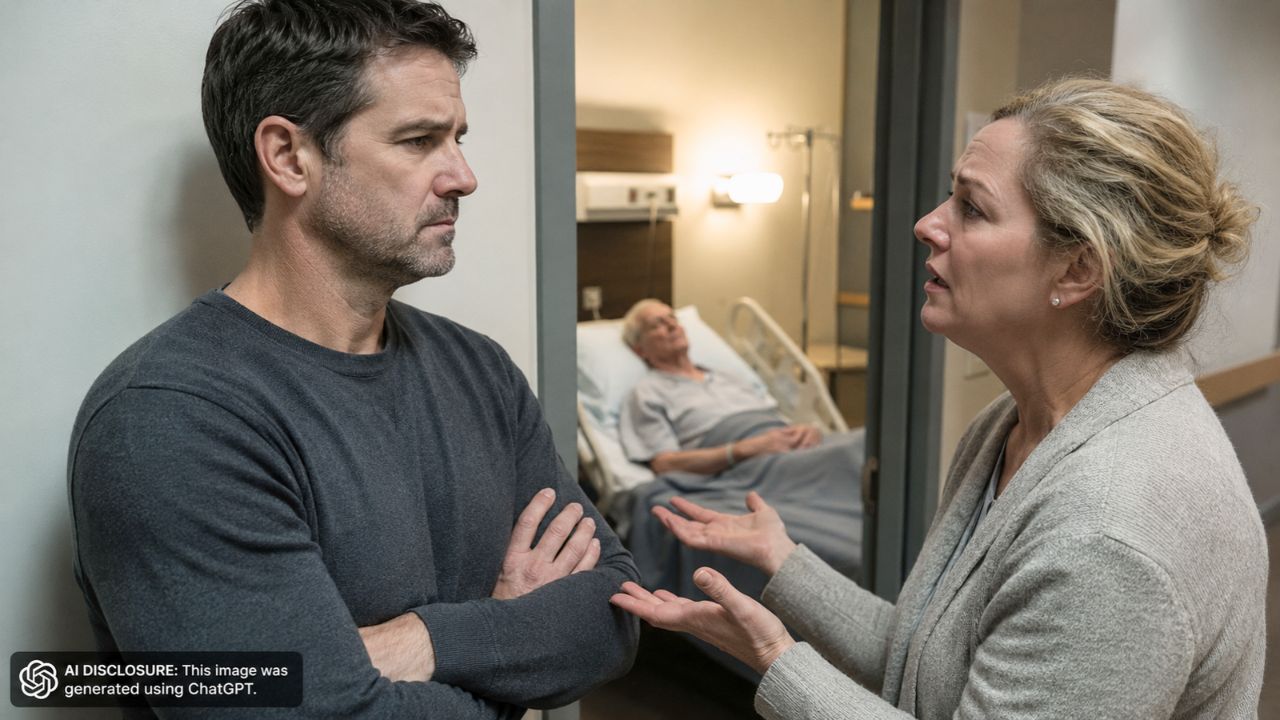
Photo credit: AI-generated image created using ChatGPT. Illustrative only.
A divorced father with a standard every-other-weekend custody schedule says he’s being pressured to give up his time with his two young kids—so they can spend those weekends and holidays at their mother’s house while their grandfather is dying in hospice. He laid out the dispute in the original post, describing a request that quickly turned into an emotional standoff.
The children are 7 and 5, and the custody arrangement has been in place since the divorce two years ago: every other weekend with him, one day a week, and alternating holidays. Now their maternal grandfather—who helped raise their mother and once lived with the couple during the marriage—is receiving hospice care in the ex-wife’s home and is expected to die within months.
A grandfather they all knew was special
By his account, the grandfather isn’t a distant relative the kids only see on major holidays. He describes his ex-father-in-law as “an amazing man,” a single parent who raised his ex-wife on his own, and someone the father himself bonded with during the marriage.
That closeness is part of what made the request hit harder. The grandfather’s cancer is advanced, he’s weak, and while he isn’t bedridden yet, the family is living with the day-to-day reality of hospice under the same roof. The kids and their mother are “devastated,” he wrote, and time now feels like the only thing anyone can’t replace.
The ask: give up weekends and move holidays into one house
The ex-wife invited him to coffee and framed it as a “huge favor.” According to him, she asked that he stop taking the children on weekends and allow all holidays to be held at her house until her father dies, so the kids don’t “miss out on time.”
She offered a compromise: he could still come around on weekends to visit and spend time with the kids, but it would be at her home, with the grandfather there. In other words, his custody time wouldn’t disappear entirely—but it would be reshaped into shorter visits on her turf, with him coming and going.
On paper, it sounds like a temporary adjustment. In real life, it’s an overhaul of the only consistent stretch of time he has with his children—overnights, routines, privacy, and the kind of relaxed parenting that’s hard to do when you’re essentially a guest in your ex’s house.
His answer was immediate, and it made things worse
He says he refused outright. He was willing to share holidays and birthdays together, calling that “not unreasonable,” but he would not accept a new arrangement where he only sees his kids for “a few hours on the weekends.”
He also emphasized that the current custody plan is a court order, meaning she can’t force the change. The only way it happens is if he agrees—and he didn’t.
That’s when the conversation reportedly fell apart. He wrote that his ex began to cry and begged him to reconsider, then accused him of being “selfish and unkind” when he held his ground. It wasn’t just about a calendar anymore; it was about whether he would be seen as standing in the way of a family’s final months together.
The father’s reasoning: don’t take their dad away, too
His argument is simple: the kids already spend most of the week with their mother and grandfather. He pointed out that they are with that household “6 days a week” when he doesn’t have them on weekends, and he believes they should still get regular breaks from the intensity of watching a loved one decline.
There’s also a deeper fear behind his “no.” He worries that if he voluntarily vanishes from his usual role during this period, it will add another loss on top of the one they’re already experiencing. In his mind, losing steady time with their dad while also losing a grandparent could be a double hit for children that young.
And he’s thinking long-term. He believes his kids will remember that he “abandoned them during this time,” even if the reason was to accommodate their mother’s grief. He doesn’t trust that they’ll understand the nuance later, especially when the immediate memory might be: Dad stopped taking us.
Family pressure crept in with a smaller proposed sacrifice
The pushback didn’t just come from his ex-wife. He says he spoke to his own mother, who felt he should at least give up the one day a week he has with the kids. That suggestion—meant as a middle ground—landed like a threat to his remaining time.
If he gives up the weekday parenting time, he says he’d only see the children twice a month. For many divorced parents, that’s not a minor tweak; it’s the difference between being a regular presence and becoming someone the kids “visit.”
The logistics matter here, too. The ex-wife’s proposal would effectively shift parenting into a supervised, shared-space model in her home, where the grandfather is in hospice and emotions are raw. Even if everyone behaves, it changes how a parent can show up—how bedtime works, how comfort happens, how discipline happens, how the kids decompress.
What people tended to focus on: time, control, and the “temporary” trap
The father framed his post as “No A-holes here,” and the tension in his story reflects that: a dying man, a grieving daughter, and two little kids who may not fully understand what’s happening until it’s over. But even in sympathetic readings, the practical concerns are hard to ignore.
One major focus was the scale of what was being requested. Trading or swapping a few weekends to accommodate meaningful visits is one thing. Handing over every weekend and all holidays until an uncertain end date is another, especially when hospice timelines can stretch and shift. “Until he dies” can be weeks—or it can be far longer than anyone expects.
Another recurring theme was control. The mother’s offer still put the father in the position of having to ask permission to parent in someone else’s home. Even if she meant well, it creates a power imbalance that can be difficult to undo later, particularly if routines change and the kids get used to the idea that weekends belong at mom’s house.
At the same time, there was sympathy for the ex-wife’s desperation. Her father raised her alone. He lived with the family during the marriage. Now he’s dying in her home. The ask wasn’t about convenience—it was about squeezing every last normal moment out of an abnormal year.
In the end, the father is left with a choice that doesn’t have a clean outcome: protect his custody time and risk being cast as the barrier to a goodbye, or yield and risk becoming less present in his kids’ lives at a moment when they may need him most. Whatever happens next, it’s likely to reshape how this co-parenting relationship works long after hospice ends.
Check out more from Now Rundown:
- A Party of 12 Came Back a Month Later Demanding Their $80 Tip Refunded — My Restaurant Made Me Pay It
- Her Coworker Kept Filing the Same Complaint About Her After Being Warned — Then She Filed a Counter-Report With Every Email Documented
- Siblings Demanded Half of Their Sister’s $11 Million Inheritance — She Refused Because They Never Visited
- The Kid I Bullied in Middle School Just Interviewed for a Job on My Team — He Bombed It and I Didn’t Hire Him

Abbie Clark is the founder and editor of Now Rundown, covering the stories that hit households first—health, politics, insurance, home costs, scams, and the fine print people often learn too late.