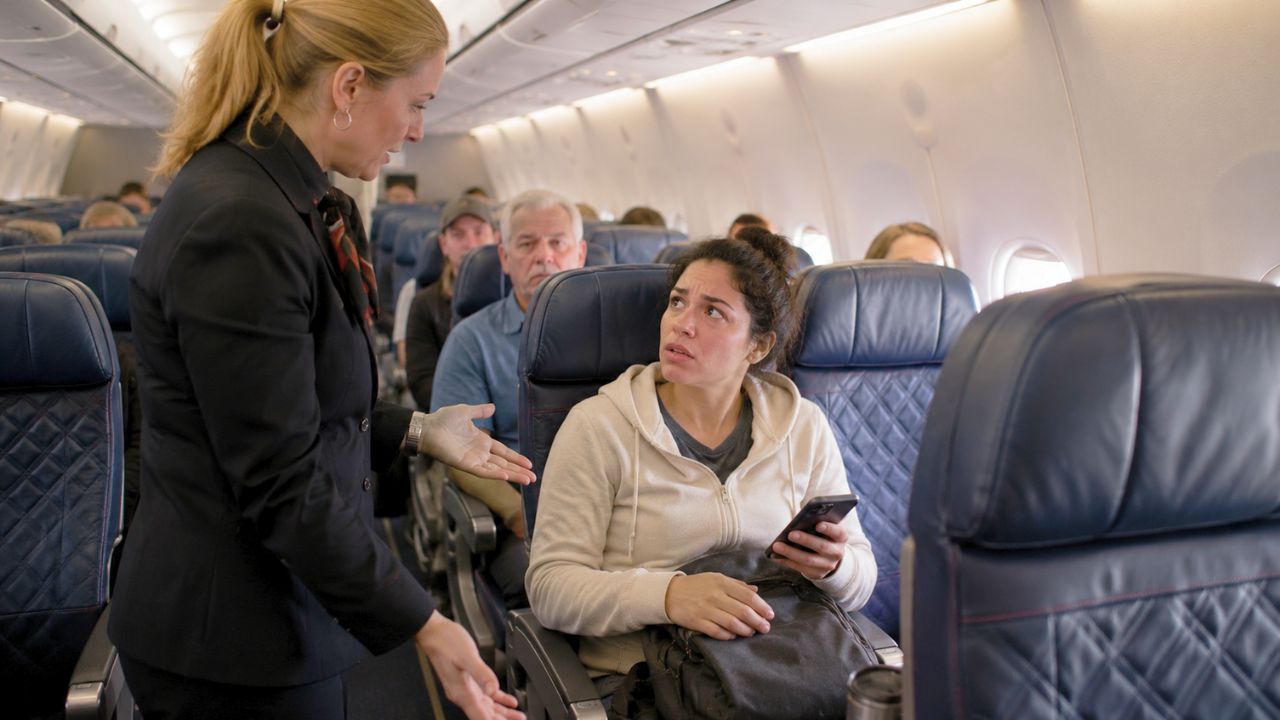
Airline Made Her Get Off the Plane After She Had Already Sat Down and Stowed Her Bag
Photo credit: Nowrundown.com
She was already settled in, earbuds in, tote bag pushed under the seat in front of her, and her coat folded like she was trying to be the easiest passenger on the entire flight. The plane smelled like jet fuel and someone’s coffee, and the boarding music had finally cut off. All she had left to do was exhale.
Then a flight attendant stopped at her row and asked her to come with them “for a quick moment.” It wasn’t loud, but it was just loud enough that the people across the aisle looked up. She assumed it was a seat mix-up or maybe her carry-on tag was missing.
It turned out to be neither. She was being told she needed to get off.
The problem started before the big blowup
The trip itself wasn’t optional in her mind. She was flying out for her younger sister’s wedding weekend after months of half-hearted group chats and tense family calls. The wedding had already been complicated: their mom had strong opinions about everything, and her sister had tried to keep the peace by giving everyone a “role.”
Her role, apparently, was to show up, smile, and not mention why she’d gone low-contact with their mom earlier in the year. She’d agreed because she didn’t want her sister to feel punished for a relationship that wasn’t hers to manage.
She booked a basic economy ticket weeks ago, used miles to get the fare down, and packed light to avoid extra fees. She wasn’t trying to be dramatic. She was trying to be invisible.
But the day of the flight, her phone had been buzzing with texts from her mom asking about her arrival time, what hotel she was staying at, and whether she’d “finally come to her senses.” She didn’t respond. She put her phone on airplane mode the second she hit the gate.
Boarding felt normal… until it didn’t
Boarding was routine. She scanned her pass, walked down the jet bridge, and found her seat. It wasn’t a great one—middle seat, several rows back—but she didn’t care. She just wanted to get there without a scene.
She stowed her bag, buckled up, and watched the last few passengers file in with oversized backpacks and frantic energy. She noticed a couple standing near the front, hovering like they were waiting for something. The woman kept checking her phone and looking back down the aisle.
A few minutes later, the flight attendant came to her row with that too-bright customer-service smile. The attendant asked to see her boarding pass again. Then they glanced down at a small device, frowned, and quietly asked her to step into the aisle.
It was the kind of request that makes your stomach drop even if you’ve done nothing wrong.
The request put everyone on the spot
At the front of the plane, another crew member was waiting, and so was a gate agent. They spoke in low voices, but she caught words like “reassigned,” “inventory,” and “seat needed.”
She explained, still calm, that she had already boarded and sat down. The gate agent nodded like that didn’t matter. The seat, she was told, had to be given to someone else due to a “last-minute change,” and she would be rebooked.
She asked if it was overbooking. The gate agent didn’t say yes, but didn’t exactly deny it either. They offered flight credit and said they’d get her on the next available flight.
That’s when she felt the humiliation creep in. The plane was full of strangers pretending not to stare while absolutely staring. Her cheeks burned, and she realized her bag was still under the seat back in her row, like she’d been marked as someone who didn’t belong.
She asked for a specific reason, because being removed after you’ve already sat down doesn’t feel like a “change.” It feels like you’re being singled out. The crew member repeated the same line about needing the seat, adding that if she didn’t comply, they’d have to “escalate.”
So she went back, pulled out her tote, and walked off the plane in that awful slow parade where everyone can see you, but nobody will meet your eyes.
It got messier at the gate
Back in the jet bridge area, the gate agent pulled up her reservation and began tapping quickly, as if speed could make the situation feel normal. She was told she’d been rebooked for a flight later that night with a connection, turning a simple trip into a near-all-day ordeal.
Then the real twist showed itself. While she was trying to figure out whether the new itinerary would make her miss the rehearsal dinner, she heard her name again—coming from the waiting area.
Her mother was there.
Not walking up casually like she just happened to be traveling too. Her mother had that determined expression she used when she thought she was about to “fix” something by force. Next to her was a man in a suit holding papers and a small rolling bag, looking exhausted and impatient.
Her mom spoke to the gate agent with a familiarity that made the woman behind the counter soften. Not in a friend way, exactly. More like someone had been calling, complaining, pushing. Her mom’s eyes flicked toward her, and she didn’t even pretend to be surprised to see her there.
In that moment, it clicked. This wasn’t random. Someone had been working behind the scenes.
She asked the agent, point blank, whether her seat had been reassigned to a different passenger. The agent hesitated, then said they couldn’t discuss other customers. But a few seconds later, the suited man was scanned through the priority lane and headed down the jet bridge.
Her mom didn’t deny anything. She simply said, in that tight, controlled voice, that it “made more sense” for her to travel later and that she’d “be grateful” when she calmed down. It wasn’t an apology. It was ownership.
The fallout wasn’t just about the flight
She didn’t yell. That was the strangest part. She felt too stunned to raise her voice, like her brain was trying to decide if this was actually happening.
Instead, she stepped away from the counter and called her sister. Her sister answered on the second ring, breathless, already stressed from wedding logistics. The moment she explained what happened, there was a long silence.
Her sister didn’t sound shocked so much as defeated. She asked if their mom was “in one of her moods,” like this was weather. She also asked, softly, if she could “just make it work” because the weekend was already fragile and she didn’t want another fight.
That’s when the flight situation stopped being about travel and turned into the same old family script: her mom does something outrageous, and everyone else manages the mess so the day can proceed.
She told her sister she would still come, but she wasn’t going to pretend this was normal. She wasn’t going to hug their mom and smile in photos like she hadn’t just been escorted off a plane.
Her sister started crying. Not angry crying—overwhelmed crying. She said she didn’t know how to stop their mom from doing things like this, and she just wanted one weekend where nobody made it about themselves.
And she couldn’t argue with that. But she also couldn’t un-feel the sting of being removed like a problem passenger because her mother decided she could.
People nearby had plenty to say, even if quietly
While she stood near the gate, a couple who’d watched the whole thing approached her with that careful, sympathetic energy strangers get when they’re trying not to make things worse. The woman told her she’d seen the suited man get upgraded at the desk and suspected they were bumping someone from the back to make it happen.
An older man sitting nearby muttered that airlines will do anything for a last-minute premium traveler, and it’s always the basic economy seats that get treated like placeholders. Another person suggested she ask for cash compensation instead of flight credit and to request a written explanation.
But the most cutting reactions were the looks her mother got. Even people who didn’t know the family dynamic could sense it: this wasn’t a simple mix-up. This was control dressed up as “help.”
Her mom, for her part, stayed planted near the gate like she was supervising the outcome. She didn’t offer to switch, didn’t offer her own seat, didn’t even act embarrassed. She watched her daughter struggle with rebooking like it was a lesson.
Eventually, she walked away, leaving behind that familiar feeling of being outplayed in public, where arguing only makes you look unstable and staying quiet makes you look like you agreed.
She took the later flight. She arrived tired, wrinkled, and furious in a way that didn’t burn hot—it burned steady. At the hotel, she texted her sister that she’d be at the ceremony, but she wouldn’t be sharing a suite, and she wouldn’t be participating in any “family breakfast” situations where her mom could corner her.
The wedding weekend still happened, because weddings almost always do. But the photos tell a story if you know where to look: her smile is polite, her posture is careful, and her mother is positioned like a queen at the center of everything.
And the day after she flew home, she filed a formal complaint with the airline, not because she thought it would rewrite what happened, but because she wanted it on record that she wasn’t a seat you could simply hand away after she’d already taken it.
Check out more from Now Rundown:
- A Party of 12 Came Back a Month Later Demanding Their $80 Tip Refunded — My Restaurant Made Me Pay It
- Her Coworker Kept Filing the Same Complaint About Her After Being Warned — Then She Filed a Counter-Report With Every Email Documented
- Siblings Demanded Half of Their Sister’s $11 Million Inheritance — She Refused Because They Never Visited
- The Kid I Bullied in Middle School Just Interviewed for a Job on My Team — He Bombed It and I Didn’t Hire Him

Abbie Clark is the founder and editor of Now Rundown, covering the stories that hit households first—health, politics, insurance, home costs, scams, and the fine print people often learn too late.