Coworker Started Timing How Long She Was Away From Her Desk and Reporting It to HR
Photo credit: Nowrundown.com
By the time she noticed the little notebook, she’d already spent two weeks feeling like she couldn’t breathe at work.
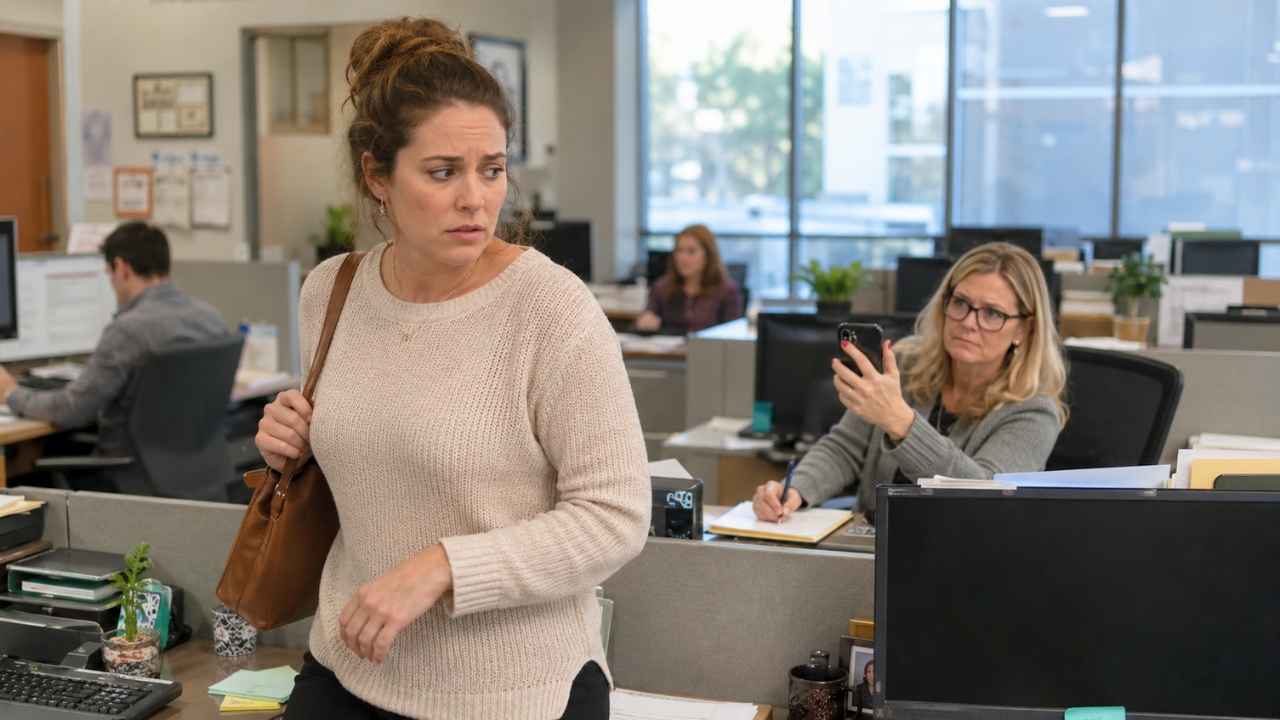
It started with small things: a coworker glancing up when she stood, a pause in conversation when she walked back from the restroom, the faint click of a keyboard like someone was keeping score. She worked in a mid-sized office with an open floor plan and those low cubicle walls that made every movement feel public. She told herself she was being paranoid, until the day she walked past the printer area and saw her coworker’s screen—rows of times and notes lined up next to her name.
The problem started as a “productivity push”
The company had been tightening up after a messy quarter. Managers had started using words like “efficiency” and “visibility,” and the vibe shifted from relaxed to watchful almost overnight. People stopped taking coffee breaks together. Team chats got quieter. Everyone looked like they were trying to appear busy, even when work was slow.
She was a solid employee, the kind who always met deadlines and picked up tasks without being asked. But she also had a medical condition that meant she drank a lot of water and occasionally needed to step away. Her manager knew. HR had paperwork on file. It was the kind of thing that shouldn’t have been a story at all.
Her coworker, though, had made herself the unofficial hall monitor the second the company started talking about productivity. She’d been with the team longer, but they were in the same role. Not a lead, not a supervisor—just someone with a sharp eye and a strong opinion about how everyone else should work.
She realized someone was literally tracking her movements
The first direct hint came during a Monday morning check-in. Her coworker casually mentioned that “some people” were taking long breaks, and that it was “not fair” to those who stayed at their desks. It was said with a little laugh, like a joke. But the way her eyes landed made it feel like a warning.
After that, the glances got more obvious. Every time she stood up, her coworker’s head tilted slightly, like she was noting the time. A few times, when she came back, her coworker would ask something pointed, like whether the restroom on their floor was out of order or if she was having trouble with the printer. The questions weren’t helpful. They were fishing.
Then came the spreadsheet. She didn’t mean to snoop, but it was there—brightly highlighted rows, timestamps down to the minute, and little comments like “returned with coffee” or “talking in hallway.” Her own name appeared again and again, more than anyone else’s, and it made her stomach flip. It didn’t read like casual curiosity. It read like a case file.
The reporting didn’t stop at gossip
She went home that night replaying everything. She thought about her condition and the paperwork. She thought about the way she’d been rushing, skipping refills, trying to make herself smaller. And she thought about how humiliating it felt to be monitored like a child.
A few days later, her manager asked her to jump on a quick call. The manager sounded uncomfortable, the way people do when they’ve been handed a problem they don’t want. HR had received a “concern” that she was away from her desk too often and that it was affecting team workload.
She asked, very calmly, where that information came from. Her manager didn’t want to say, but the answer was written all over the awkward pauses. Someone had been counting. Someone had been reporting. Someone had decided they were the boss.
She explained—again—that she had a documented accommodation and that her work was consistently completed. She offered to pull up her performance metrics on the spot. HR thanked her for clarifying and ended the call with a tight, rehearsed tone that made it hard to tell whether they were annoyed at the complaint or at her.
The office split into sides in the quietest way
After that call, the atmosphere got even stranger. A few coworkers started checking in with her in a casual way that wasn’t casual at all. They’d ask if she was okay, or if she’d heard anything new. One person admitted they’d been timed too, once, but only for a day or two—then it stopped. Another said they’d noticed the coworker scribbling whenever someone walked away, like she was logging it for later.
Meanwhile, the coworker who’d been tracking her acted totally innocent. She was suddenly extra friendly, offering to grab supplies, complimenting her blouse, dropping “we’re such a team” comments into every conversation. It was the kind of sweetness that made your skin crawl because it wasn’t kindness—it was a performance.
The worst part was how small it made the office feel. Walking to the restroom felt like walking across a stage. Standing at the copier felt like being under a spotlight. She started eating lunch at her desk, not because she wanted to, but because she didn’t want one more note written about her leaving.
At one point, she heard her coworker joking with someone about “time theft,” and it wasn’t funny. It was the kind of phrase people use when they’ve decided they’re righteous, and righteousness can make people mean.
HR finally asked the right questions
She decided she wasn’t going to wait for the next “concern.” She documented everything she could remember: dates, comments, the time she’d seen the spreadsheet, the way her coworker would make pointed remarks after she came back from stepping away. She didn’t dramatize it. She kept it clean and factual, because she knew that’s what HR responds to.
When she requested a meeting, HR tried to keep it general at first—workplace culture, team communication, the usual. But she pushed gently and asked whether it was appropriate for a peer to track her bathroom breaks and coffee runs and send that information up the chain.
That was when the tone shifted. HR asked how she knew she was being tracked. She described what she saw. She explained that she had an accommodation and had already disclosed sensitive medical information through the proper channels. She said she didn’t feel safe or respected knowing a coworker was monitoring her body and movements like it was office entertainment.
HR didn’t apologize, but they did something better: they got serious. They asked whether she had witnesses, whether anyone else had been tracked, and whether her coworker had said anything directly. The meeting ended with HR telling her they would address it and that retaliation was not acceptable.
People around them had very different reactions
Once HR got involved, the office gossip machine started up, but it moved in whispers. A few coworkers were blunt: they thought the tracking was creepy and obsessive, and they couldn’t believe someone had the time to do it. They pointed out that if anyone’s productivity should be questioned, it was the person building spreadsheets about other people’s restroom trips.
Others had a colder reaction. They framed it like “everyone’s stressed” or “we’re all being watched anyway,” as if that made it normal for a colleague to take it upon herself to police the room. One person even suggested that if she didn’t want attention, she should “try to be at her desk more.” That comment stung, because it reduced a real medical need to a personal flaw.
The coworker who started it all didn’t apologize. She just stopped making eye contact. Her screen stopped showing spreadsheets, but the vibe didn’t snap back to normal. If anything, it felt like the office had learned a new lesson: someone might be quietly taking notes.
A couple of weeks later, managers announced a new policy: concerns about productivity had to go directly to supervisors, and employees were not to track or document other employees’ movements. It was framed as “protecting a respectful workplace,” but everyone knew why it existed.
She didn’t get a satisfying moment where the coworker was publicly called out. There was no dramatic blowup, no office-wide reckoning. What she got was more subtle: HR stopped entertaining petty reports, her manager started checking in privately to make sure she had what she needed, and the coworker who’d appointed herself timekeeper lost her little stage.
It still changed how she felt at work, though. She found herself thinking twice before standing up, not because she was doing anything wrong, but because being watched like that leaves a mark. And even after the tracking stopped, she knew one thing for sure: some people don’t need power to abuse it. They just need a notebook and the belief that they’re entitled to judge everyone else.
Check out more from Now Rundown:
- A Party of 12 Came Back a Month Later Demanding Their $80 Tip Refunded — My Restaurant Made Me Pay It
- Her Coworker Kept Filing the Same Complaint About Her After Being Warned — Then She Filed a Counter-Report With Every Email Documented
- Siblings Demanded Half of Their Sister’s $11 Million Inheritance — She Refused Because They Never Visited
- The Kid I Bullied in Middle School Just Interviewed for a Job on My Team — He Bombed It and I Didn’t Hire Him

Abbie Clark is the founder and editor of Now Rundown, covering the stories that hit households first—health, politics, insurance, home costs, scams, and the fine print people often learn too late.