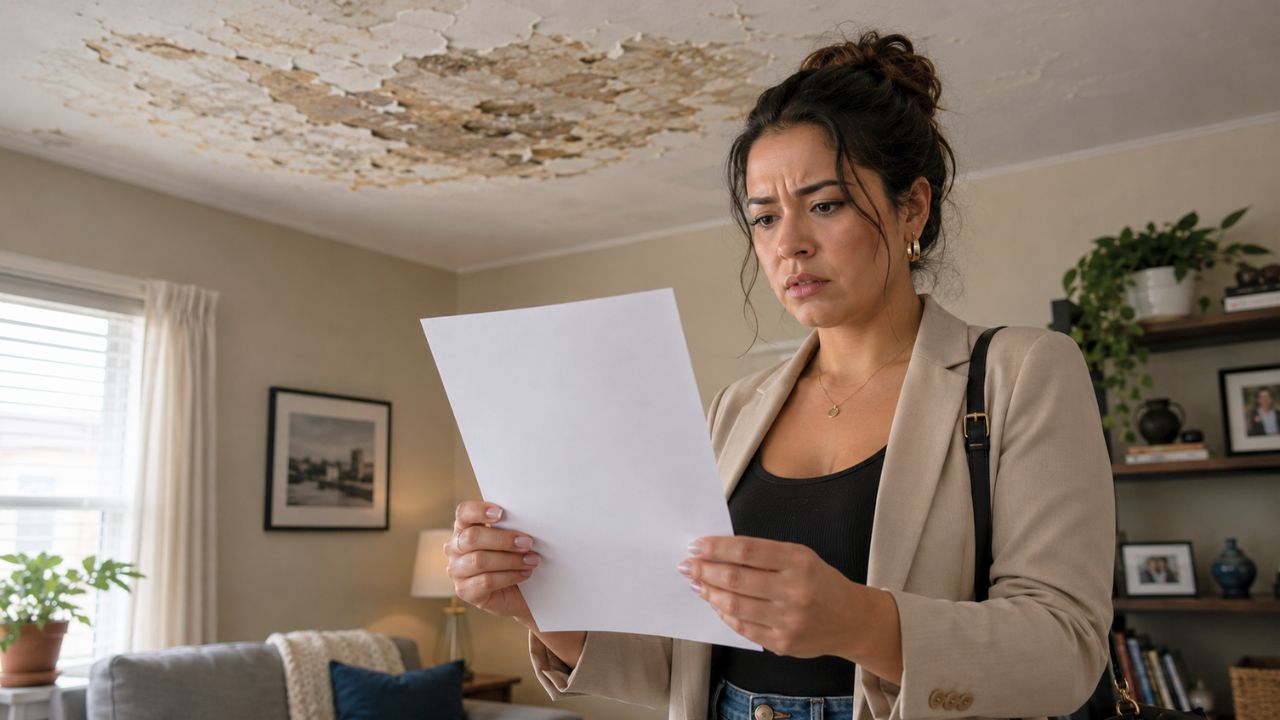
Landlord Billed Her for Fixing the Ceiling She Had Reported 14 Times Over Two Years
Photo credit: Nowrundown.com
By the time Mara noticed the newest crack in her bedroom ceiling, she already knew what it would mean: another photo, another email, another week of waiting. The plaster had started to bubble in a soft, damp oval right above the spot where her toddler’s crib used to be, back when she still felt comfortable letting him sleep in that room.
She lived in a small upstairs unit of an older duplex, the kind with creaky stairs and charming trim that only feels charming when nothing is leaking. Mara was 29, newly divorced, and trying to keep her life steady on a preschool teacher’s paycheck while her son split time with his dad. The last thing she needed was a ceiling that kept threatening to give up.
The problem started as a “little stain”
It began with a faint brown ring after a heavy storm. Mara texted her landlord, Frank, because he’d told all the tenants to “just shoot him a message” if anything came up. Frank replied quickly—too quickly—with something casual about how old buildings do that, and he’d “keep an eye on it.”
But the stain didn’t stay a stain. It spread, then went soft at the edges. When Mara pressed it with her fingertip, the paint flexed like wet cardboard, and she felt that little jolt of panic you get when you realize your home can literally fall on you.
She started reporting it the way renters learn to report things: photos, dates, and follow-up emails. At first it was once a month. Then, when the upstairs bathroom in the other unit flooded for the second time, it became once a week. By the end of the first year, she had a whole folder in her phone labeled “ceiling.”
Fourteen reports and the same handful of excuses
Frank’s responses turned into a rotating menu. The roofer was booked out. The handyman was sick. The weather needed to dry out first. He didn’t want to “open it up” until he was sure the leak was fixed.
Mara tried to keep it polite because she knew how fast “difficult tenant” can become a label. She also didn’t want drama with her ex, who already thought she should “just move” as if moving was a quick errand and not an expensive, paperwork-heavy life upheaval.
Over those two years, Mara reported the ceiling fourteen times. Fourteen separate messages, plus a few phone calls she later summarized in email, because a friend told her that if anything ever got messy, she needed a paper trail. She even offered to be home whenever a contractor could come, even though it meant trading shifts and begging coworkers for swaps.
Frank did send someone eventually—twice. One guy looked up, tapped the ceiling lightly, and said it was “just cosmetic.” The other guy patched a small section without addressing what was still actively making it damp. The patch discolored within a month, like the building was laughing at the effort.
The day the ceiling finally gave them a reason to pay attention
The blowup didn’t happen because Mara got louder. It happened because the ceiling got worse at the worst possible time.
On a Sunday night, Mara was folding laundry when she heard a slow, thick drip that wasn’t coming from the sink. She looked up and saw water gathering, then spilling, right through the center of the soft spot. She shoved a mixing bowl under it and texted Frank again with a photo.
Frank didn’t respond until the next morning. By then, the bowl had overflowed once, and Mara had spent half the night swapping towels and setting alarms to check the drip. When her son came back from his dad’s that afternoon, she blocked off the bedroom entirely and had him sleep on a pullout in the living room because she didn’t trust that ceiling over a child.
That same week, a chunk of plaster finally dropped. Not the whole ceiling, but enough to scatter dusty debris across the floor and make her feel sick with relief that it happened when nobody was underneath. Mara took photos of the hole, the wet edges, the debris, and the growing water damage creeping along the joists.
This time Frank showed up in person. He looked up, frowned, and asked her if she’d been “running a humidifier constantly.” Mara just stared at him. She had been reporting an active leak for two years, and now he was trying to make it sound like she’d steamed the ceiling off with self-care.
The bill landed like an insult
The repair finally happened quickly once the plaster fell. Frank had a crew come in, cut out a section, replace the damaged drywall, and slap on fresh paint that didn’t quite match the rest of the ceiling. Mara didn’t love the disruption, but she was grateful the immediate hazard was gone.
Then, two weeks later, she opened her mailbox and found an itemized invoice with her name typed at the top. It listed “ceiling repair,” “paint,” and “labor,” and the total wasn’t small. It was framed as a charge being added to her next month’s rent.
Mara read it twice because it didn’t compute. She’d been begging for this repair. She hadn’t caused it. And she had proof—fourteen reports—showing she’d asked for help long before it became a full-blown collapse.
Frank followed up with a short message saying the crew found “signs of tenant negligence,” and the cost would be her responsibility. He suggested she should have “ventilated better” and implied that it was basically her fault for “not telling him sooner,” a sentence that made her laugh out loud in the most humorless way.
That’s when the situation stopped being about drywall and turned into something uglier: power.
Friends, family, and one messy group chat
Mara didn’t post it online, but she did what people actually do when they’re stunned—she sent screenshots to her group chat. Her sister called within minutes and asked if Frank had lost his mind. A coworker told her to stop communicating by text and switch to email only. Another friend asked if she had renters insurance, as if the insurance should have to clean up a landlord’s neglect.
The hardest reaction came from Mara’s ex, who treated the bill like proof she was “bad with money.” He offered to “help” by paying it and taking it out of their shared child expenses later, which somehow managed to be both generous-sounding and controlling. When Mara refused, he told her she was being stubborn and making their son’s life harder.
That part stung, because she’d been the one sleeping in the living room with a preschooler for weeks to keep him safe. She’d been the one placing bowls and towels and moving furniture away from a leak. And now people were acting like she was the problem because she wouldn’t quietly swallow a charge that never should have existed.
Mara pulled up every email, every photo, and every dated message. She printed them, stacked them, and realized she had built a timeline without meaning to. Fourteen reports wasn’t just a number anymore. It was a record of being ignored.
When she pushed back, the landlord pushed harder
Mara wrote Frank a calm email attaching the documentation. She pointed out that she had repeatedly reported the leak, that it worsened over time, and that the repairs were necessary maintenance. She asked him to remove the charge and confirm that the source of the leak had been fixed, not just the visible damage.
Frank’s reply was colder than anything she’d received before. He doubled down on the charge and added a warning that if rent wasn’t paid in full, late fees would apply. He also mentioned that her lease was coming up soon, and he’d “evaluate renewal based on overall tenancy.”
That line made Mara’s stomach drop. She didn’t have the savings to move quickly, and she didn’t want her son bouncing between addresses again. She also couldn’t afford to be on the hook for a repair that existed because the property wasn’t being maintained.
So she did what she’d been trying not to do for two years: she stopped treating it like a personal dispute and started treating it like a formal one. She sent a certified letter disputing the charge and requesting repairs to the underlying leak. She scheduled a time for an inspection through the proper channels. She kept everything, even the envelope the bill came in.
Frank didn’t apologize. He didn’t suddenly become reasonable. But the tone shifted. The next communication came through a property management email address instead of his personal number, and a contractor showed up to look at the roofline and the bathroom plumbing upstairs.
Mara still didn’t feel settled. The ceiling looked better, but trust doesn’t patch over as easily as drywall. Every time it rained, she found herself listening for that slow drip in the quiet.
She didn’t get a neat ending—no dramatic moment where Frank admitted he was wrong and everything went back to normal. What she did get was something more realistic: a paper trail thick enough to stand on, a support system that stopped her from gaslighting herself, and the determination to not pay for a problem she’d been reporting since it was just a “little stain.”
Check out more from Now Rundown:
- A Party of 12 Came Back a Month Later Demanding Their $80 Tip Refunded — My Restaurant Made Me Pay It
- Her Coworker Kept Filing the Same Complaint About Her After Being Warned — Then She Filed a Counter-Report With Every Email Documented
- Siblings Demanded Half of Their Sister’s $11 Million Inheritance — She Refused Because They Never Visited
- The Kid I Bullied in Middle School Just Interviewed for a Job on My Team — He Bombed It and I Didn’t Hire Him

Abbie Clark is the founder and editor of Now Rundown, covering the stories that hit households first—health, politics, insurance, home costs, scams, and the fine print people often learn too late.