Coworker Kept Bringing In Food and Watching Everyone Eat It
Photo credit: Nowrundown.com
By the time the elevator doors opened on the fourth floor, she could already smell it. Warm cinnamon, toasted cheese, something fried—always something that made an ordinary Tuesday feel like it had a soundtrack. The problem wasn’t that someone in the office liked to cook. It was that the food never seemed to be for anyone.
At first, people treated it like a quirky habit. A coworker would walk in balancing a big plastic container or a bakery box, set it down on her desk, and then… just wait. No announcement. No “help yourself.” Just a quiet sort of arranging and unwrapping while everyone else tried to pretend they weren’t staring.
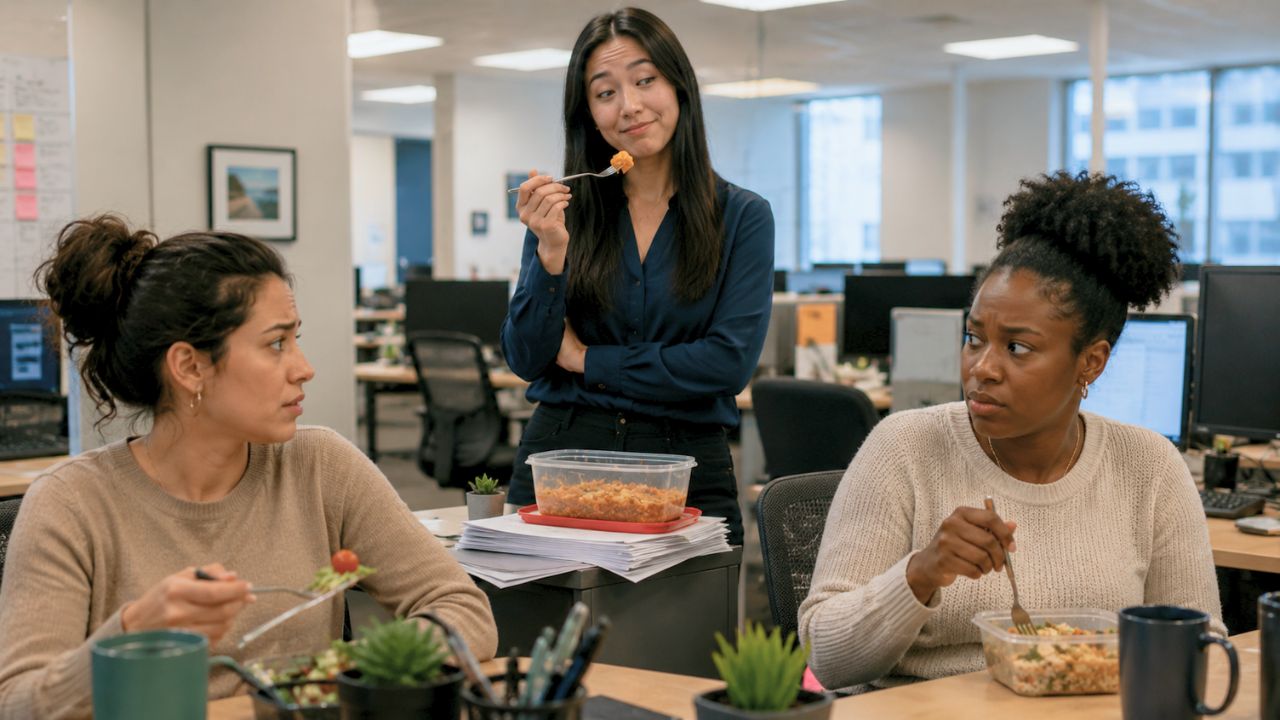
And then she’d do the part that turned it from odd to uncomfortable: she’d start looking up every time someone took a bite of their own lunch, watching like she was keeping score.
It started out like a sweet office thing
The coworker—people called her Mara behind her back because her real name got whispered like it was a secret—joined the team a few months after a small restructure. She was friendly in that careful, polished way, the kind of person who asked how your weekend was but didn’t really pause for the answer.
On her first Friday, she brought in a tray of pastries. Everyone brightened, because free food is the fastest way to make coworkers feel like friends. But when someone reached for one, Mara gently slid the box closer to her laptop and said she was saving them for later.
That should have been the end of it. Yet Monday came, and she brought a big deli salad. Tuesday, a takeout bag that smelled like garlic and butter. Wednesday, a homemade loaf wrapped in foil. She’d open everything slowly, almost like a display, and then eat… maybe two bites.
The rest sat there, uncovered, filling the air. The rest of the office sat there, hungry, trying to focus.
Then she started narrating other people’s lunches
Once the pattern became obvious, people stopped pretending it was generous. It felt like a performance. Mara would reheat something fragrant and then pace to the printer, passing desks like she wanted everyone to notice.
When the team’s newest analyst ate yogurt at 10:30, Mara drifted by and commented that dairy was “bold” in the morning. When someone warmed up leftover fish, Mara made a face and asked if that was “really necessary.” When the receptionist brought a protein bar, Mara asked if she was “still dieting.”
It got worse around lunch. Mara would sit at the edge of the break room table, her own food arranged in front of her like a magazine photo, and then watch everyone else eat. Not with casual interest. With focus.
People started taking lunches at their desks or on quick walks just to avoid the feeling of being observed. The break room, which used to be where people traded weekend plans and office gossip, turned quiet and clipped. Bite. Swallow. Back to work.
The team tried polite hints, and she pushed back
Her manager tried the soft approach first. He mentioned that if she was bringing treats, the office loved it when people shared. Mara smiled and said she just liked having options. He mentioned that strong smells could be distracting. Mara said she didn’t notice any smells.
A coworker tried joking. If Mara was going to bring in restaurant takeout every day, did she want to start an office lunch club? Mara laughed too loudly and said she didn’t like people touching her food.
Then she started bringing in more. Not less.
One Thursday, she arrived with two boxes of fancy cupcakes and set them on her desk in full view of the walkway. The frosting was piled high and glossy, the kind of thing you can’t unsee once you’ve seen it. When someone complimented them, Mara said she “couldn’t possibly eat them all,” then kept her hands on the lid like a guard.
Later, when she caught someone staring, she asked if they were feeling hungry. It wasn’t an offer. It was a comment, like she’d spotted a weakness.
The breaking point came during a meeting with no lunch break
The blowup happened on a deadline day when everyone was locked into back-to-back meetings. Lunch became whatever you could grab between calendar invites. People were already irritated, already worn down.
Mara walked into the conference room carrying a foil pan. She set it on the side table and peeled it back just enough for the smell to hit: baked pasta, rich and hot. Half the team’s stomachs actually growled, and a few people laughed awkwardly like they could turn it into a joke.
Mara didn’t laugh. She sat down and watched.
When the meeting dragged past an hour, someone quietly opened their bag and started eating crackers. Mara leaned over and asked, in front of everyone, whether they “needed to eat right now.” Then she nodded toward the foil pan and said she’d brought something “more satisfying,” but she didn’t move it closer or offer plates.
The room went still in that way it does when everyone is trying to decide if they just witnessed something rude or if they’re overreacting.
Finally, one coworker—usually the calmest person on the team—said, plainly, that it was weird to bring food in, make it smell up the room, and then police what other people were eating. He didn’t raise his voice. That was almost worse.
Mara’s face tightened, and she snapped that she wasn’t policing anyone. She said people were “obsessed” with her food and that it made her uncomfortable. Then she grabbed the foil pan, stood up mid-meeting, and left the room.
Everyone sat there listening to her heels click away while the manager tried to restart the agenda like his entire team hadn’t just watched a social grenade roll under the table.
People compared notes, and the pattern got uglier
After that, the office chatter wasn’t even gossip anymore. It was people checking their own sanity. Had she been watching them eat? Was she making comments to everyone? Was it only certain people?
It turned out Mara had been targeting a few coworkers more than others, especially anyone who was dieting, pregnant, recently postpartum, or just openly stressed. One person admitted Mara had asked how much weight she’d gained since starting the job. Another said Mara had once stood behind her chair and remarked that she “must be starving” based on how fast she was eating.
Someone else shared that Mara didn’t just bring food. She brought food she knew people liked. A colleague mentioned loving a certain bakery, and suddenly Mara would show up with that bakery’s signature cookies—place them on her desk, and never share.
It stopped feeling like social awkwardness and started feeling like a game she liked winning.
Even people who didn’t care about snacks felt gross about it. It wasn’t the pastries. It was the power move.
HR stepped in, but the office didn’t reset overnight
The manager didn’t want to involve HR until he had to. After the meeting incident, he didn’t have a choice. Multiple employees reported feeling distracted and singled out, and the “food in meetings” moment was an easy, concrete example.
HR set guidelines that sounded basic but were clearly written with Mara in mind: no strongly scented foods in meetings, no commenting on coworkers’ eating habits or bodies, and no leaving perishable foods out at desks. If someone brought food to share, it had to be placed in the break room with a note. If it wasn’t for the group, it stayed packed away.
Mara reacted the way people like that often do. She didn’t apologize. She acted offended. For a week, she barely spoke and kept her lunch in a cooler bag like she was making a point.
Then she started eating at her desk with headphones on, which would have been fine if she didn’t still make little faces when people walked by with their own lunches. The comments mostly stopped, but the mood didn’t bounce back right away.
People had learned to tense up in the break room. They’d learned to second-guess taking a bite. You don’t forget that kind of weird scrutiny quickly.
Over time, the office found its rhythm again. The team started doing occasional potlucks where everything went on one table with labels, no hovering, no weirdness. But Mara never contributed. She also never quite rejoined the social fabric she’d frayed.
And even months later, if someone opened a container of cinnamon rolls in the morning, the first reaction wasn’t excitement. It was a quick glance around the room, just to make sure nobody was watching.
Check out more from Now Rundown:
- A Party of 12 Came Back a Month Later Demanding Their $80 Tip Refunded — My Restaurant Made Me Pay It
- Her Coworker Kept Filing the Same Complaint About Her After Being Warned — Then She Filed a Counter-Report With Every Email Documented
- Siblings Demanded Half of Their Sister’s $11 Million Inheritance — She Refused Because They Never Visited
- The Kid I Bullied in Middle School Just Interviewed for a Job on My Team — He Bombed It and I Didn’t Hire Him

Abbie Clark is the founder and editor of Now Rundown, covering the stories that hit households first—health, politics, insurance, home costs, scams, and the fine print people often learn too late.