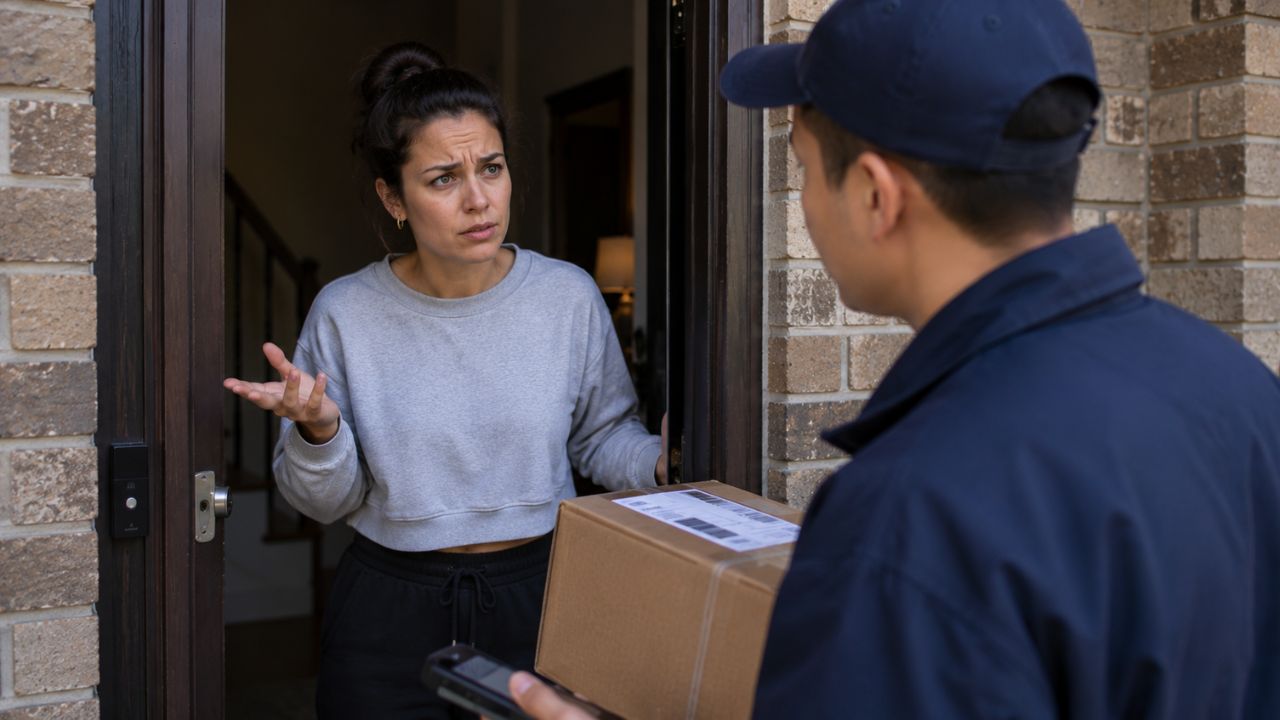
Package Delivered to Wrong House, Homeowner Refused to Return It — And the Delivery Photo Made It Obvious
Photo credit: Nowrundown.com
A Reddit user said a misdelivered package turned into a frustrating neighbor dispute after the delivery photo appeared to show exactly where the package had gone, but the homeowner at that address allegedly refused to return it.
The user shared the situation in a post on r/legaladvice, explaining that a package had been delivered to the wrong home. That kind of mistake is annoying, but usually fixable. A carrier drops a package at the wrong porch, the delivery photo gives away the location, and the person who received it either brings it over or leaves it outside for the rightful recipient.
But according to the poster, that did not happen here.
The package was apparently delivered to a house that was not theirs, and the delivery photo made the mistake clear. The poster believed they knew which home had received it. But when they tried to get the package back, the homeowner allegedly refused to return it.
That changed the whole situation. A misdelivery can be an honest shipping error. Refusing to return a package that clearly belongs to someone else makes it feel much more like theft.
The poster wanted to know what they could do next. Should they call police? Contact the carrier? Go through the seller? File a claim? Keep pushing the homeowner? Would the delivery photo be enough proof that the package went to that house?
Those questions matter because misdelivered packages sit in a strange middle ground. The buyer did not receive what they paid for. The carrier may say the package was delivered. The seller may say the order reached the destination area. And the person who physically has the box may deny having it or refuse to hand it over.
The delivery photo can be powerful in that situation. It can show the porch, door, house number, welcome mat, siding, or other details that identify the wrong home. But the photo may not prove what happened after delivery. Someone else could have taken the package from that porch. The homeowner could claim they never saw it. The carrier could have made another mistake. That is why the poster needed to handle the next steps carefully.
The neighbor angle made the situation worse. If the package went to a stranger across town, the poster might not have to see that person again. But if it went to someone nearby, the dispute could linger. Every future delivery could become a worry. Every interaction could feel tense.
The post did not describe a dramatic confrontation. It described a common modern problem with a sharper edge: a package goes to the wrong house, proof points to the location, and the person at that house allegedly refuses to cooperate.
For the poster, the issue was not only the item inside the box. It was the feeling that someone could keep their property simply because a delivery driver made a mistake.
Commenters urged the poster not to keep arguing with the homeowner directly. If the person had already refused to return the package, more confrontation could make the situation worse without getting the item back.
Several people said the poster should contact the carrier and report the misdelivery. The delivery photo was important because it showed the package did not reach the correct address. If the carrier delivered it to the wrong house, the carrier may need to investigate or correct the delivery record.
Others said the seller should also be contacted. In many cases, the seller is the shipper and may be the one with standing to open a claim with the carrier. The poster could provide the delivery photo, explain that the image showed the wrong house, and ask for a replacement or refund.
Police reports also came up. Commenters said that if the homeowner truly had the package and refused to return it, the poster could consider filing a report. The value of the item would matter, and police response might vary, but having a report could help with a claim or create a record if the issue escalated.
Several people warned against taking matters into their own hands. The poster should not go onto the other person’s porch, try to retrieve the package themselves, or get into a heated argument at the door. Even if the package was theirs, walking onto someone else’s property to take it could create a new problem.
Commenters also suggested saving everything: the delivery photo, tracking number, order receipt, messages to the carrier, messages to the seller, and any communication with the homeowner if it existed. A clear paper trail would make the claim stronger.
The post did not end with the package recovered or the homeowner admitting anything. It ended with the poster trying to decide how to get help when the proof seemed obvious but the package was still gone.
That is what made the situation so aggravating. The delivery photo appeared to show the mistake. The poster believed the wrong house had the box. But knowing where something went is not always the same as getting it back.
Commenters did not tell the poster to keep knocking or turn it into a neighborhood fight. They told them to use the photo as evidence, go through the carrier and seller, file a police report if needed, and keep the whole thing documented.
Because when a package is delivered to the wrong house and the person there refuses to return it, the problem is no longer only a delivery mistake. It becomes a question of who will make the mistake right — before the box disappears for good.
Check out more from Now Rundown:
- A Party of 12 Came Back a Month Later Demanding Their $80 Tip Refunded — My Restaurant Made Me Pay It
- Her Coworker Kept Filing the Same Complaint About Her After Being Warned — Then She Filed a Counter-Report With Every Email Documented
- Siblings Demanded Half of Their Sister’s $11 Million Inheritance — She Refused Because They Never Visited
- The Kid I Bullied in Middle School Just Interviewed for a Job on My Team — He Bombed It and I Didn’t Hire Him

Abbie Clark is the founder and editor of Now Rundown, covering the stories that hit households first—health, politics, insurance, home costs, scams, and the fine print people often learn too late.