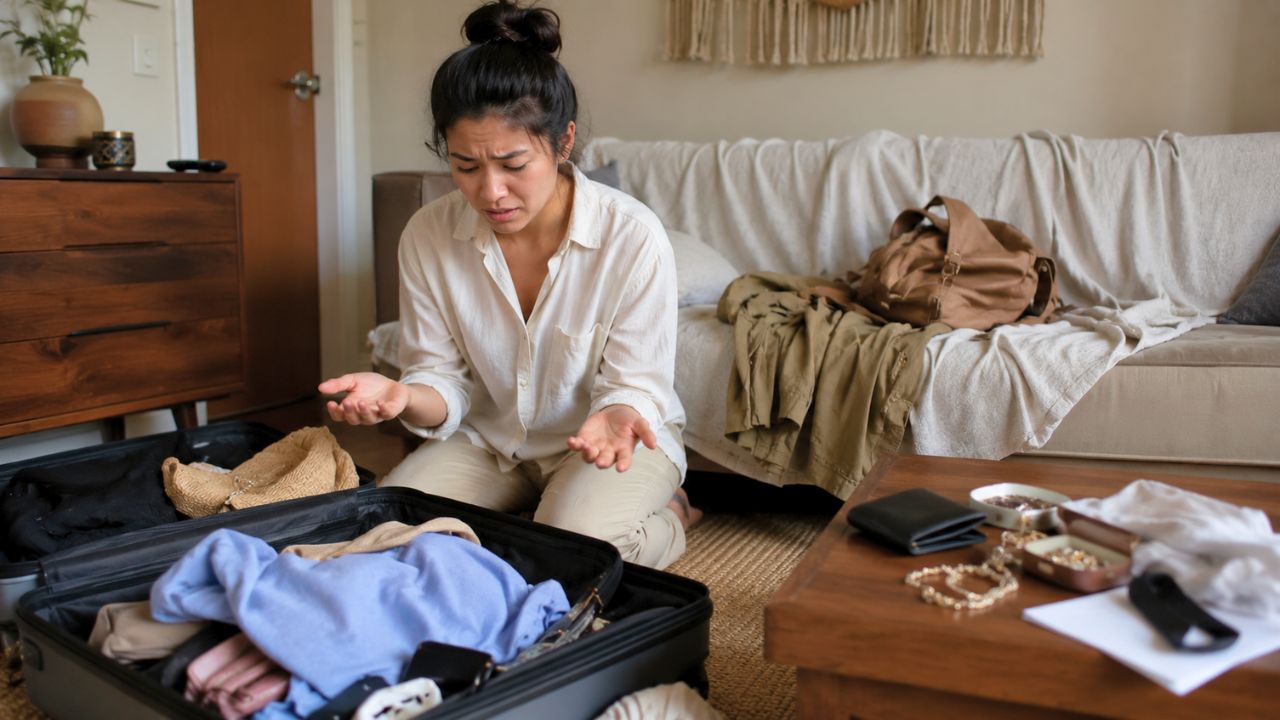
Airbnb Guest Says Belongings Were Rummaged Through and $15K Was Gone
Photo credit: Nowrundown.com
An Airbnb guest said a stay turned into a major legal and financial problem after they returned to find their belongings had allegedly been searched through and $15,000 was missing.
The guest shared the situation in a post on r/legaladvice, explaining that the issue had moved beyond an ordinary complaint with a short-term rental. This was not about dirty sheets, a bad check-in process, a misleading listing, or a refund dispute. The guest said personal belongings had been rummaged through, and a large amount of money was gone.
That kind of claim changes the whole nature of a rental problem. A guest staying in an Airbnb expects privacy and control over the space during the booking. They know the host owns the property, but while they are paying to stay there, their personal belongings should not be searched, disturbed, or taken. When a guest believes someone went through their things, the rental no longer feels like a temporary home. It feels like a crime scene.
The amount made the situation even more serious. Missing cash or property valued at $15,000 is not a minor loss. It can affect travel plans, savings, business needs, or family finances. It also raises the stakes for how the guest documents the claim. A large loss means more scrutiny. The guest would need proof of the money or property, proof it was present, evidence of who had access, and records showing what happened after the discovery.
That is where the Airbnb angle made everything complicated. Short-term rentals often involve multiple possible access points. The host may have access. Co-hosts may have access. Cleaners, maintenance workers, previous guests, or property managers may have codes or keys. If the door code was not changed, or if someone entered during the stay, the guest may not know who was responsible without logs, cameras, or admissions.
The guest’s post centered on what legal path made sense: small claims court or arbitration. That question usually comes up when a platform’s terms of service make disputes less straightforward. Airbnb, like many companies, has processes for claims, support cases, host disputes, and possibly arbitration clauses. The guest was trying to figure out where a loss this large belonged.
That uncertainty can be maddening. The guest may feel like the obvious issue is theft. But once a platform, host, rental agreement, and legal process are involved, the path to recovering money can turn into a maze. Police may investigate the theft, but that does not guarantee the guest gets repaid. Airbnb may review a claim, but that does not guarantee the platform accepts responsibility. Small claims court may have limits, and arbitration may be required depending on the terms.
The guest needed to decide how to move forward without accidentally choosing the wrong process or missing a deadline.
The post did not describe a simple resolution where the money was returned. It captured the stage where the guest had already suffered a major loss and was trying to understand how to turn that loss into a legal claim strong enough to matter.
Commenters focused on the need to treat the situation as both a criminal matter and a civil or platform dispute.
Several people said the guest should have a police report if they believed money or property had been stolen. A police report would create an official record and could help with Airbnb, insurance, or any later legal process. If the guest had already filed one, commenters said they should keep the report number and any follow-up details organized.
Others said the guest needed to gather proof of the missing amount. For a $15,000 claim, it would not be enough to simply say the money was there and then gone. Bank withdrawal records, receipts, photos, business records, travel documentation, messages, or any other proof could become important. The larger the amount, the more important the documentation.
Commenters also urged the guest to preserve every Airbnb record. That included the listing, booking confirmation, house rules, check-in instructions, door-code messages, host communications, support messages, claim filings, photos of the property, and anything showing who had access during the stay.
Some people said the guest should check whether the property had smart-lock logs or cameras covering entrances. Those logs could potentially show whether someone entered during the stay and when. The guest may not be able to access that information directly, but police, Airbnb, or an attorney might be able to request it.
The legal-process question drew cautious responses. Commenters said the guest needed to review Airbnb’s terms and any arbitration agreement carefully. If arbitration was required, trying small claims first might not work, unless the terms allowed small claims as an exception. Because the amount was significant, several people suggested speaking with an attorney before choosing a path.
Insurance also came up. Depending on the circumstances, renters insurance, homeowners insurance, travel insurance, business insurance, or credit-card travel protections might offer some coverage. But commenters warned that insurers would likely require strong documentation and a police report.
The post did not end with a confirmed suspect, a reimbursement, or a clear court outcome. It ended with the guest trying to understand how to recover from a major loss inside a short-term rental.
That is what made the situation so stressful. Losing belongings in an Airbnb is already upsetting. Believing someone rummaged through private items and took $15,000 turns the stay into something much bigger than a bad rental experience.
Commenters did not tell the guest to rely only on platform support. They told them to document everything, preserve the police report, gather proof of the loss, review the arbitration terms, and speak with a lawyer because of the amount involved.
Because when $15,000 disappears during an Airbnb stay, the question is not only who took it. It is whether the guest can prove the loss clearly enough to recover anything after the trip is over.
Check out more from Now Rundown:
- A Party of 12 Came Back a Month Later Demanding Their $80 Tip Refunded — My Restaurant Made Me Pay It
- Her Coworker Kept Filing the Same Complaint About Her After Being Warned — Then She Filed a Counter-Report With Every Email Documented
- Siblings Demanded Half of Their Sister’s $11 Million Inheritance — She Refused Because They Never Visited
- The Kid I Bullied in Middle School Just Interviewed for a Job on My Team — He Bombed It and I Didn’t Hire Him

Abbie Clark is the founder and editor of Now Rundown, covering the stories that hit households first—health, politics, insurance, home costs, scams, and the fine print people often learn too late.