Woman Says Her Uninvited Mom Asked for Wedding Details — Then Admitted She Wanted to “Figure Out Something Else”
Photo credit: JackF/istock.com
A woman says she was caught in the middle of a wedding conflict that was not hers after her mother, who had already been left off the guest list, started pushing for details anyway.
She explained in a Reddit post that the bride was not a stranger. Their families had been close for years. The bride’s brother and the poster’s brother had been best friends since preschool, their mothers had once been close friends, and the families lived within walking distance of each other when they were younger.
The poster had also grown closer to the bride as adults because they were in similar stages of life: having their first children and getting married around the same few years.
So when the bride got married, the poster was invited.
Her parents were not.
That exclusion did not come from nowhere, at least from the poster’s point of view. She said that as the family grew older, more people had recognized her mother’s “bad” and “unwell” behavior. The poster described herself as constantly teetering on no contact with her mom and said her dad had become more complicit in her mother’s erratic behavior and bipolar lash-outs.
The bride’s family had apparently made its own decision about that behavior too.
When the poster’s mother found out she was not invited to the wedding, she did not quietly accept it. According to the poster, her mom walked down to the bride’s father’s house and berated him for not making his daughter invite them.
The bride’s father told her he had no control over the guest list and that it was not his call.
That should have been the end of it.
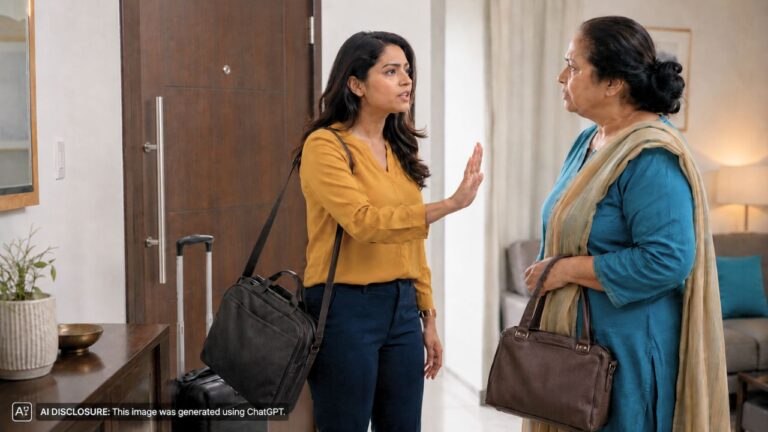
But the day before the wedding, the poster’s mom started texting her for wedding information. She wanted details and asked the poster to send a picture of the wedding invitation.
The poster did not respond.
That silence was intentional. She knew her mother was not invited, and she did not believe it was her place to hand over details to someone the bride had chosen not to include. Sending a picture of the invitation would have felt like helping her mother get around a boundary that was not hers to override.
Her mother sent another text after that. This one was sarcastic and rude, basically thanking the poster for “not being there for her.”
Almost a week later, the poster’s dad texted her and asked if she was mad at them because she had never responded to her mom’s questions. The poster told them she was not mad. She said she had simply felt uncomfortable providing the information and did not think it was her place.
That answer sent her mom into another spiral.
According to the poster, her mom told her to grow up and said she should have said she was uncomfortable so the mother could “figure out something else.”
That line seemed to say the quiet part out loud. From the poster’s point of view, her mother was not asking for wedding details for some harmless reason. She seemed to want enough information to find another way in, or at least another way to push.
The poster later learned her mother had also texted the bride’s brother for details. He did not answer either. But because the poster was her daughter, she was the one who got harassed about it days later.
That left the poster wondering if she had handled it wrong. Should she have responded directly and said she was not comfortable giving out the wedding information? Or was it reasonable to assume that an adult would understand silence after an inappropriate request?
The situation had a strange emotional pull because the poster was not the bride. This was not her guest list. She was not the person who had decided her parents could not attend. But her mother tried to pull her into it anyway, making her choose between respecting the bride’s boundary and soothing her mom’s anger.
She chose the boundary.
And that choice triggered the familiar family pattern she already seemed exhausted by: her mother’s anger, her father stepping in afterward, and the poster being treated like the problem for not making her mother’s feelings easier to manage.
The post did not include a dramatic update where the mother crashed the wedding or apologized. But the core conflict was sharp enough without that. The poster had one simple job as a guest: not give an uninvited person access to someone else’s wedding.
Her mother seemed to think being hurt by the exclusion entitled her to information.
The poster did not agree.
Commenters overwhelmingly told her she was not wrong. Many said it would have been rude and inappropriate to send wedding details or an invitation photo to someone who had purposely not been invited.
Several people said the mother’s comment about wanting to “figure out something else” was the clearest sign that the poster made the right call. To them, it sounded like the mom wanted time to pressure someone else, show up anyway, or find another way around the bride’s decision.
Others said the poster’s parents sounded exhausting, and the poster agreed in the comments that they were “always one conversation away from no contact.”
A lot of commenters encouraged her to keep setting firm boundaries, especially because she had a child of her own. Some warned that if her mother treated a wedding invitation this way, she might also treat parenting boundaries as challenges later.
Several people said the poster did not owe a detailed explanation. Silence was enough, especially when the request was obviously inappropriate.
The strongest advice was simple: the bride did not invite the mom, and the poster had no right to help her get around that. Not answering was not rude. It was respectful.

Abbie Clark is the founder and editor of Now Rundown, covering the stories that hit households first—health, politics, insurance, home costs, scams, and the fine print people often learn too late.