Caregiver Told Her New Employer She Was Pregnant During Orientation — She Was Sent for Medical Clearance, Then Fired, and the Franchisee Paid $324,200
Photo credit: AI-generated image created using ChatGPT.
A new hire showed up for orientation ready to start caregiving work in South Carolina. Partway through, she disclosed she was pregnant—something plenty of workers share early because it can affect scheduling and physical tasks. What happened next, the EEOC says, spiraled fast: she was told to get medical clearance, later reported a pregnancy-related limitation, and ended up fired anyway.
That chain of events is at the center of a federal discrimination charge resolved this week, with Florence CK, LLC—a Comfort Keepers franchisee—agreeing to pay $324,200 and accept oversight and training requirements, as laid out in the EEOC’s announcement. The agency says its investigation found “reasonable cause” to believe multiple federal laws were violated during the hiring process and after the pregnancy disclosure.
Orientation turned into a medical hurdle
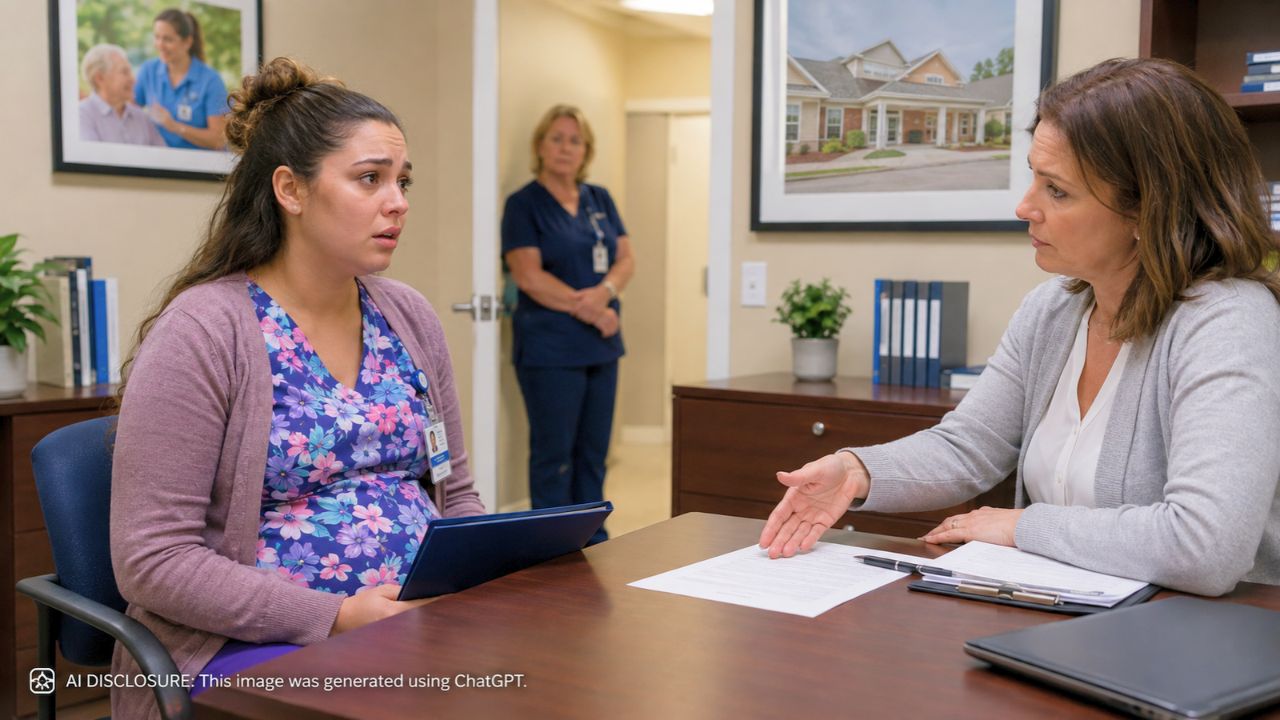
According to the EEOC, the employee was attending orientation in November 2023 when she informed the company she was pregnant. Rather than simply moving forward with training and placing her with appropriate duties, the company instructed her to obtain medical clearance.
That detail matters because medical requests can cross legal lines when they’re not job-related, not applied consistently, or function as a barrier to employment. In this case, the EEOC says it found reasonable cause to believe the employer required an unlawful medical exam.
The agency’s version of the timeline keeps the focus on immediacy: pregnancy disclosed at orientation, clearance demanded, and then—after she raised a pregnancy-related limitation—the relationship with the employer deteriorated into termination.
She said she had a limitation—then came the firing
The EEOC says the employee later notified the company of a pregnancy-related limitation. At that point, the employer had a choice: talk through what she could and couldn’t do, determine what changes might help, and see whether she could still do the essential functions of the job with or without a reasonable accommodation.
Instead, the EEOC found reasonable cause to believe the company failed to accommodate her and eventually fired her, even though she could perform the essential functions with or without a reasonable accommodation. It’s the kind of escalation that leaves workers feeling like disclosure itself was treated as disqualifying—especially when the employee was still brand-new and hadn’t even fully started the role.
The press release doesn’t detail the limitation, the specific accommodation sought, or the exact steps taken internally before the termination. But the EEOC’s finding is blunt on the core claim: the employee was capable of doing the job, and the employer’s response crossed legal lines.
The EEOC says four federal laws were in play
The agency’s investigation didn’t stop at one statute. It says it found reasonable cause to believe the franchisee violated Title VII of the Civil Rights Act of 1964, the Pregnant Workers Fairness Act (PWFA), and the Americans with Disabilities Act (ADA) through unlawful medical inquiries, failure to accommodate, and firing.
In plain terms, the EEOC is describing a cluster of problems that can happen when pregnancy is treated like a condition that automatically requires special permission to work. Title VII covers pregnancy discrimination through the Pregnancy Discrimination Act framework. The PWFA adds a clearer, more direct accommodation obligation for pregnancy-related limitations. And the ADA can come into play when a pregnancy-related condition rises to the level of a disability or is treated in a way that triggers disability-related protections.
Then there’s a separate allegation that expands beyond one employee. The EEOC also says it found reasonable cause to believe the company’s statewide hiring practice of requiring disclosure of family medical information violated the Genetic Information Nondiscrimination Act (GINA)—a law that, among other things, restricts employers from requesting or using genetic information, including family medical history, in employment decisions.
That piece reframes the case from a single bad call during orientation to something the agency viewed as a broader hiring practice, affecting applicants and employees across South Carolina.
The money isn’t just for one person
The resolution came through pre-litigation conciliation, meaning the matter was settled without the EEOC filing a lawsuit in court. Florence CK, LLC agreed to provide monetary relief totaling $324,000 to the affected employee and to more than 1,000 former and current candidates and employees.
The total payment listed is $324,200. The EEOC’s release ties the monetary relief to both the individual allegation and the wider hiring-practice concern, which helps explain why so many people may be included in the payout pool.
Beyond money, the agreement includes non-monetary terms designed to change how decisions get made day to day: anti-discrimination training for human resources staff, managers, and other decisionmakers; posting EEOC notices; and a specific notice about the resolution displayed in conspicuous places. The EEOC will monitor compliance for two and a half years, which is long enough to catch whether a policy change actually sticks after the headlines fade.
Where people tend to focus when they hear cases like this
Even without a comment thread attached to the EEOC release, cases like this reliably draw a certain kind of practical workplace reaction: get everything in writing, don’t rely on verbal assurances, and document the exact sequence of events. When a worker is told to get “medical clearance,” the specifics—who asked, what they asked for, and whether it’s required of everyone—often become the pivot point.
Another common focus is the speed of escalation. Orientation is usually when employers are still on their best behavior, which is why a rapid shift from “welcome aboard” to “you need clearance” to “you’re fired” tends to stand out. People also tend to flag the accommodation piece, because many pregnancy-related limitations are temporary and can be addressed through light-duty adjustments, lifting limits, modified assignments, or scheduling changes—especially in fields like in-home care where tasks vary by client.
Finally, the mention of GINA usually catches attention because it’s less familiar than Title VII or the ADA. But the EEOC’s point is straightforward: employers generally shouldn’t be asking for family medical information as part of hiring, and doing so statewide can multiply exposure quickly.
In this case, the consequences were concrete: a six-figure payment, training requirements, posted notices, and years of federal monitoring. For workers watching from the outside, the story is a reminder that pregnancy disclosure shouldn’t trigger a new set of hoops—and that when it does, it can end up costing employers far more than a simple, reasonable accommodation ever would.
Check out more from Now Rundown:
- A Party of 12 Came Back a Month Later Demanding Their $80 Tip Refunded — My Restaurant Made Me Pay It
- Her Coworker Kept Filing the Same Complaint About Her After Being Warned — Then She Filed a Counter-Report With Every Email Documented
- Siblings Demanded Half of Their Sister’s $11 Million Inheritance — She Refused Because They Never Visited
- The Kid I Bullied in Middle School Just Interviewed for a Job on My Team — He Bombed It and I Didn’t Hire Him

Abbie Clark is the founder and editor of Now Rundown, covering the stories that hit households first—health, politics, insurance, home costs, scams, and the fine print people often learn too late.