Teenager Gave Up on His Relationship With His Stepbrother After Years of Being Rejected and Corrected for Calling Him “Brother”
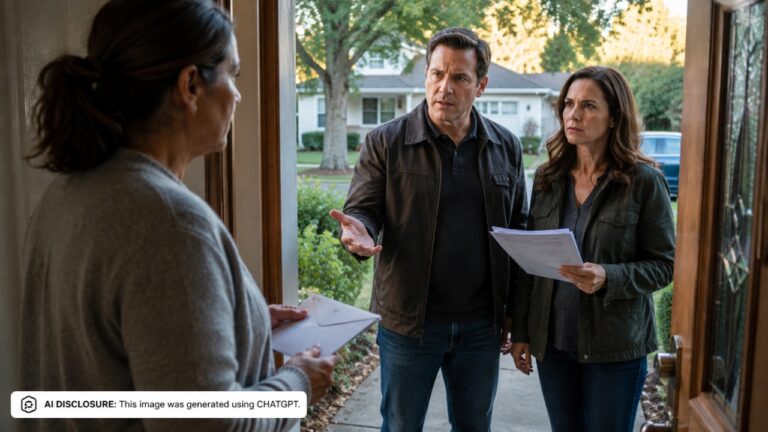
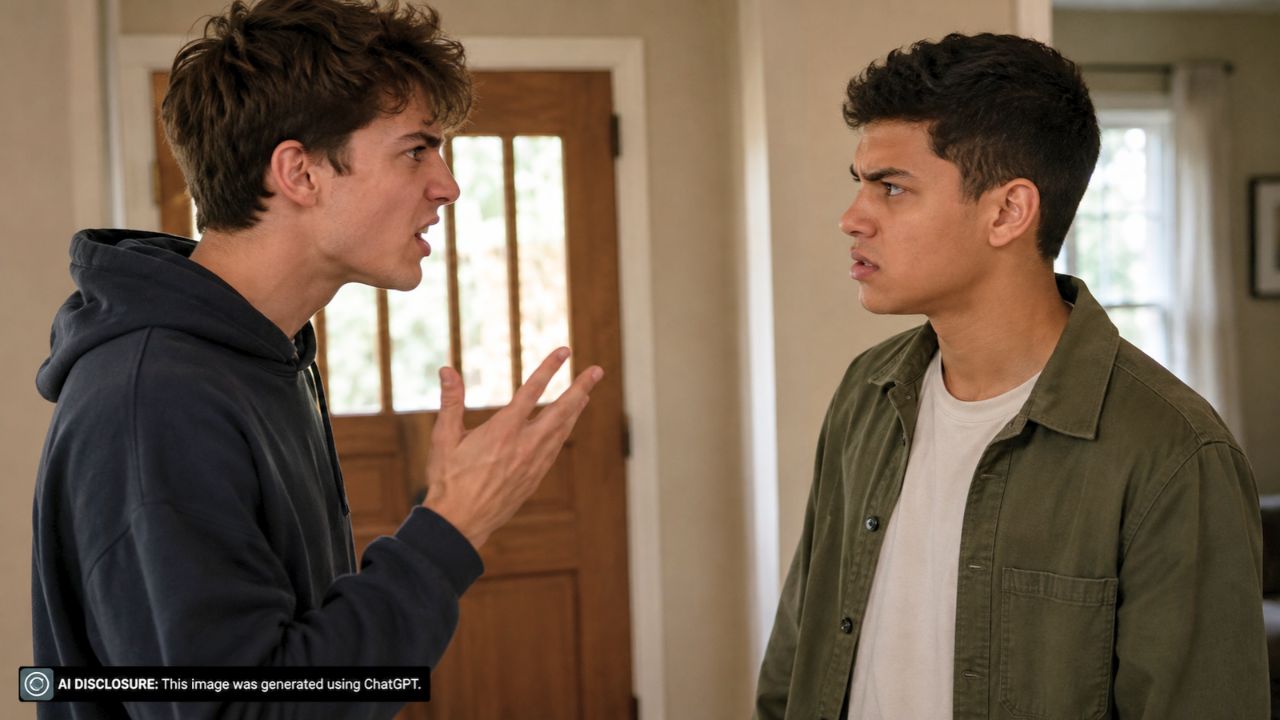
Photo credit: AI-generated image created using ChatGPT. Illustrative only.
Two boys were brought together so young that most people around them treated it like a simple fact: they were brothers. But one of them never accepted that label, and after 15 years of being corrected, avoided, and outright insulted, the other says he’s done trying.
In the original post, an 18-year-old describes growing up alongside his stepbrother Shane, also 18, after their surviving parents married when the boys were 3. The writer says he considered Shane family in the fullest sense. Shane, on the other hand, repeatedly rejected the idea—sometimes politely, sometimes harshly—and now has cut contact almost completely.
They grew up under one roof, but not with the same support system
Both boys lost a parent as babies. Shane lost his dad, and the writer lost his mom. When Shane’s mom and the writer’s dad met and built a blended household, it looked like a fresh start on paper.
In practice, the family structures around the boys were uneven. Shane had a strong connection to his paternal relatives—grandparents, cousins, and an extended family that showed up and stayed involved. The writer says he didn’t have the same thing: his paternal relatives were disinterested, and he had “no involvement” from his maternal side.
That gap showed up in the small milestones kids notice early. Shane had grandparents for school events like grandparents’ day. The writer didn’t. Shane had cousins he preferred spending time with, while the writer describes himself as the one left outside that built-in network.
“Stepbrother” wasn’t just a technicality in their house
Plenty of blended families use “brother” and “sister” casually, and the writer says that’s how the household operated. Friends, school contacts, and family acquaintances referred to the boys as brothers.
But Shane resisted that framing from the start. The writer says Shane would correct people—insisting on “stepbrother,” or saying they weren’t brothers at all. Worse, he would get angry at the writer for not correcting it himself and for seeming happy to call Shane his brother.
The writer says he wasn’t trying to erase anyone’s past. He describes a home where their late parents were respected, and where he cared about his stepmother and saw her as a second mom, even if he usually called her “stepmom.” He wanted the relationship to feel real. Shane didn’t.
Forced togetherness turned into a cycle of misery and insults
As they got older, the writer says the relationship didn’t just stall—it deteriorated. He kept trying, and the adults around them encouraged it. He says their parents praised him when he invited Shane along or attempted to include him.
But Shane only participated when he was forced to, and the writer says Shane made those moments miserable on purpose. He describes Shane being “a huge” jerk during shared activities and telling humiliating lies to put him down, including claiming he smelled or using a slur to mock him for wanting to spend time together.
Over time, the writer stopped chasing the approval he wasn’t getting and focused more on friends. Even then, he says someone always tried to push the two back together—like the family couldn’t accept that the bond wasn’t forming no matter how many invitations were extended.
Birthdays became the breaking point
The clearest examples, according to the writer, showed up around celebrations—moments that are supposed to be non-negotiable in a family. He says Shane started skipping activities planned for his birthday, leaving to go to his extended family before their parents could intervene. On some occasions, Shane allegedly went as far as hiding at friends’ houses to avoid celebrating him.
Then, when Shane’s birthday came around, the writer says he didn’t just get left out; he was made to feel excluded on purpose. He claims Shane’s friends would “gang up” on him so the message was clear: this was not his space, not his day, and not his family moment.
At that point, the issue wasn’t a teenager being awkward about blended-family labels. It was an established pattern of rejection, followed by public humiliation, with parents unable to stop it in real time.
Moving out didn’t end the feud—it made the cutoff official
After his birthday, Shane moved in with his extended family, the writer says. Contact narrowed to Shane speaking with his mom and “maybe” the writer’s dad—if the dad happened to answer the phone.
When the writer tries to call, he says Shane hangs up. Even when Shane calls their mom, if she asks the writer to answer and he picks up, Shane ends the call immediately. The writer describes it as deliberate: Shane wants no contact, no conversation, and no chance for the writer to be casually included again.
So the writer made his own decision. He stopped trying. He says he “gave up,” let it go, and accepted that Shane does not want a sibling relationship.
Family members keep pushing him to keep reaching out anyway
The part that’s left the writer questioning himself isn’t just the rejection—it’s the pressure from the adults around him. He says his parents and family friends insist they’re “too young to give up” on a sibling bond and that, in the long run, “we’re all each other has.”
They’re asking him to stay consistent in reaching out, even if it’s one-sided. The writer says when he pointed out that Shane has explicitly said they’ll never be real siblings, he was told he still shouldn’t quit—and should do it “for my family,” even if it’s not for him and Shane personally.
That puts him in a familiar role: the one expected to absorb rejection quietly to keep the household story intact. Not the one who’s been openly refusing the relationship for years.
In responses to stories like this, people typically focus less on forcing reconciliation and more on respecting clear boundaries—especially when the rejection comes with cruelty. The practical point is straightforward: you can’t build a sibling bond alone, and repeatedly offering yourself up for humiliation doesn’t create closeness; it just teaches everyone involved that one person’s feelings are optional.
For now, the writer’s reality is that Shane has a place with extended family, a social circle that backs him up, and a clear preference to keep distance. The writer has friends and a life he’s trying to build, but also a family still asking him to perform hope on command. And that may be the last unresolved tension: not whether Shane will ever come around, but whether the writer is allowed to stop bleeding in the name of togetherness.
Check out more from Now Rundown:
- A Party of 12 Came Back a Month Later Demanding Their $80 Tip Refunded — My Restaurant Made Me Pay It
- Her Coworker Kept Filing the Same Complaint About Her After Being Warned — Then She Filed a Counter-Report With Every Email Documented
- Siblings Demanded Half of Their Sister’s $11 Million Inheritance — She Refused Because They Never Visited
- The Kid I Bullied in Middle School Just Interviewed for a Job on My Team — He Bombed It and I Didn’t Hire Him

Abbie Clark is the founder and editor of Now Rundown, covering the stories that hit households first—health, politics, insurance, home costs, scams, and the fine print people often learn too late.