Veteran Cut Off Her Parents After They Announced Plans to Leave Almost Everything to Her Struggling Brother Despite Never Paying for Her Education
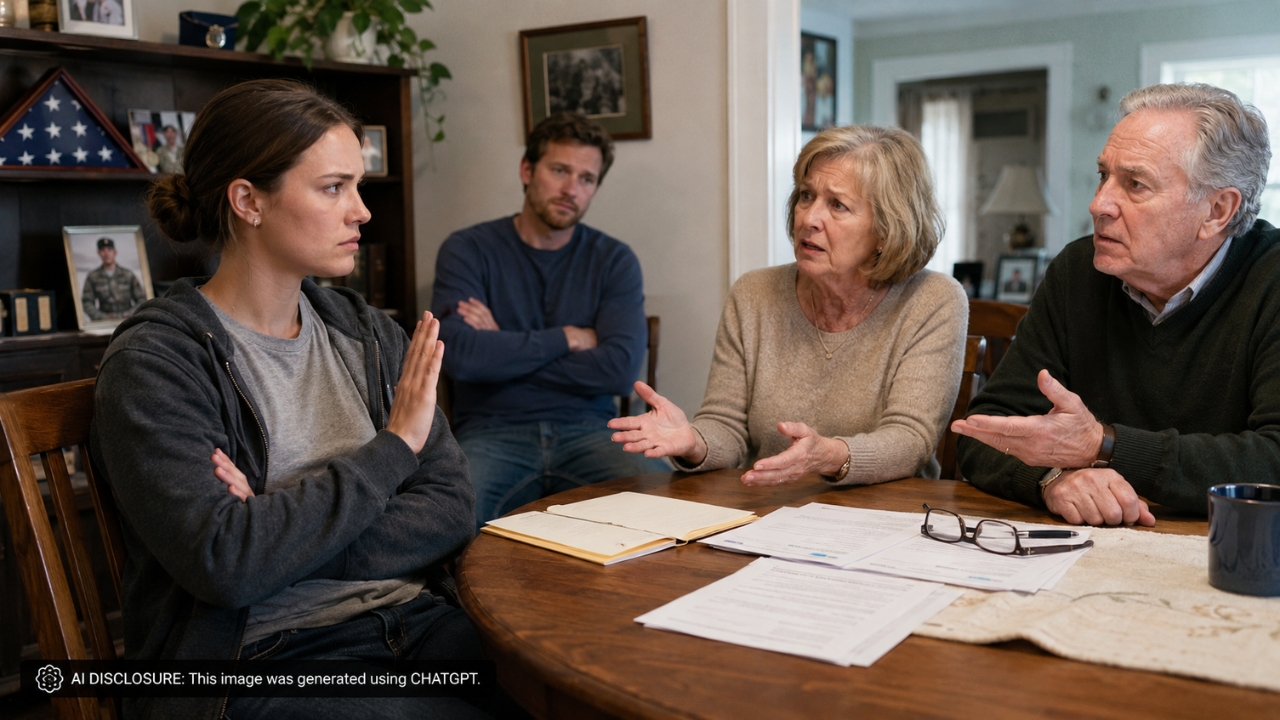
Photo credit: AI-generated image created using ChatGPT. Illustrative only.
At 24, she’s already built the kind of stability her parents always said they wanted for their kids: military service, a degree earned through her own effort, a home, and a plan to keep moving up. But one family conversation about a will turned that pride into a hard stop.
In the original post, the veteran said she cut off her parents after they told her they intend to leave “almost everything” to her older brother—while also expecting her to handle the responsibilities that come with aging parents: medical power of attorney, estate management, and the practical day-to-day help that keeps them afloat.
They raised two kids with “earn your own way” rules—until adulthood
The woman described growing up with parents who insisted both children fund their own futures. In her case, that meant joining the military at 17 and using her service benefits to climb through school. She earned an associate degree while enlisted, put her GI Bill toward a bachelor’s degree, and said she’s now working toward a master’s.
Meanwhile, her brother—32, their only other child—never took off in the same way. She called him a “failure to launch,” saying he struggled academically, didn’t attend college, and attempted two trade programs (welding and mechanic) but “basically flunked out.” He now works at a gas station.
On paper, it could look like two adults who made different choices. What she can’t get past is what happened behind the scenes once they were grown.
The money divide wasn’t subtle, and it wasn’t occasional
She said her parents helped her brother in ways they never offered her. They fully paid for him to attend trade school twice. They’ve given him cash when he fell behind on rent, along with what she described as countless “loans.”
She emphasized she wasn’t angry that her parents didn’t pay for her education or wedding. She learned to function without that kind of support, and in many ways that independence became part of her identity.
What stung was the disparity: her parents holding the line with her while repeatedly stepping in for him. In her telling, they were subsidizing his attempt to “cosplay as an adult,” while she was expected to shoulder everything alone.
The will conversation changed the whole relationship overnight
The breaking point came when her parents—both in their sixties and in poor health—began working on their will. She believes they likely won’t live another ten years, and the family is already dealing with the realities of medical limitations.
She said her parents notified both children that they plan to leave almost everything to her brother. At the same time, they want her to serve as medical power of attorney and to manage their estate.
To her, it sounded like being asked to do the difficult, time-consuming work of caretaking and administration, while her brother receives the bulk of the financial benefit. She responded by telling them to give him everything—and that she was “completely done” with them.
Her parents pushed back by asking her to have “some grace,” arguing that her brother isn’t very capable and will need support even after they’re gone. But for her, the message was clear: the expectations were still uneven, only now the stakes involved legal authority and long-term responsibility.
Then came the ride request—and the line got even sharper
The tension didn’t stay theoretical for long. The next flashpoint was a small, concrete ask: her mother had a doctor’s appointment and needed a ride because she “medically can’t work,” according to the post.
This is the kind of errand that often becomes the default job of the responsible child, especially when parents’ health declines. Instead of stepping in, she refused. She told her mother to ask her “favorite child” or pay for an Uber.
It was a blunt line, and it made the household dynamic explicit: if the parents are choosing a primary beneficiary and framing one child as the one who needs to be carried, they can’t also automatically draft the other child to be the driver, administrator, and crisis manager.
After that exchange, she described the family atmosphere as tense and hostile—less a disagreement and more a standoff.
Her brother apologized, but she aimed her anger higher
Her brother eventually called to apologize and asked her not to be mad at him. She told him she wasn’t angry with him and that he “didn’t do anything wrong.”
That moment matters because it shows how the resentment is targeted. She doesn’t describe her brother as malicious or scheming; she describes him as someone their parents have continually propped up. Her frustration is with the system her parents created: one set of rules for the child who performed well and another for the child they worry about.
She also included an important clarification about the word “disabled.” She said she meant to put it in quotation marks and explained that her mother calls her brother disabled even though he isn’t, in her view. The brother has been tested for learning disabilities, she wrote, and her mother still treats his below-average IQ as a disability.
That detail adds another layer to the conflict: it’s not only about money, but about the narrative the parents use to justify unequal treatment—and how that narrative might follow the family into legal decisions about caregiving and control.
What people zeroed in on: don’t do the work if you’re not being trusted
While the post itself centers on whether cutting her parents off makes her wrong, the practical heart of the dispute is the split between responsibility and reward. When one child is asked to be medical power of attorney and manage an estate, that isn’t a symbolic role. It can mean medical decisions, paperwork, logistics, and a steady stream of emergencies.
In dynamics like this, many observers tend to focus less on the morality of a will and more on consent: nobody can be forced into being the family’s administrator. If her parents want her to do the hard parts, they need her buy-in—and she’s signaling she won’t provide labor and authority on demand while being treated as an afterthought financially and emotionally.
The other point people often raise in these scenarios is clarity. If parents truly believe one child needs more help, they can still structure things to avoid punishing the other child: clear roles, clear compensation for time, or balanced inheritances with safeguards. But the plan she was presented with sounded like a one-way arrangement: she manages, he benefits.
For now, she’s chosen distance. Her parents still have their plan, her brother still has his life, and she’s drawn a boundary that turns every future request—rides, appointments, paperwork—into a new test of who the family thinks is responsible for whom.
Check out more from Now Rundown:
- A Party of 12 Came Back a Month Later Demanding Their $80 Tip Refunded — My Restaurant Made Me Pay It
- Her Coworker Kept Filing the Same Complaint About Her After Being Warned — Then She Filed a Counter-Report With Every Email Documented
- Siblings Demanded Half of Their Sister’s $11 Million Inheritance — She Refused Because They Never Visited
- The Kid I Bullied in Middle School Just Interviewed for a Job on My Team — He Bombed It and I Didn’t Hire Him

Abbie Clark is the founder and editor of Now Rundown, covering the stories that hit households first—health, politics, insurance, home costs, scams, and the fine print people often learn too late.