Man Cut Off His Parents After They Drove Over 1,100 Miles to Corner Him Into a Conversation He Had Already Refused to Have
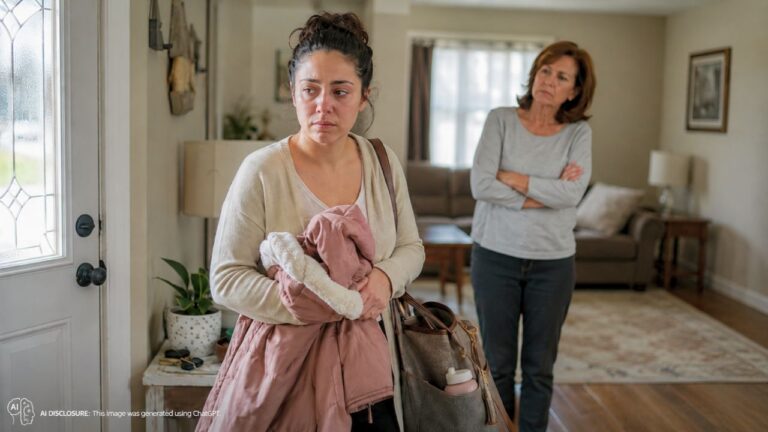
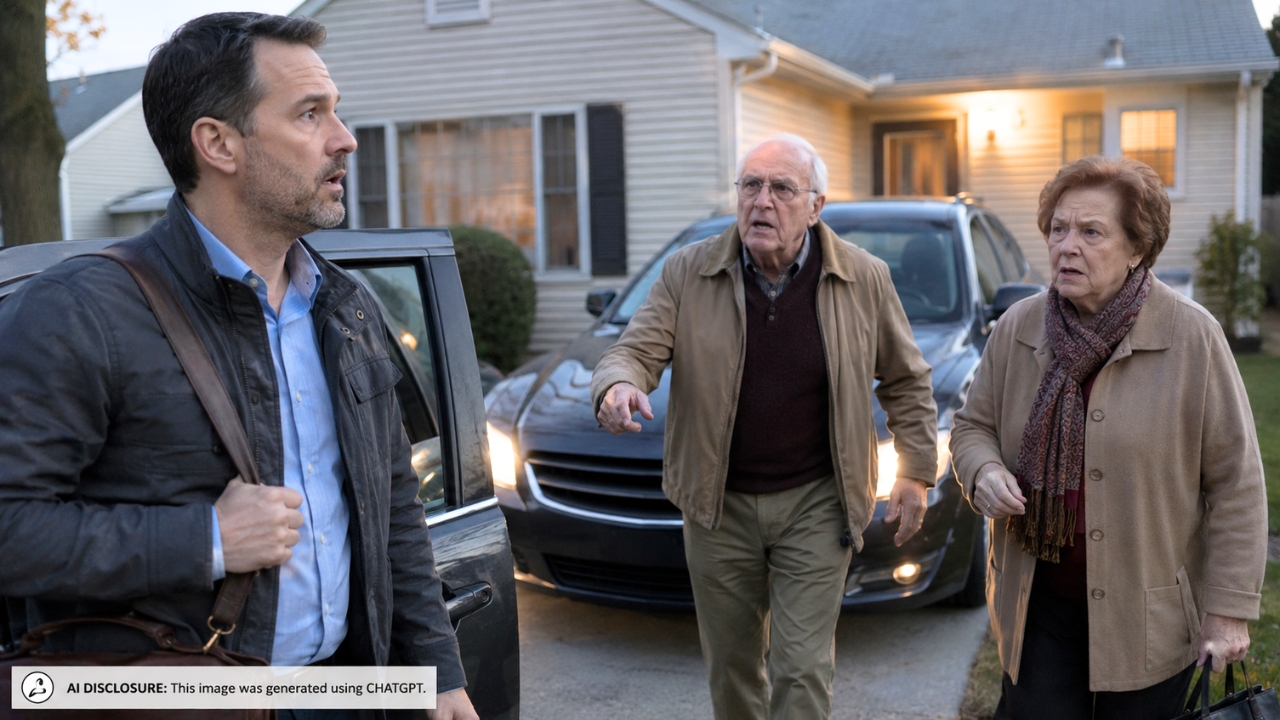
Photo credit: AI-generated image created using ChatGPT. Illustrative only.
He pulled into his driveway after work, expecting an empty house and a quiet Friday. Instead, a car followed him in. His parents had driven more than 1,100 miles from Florida to New Jersey, timed it using a family location app, and waited nearby so they could confront him when they knew he’d be alone.
In the original post, the 45-year-old man describes that moment as the breaking point in a relationship he’d already been trying to step back from. He says he’d refused to have a heavy conversation while his wife’s family was in crisis, and he believed his brother had clearly told their parents not to contact him at all. They showed up anyway.
A “normal” childhood that looks different as an adult
On paper, he says his upbringing seemed stable: two parents, three kids, family trips, holidays, and no divorce. For years, he compared it favorably to his wife’s difficult childhood—especially because her parents improved after their split and she remains close to them.
But with time, he says the “Leave it to Beaver” framing started to crack. He remembers being hit as a kid, described as routine discipline in the household, and one memory stands out: being called into his parents’ bedroom around age eight and being struck while his father, who “preferred to sleep naked,” yelled at him. He remembers ending up curled in a corner, terrified.
He also describes a home where racial slurs were common, so normalized that he didn’t understand the meaning as a child. One moment still stings: on a family trip, he looked through binoculars at a ferris wheel and repeated a slur to describe people he saw. His father slapped him, he says, but offered no explanation—leaving him confused about what he’d done until much later.
The relationship shifted into a scorecard
As an adult with his own family, he says his parents’ behavior started to feel less like support and more like ranking. After his parents retired to Florida, they would drive north a few times a year, stay at his North Carolina home for only a few days, then spend a week or more with his sister in New Jersey before driving straight back without stopping again.
He tried to be gracious about it at first. Over time, he says, it became harder to ignore—especially because it meant less time with his kids. When he moved to New Jersey in 2020, only 20 minutes from his sister, the pattern continued: two to four days at his house, and the rest of the trip at his sister’s.
What made it feel sharper, he says, was that his own house had more space—including a basement-apartment setup—while his sister’s home was smaller, offering his parents less privacy. It didn’t read like convenience. It read like preference.
The “Sunday call” became a demand—right when life fell apart
He says his parents also believed it was the children’s job to maintain contact. A weekly Sunday phone call became his responsibility, and he describes it as less a conversation than a chore: he’d share updates, get a “factoid or two,” and hang up.
Then the worst stretch of his adult life hit. His brother-in-law—his wife’s brother, who lived two blocks away and had kids the same ages—was diagnosed with terminal cancer in summer 2023. The man describes him as family and as one of his closest friends. As the situation consumed their days, he says he sometimes missed the weekly calls.
His parents were upset, he says, and when he suggested they call him instead, they claimed they didn’t want to “bother” him because he was busy. In November 2024, after his wife had an ER visit and he missed two Sundays in a row, the guilt trips escalated, and he began pulling back further—texts on holidays, fewer calls.
The final straw came in January 2025. He again asked why contact was always his job. This time, his mother’s answer was blunt: “I don’t think I should have to do that.” Near the end of the call, she asked how he was doing. He replied, “I’m not doing good mom.” He says she said goodbye a few seconds later and ended the call.
They used location tracking to catch him alone
After that, he told his brother in California that he needed a break. His brother later warned their parents not to contact him, saying there was a chance he could cut them out if they pushed. The poster says his parents took it as “don’t call,” not “no contact,” and decided showing up in person was fair game.
On a Friday, he got home from work and saw them pull into the driveway. His wife was out with the kids. He immediately texted his wife, brother, and sister that his parents were there and he was alone. He later learned they’d tracked his timing through a “find my friend” app shared across the family, then waited at a local restaurant until he arrived.
Inside, it was awkward small talk until his wife rushed home. They sent the kids upstairs and sat at the table for the conversation he’d been trying to avoid.
He says there were no apologies—neither for the surprise confrontation nor for the long history underneath it. His parents said they spent more time at his sister’s because her kids were more affectionate than his. They suggested they might be the injured party because he moved to New Jersey instead of Florida. They also brought up an old childhood joke that he’d been “the favorite,” implying he no longer held that spot.
Even in that tense meeting, he says, the racist language didn’t stop. When he asked them not to use a slur for Jewish people in front of his wife, they argued they didn’t think she was “really Jewish,” because they associated it with religion, not ethnicity. Politics surfaced too; his father joked that Trump winning “probably didn’t help,” then quickly dropped it when the poster mentioned education policy—both he and his wife are teachers.
The real fallout wasn’t the talk—it was what it cost
The conversation ended with his mother saying they had “a lot to think about,” and his parents left to stay at his sister’s for the weekend. He says he broke down crying on the couch, and his wife stayed home to comfort him instead of going to spend that night with her dying brother, who was then in end-of-life care on home hospice.
That detail sits heavily with him. He says he loves that she chose him in that moment, but feels angry and guilty that the confrontation pulled her away from time she could have had with her brother.
His parents returned for dinner the next two nights, but he describes it as stiff and surface-level. After they left, he decided to go no contact. His brother-in-law died in February. The day after the celebration of life, his mother called to ask how it went. He spoke politely for a few minutes, then cried again after hanging up.
By late June, he says, he still hadn’t resumed contact. He tried therapy once, didn’t connect with the therapist, and hasn’t rushed to find another yet. He also wrestles with the same thought many adult children do: if he ended up with a stable life, a marriage, kids, and a career, does that mean his parents were “at least ok”?
People responding to his story focused less on that question and more on the escalation: tracking his location, timing the confrontation, and showing up after being told not to contact him. The advice most often centers on boundaries that are enforceable—removing shared location access, documenting surprise visits, and having a plan if they show up again when he’s alone.
For him, the hardest part doesn’t seem to be choosing distance. It’s accepting that the version of his family he grew up defending may not be the version that actually exists—and that, even now, his parents are willing to cross lines to get what they want.
Check out more from Now Rundown:
- A Party of 12 Came Back a Month Later Demanding Their $80 Tip Refunded — My Restaurant Made Me Pay It
- Her Coworker Kept Filing the Same Complaint About Her After Being Warned — Then She Filed a Counter-Report With Every Email Documented
- Siblings Demanded Half of Their Sister’s $11 Million Inheritance — She Refused Because They Never Visited
- The Kid I Bullied in Middle School Just Interviewed for a Job on My Team — He Bombed It and I Didn’t Hire Him

Abbie Clark is the founder and editor of Now Rundown, covering the stories that hit households first—health, politics, insurance, home costs, scams, and the fine print people often learn too late.