Woman Told Her Father She’s Changing Her Name — After He Spent Years Pressuring Her to Live Up to Her Deceased Grandmother’s Legacy
Photo credit: AI-generated image created using ChatGPT. Illustrative only.
By the time Lorraine was old enough to understand why her name mattered so much, it was already carrying someone else’s weight. Her father had chosen it in grief, insisting she be named after his mother, who died just a month before Lorraine’s mom learned she was pregnant.
But in the years that followed, Lorraine says the name became less of a tribute and more of a script—one her dad and uncles expected her to follow. In the original post, she explains why she finally told her father she’s legally changing her first name to “Rain,” and why that conversation has now left her family in an icy standoff.
The tribute started as a sweet story—until it became a standard
Lorraine grew up hearing about the grandmother she never met. Early on, the comparisons felt warm, even flattering. She also resembled her grandmother, which made the family’s stories and nostalgia feel more personal, like she was connected to someone important.
For a while, it worked. She liked hearing who her grandmother was, what she loved, and why she mattered to her father. Being “just like her” sounded like praise—until Lorraine reached her late teens and started making choices that didn’t match the version of her grandmother her family wanted preserved.
When she started choosing her own path, the comparisons turned sharp
Lorraine says things shifted once she picked a college and career direction her dad didn’t like. That’s when “you remind me of her” stopped being a compliment and became a warning. Her father began framing her decisions as a personal failure to “live up to her legacy,” telling her she would “let her down” if she didn’t do things the way her grandmother had.
It didn’t stay limited to major life choices. Lorraine describes being criticized for growing out of hobbies, with her dad and uncles insisting she had to keep liking them because her grandmother did. Even when she said she’d simply lost interest, the response was the same: she was “just like her,” so she was expected to act like it.
Over time, that pressure didn’t pull her closer to her grandmother’s memory—it pushed her away from anything associated with it. What used to be normal growing up began to feel like an identity trap. If she liked something, it was taken as proof she was her grandmother reborn. If she didn’t, it became an argument.
A haircut, a nickname, and the moment it clicked
In college, Lorraine changed her hair. That sparked another family blowup, and it was the point where she says she finally took a harder look at what was happening. She started therapy and came to a blunt realization: she believed her dad and uncles weren’t just honoring their mother—they were treating Lorraine like her replacement.
The more she thought about it, the more it infected everything. Lorraine began questioning whether she genuinely liked certain things, or whether she’d been shaped into them. She wondered whether her dad loved her as a separate person, or primarily as a way to keep his mother present.
So she did what a lot of people do in their early 20s: she experimented. She tried new interests. She explored what felt like “hers.” Her dad continued to react badly.
One of the biggest flashpoints was her name. Lorraine started going by “Rain,” a shortened version that had existed as a nickname among friends since high school and college, but which she eventually embraced full-time. Her dad and uncles refused to use it, and Lorraine says they got upset when anyone else did.
Then she dyed her hair. Lorraine notes she still looks like her grandmother in the face, but the hair comparisons never stopped—and she suspected her visual similarities were part of why her family clung so tightly to the idea that she should be the same person, just in a new body.
The wedding question turned into a bigger announcement
Now 27, Lorraine is engaged and planning a wedding next year. Recently, her father asked whether she planned to change her last name after marriage. Lorraine told him yes—she wanted to share a last name with her husband and any future children they might have.
That’s when her father pleaded with her to keep her last name, pointing out that even if she goes by “Rain” socially, her legal first name is still Lorraine—exactly her grandmother’s. In his view, keeping the full legal name seemed to matter as a final link.
Lorraine responded by telling him she was using the name-change process as an opportunity to make “Rain” her legal first name as well. She said she’d keep her middle name, which she also shares with her grandmother, but she wanted her first name to reflect her own identity rather than the expectation that she be a stand-in for someone else.
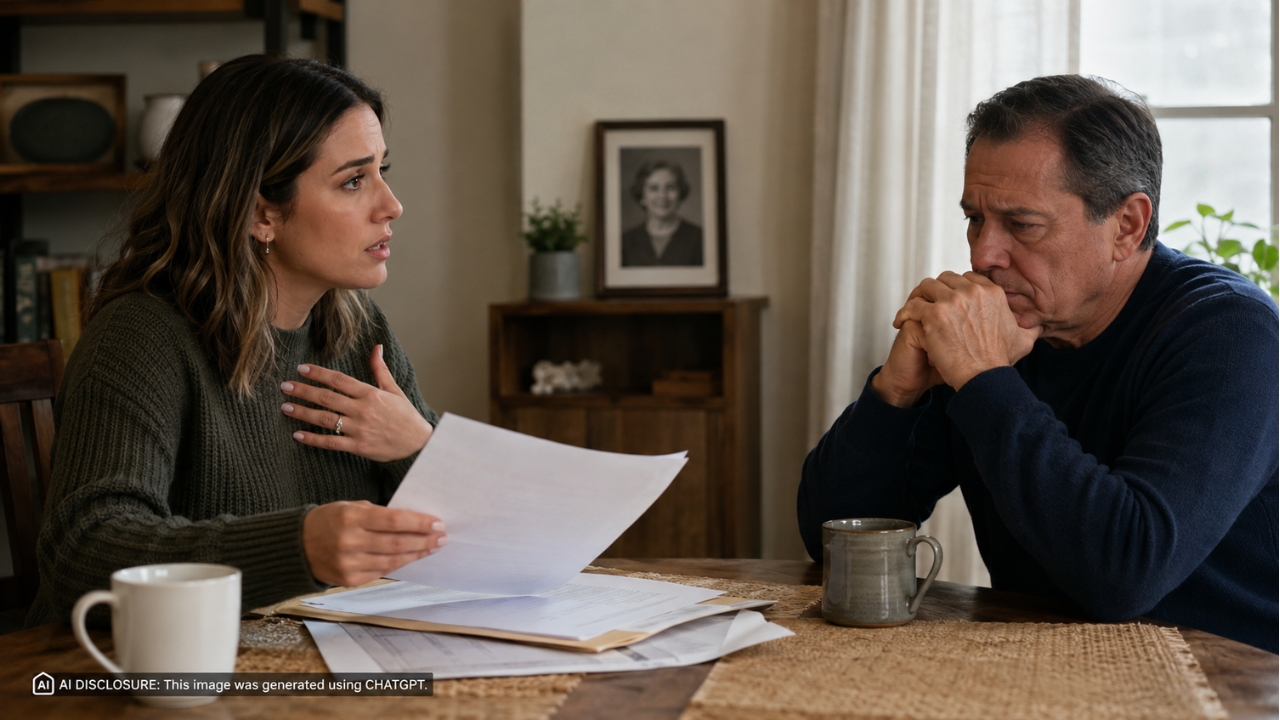
Her father took it as an attack. Lorraine says he accused her of being spiteful. She told him it wasn’t about punishment—it was about reclaiming herself. And then she said the sentence that detonated what was left of the peace: she told him she doesn’t exist to be the reincarnation of his mother, and that maybe if he hadn’t pushed that identity so hard, she wouldn’t feel like she had to do this.
Her father’s response cut in a different direction. He told her maybe one day she’ll understand how it feels “when he’s dead”—a line that, intentionally or not, ties the argument right back to grief and loss.
Family fallout, and what people zeroed in on
After that talk, Lorraine says her father stopped speaking to her for several days. Her mother told her she hurt his feelings and argued that Lorraine shouldn’t have revealed the legal first-name change, or shouldn’t have said everything she said in the heat of the moment.
Her fiancé sided with her, backing the idea that she has the right to define herself—especially before marriage, paperwork, and future children lock more decisions into place.
In responses to stories like Lorraine’s, people tend to focus less on the nickname itself and more on the pattern: a parent using a child’s name and resemblance as a way to manage grief. Practically, many also point to the reality that legal names show up everywhere—marriage licenses, banking, medical records, work documents. If “Rain” is the name she lives by, making it official can reduce daily friction and prevent her from constantly being pulled back into the identity her family insists on.
Others often point out that boundaries can be clearest when they’re boring: use the name she introduces herself with, or accept that she may limit contact. Because in families where a “legacy” is treated like a job description, every small concession becomes precedent.
She’s not trying to erase her grandmother—she’s trying to exist alongside her
Lorraine isn’t describing a rejection of her grandmother’s memory so much as a refusal to be drafted into it. She’s keeping her middle name. She’s not denying the resemblance or the stories. What she’s pushing back on is the idea that her identity is owed to the dead and controlled by the living.
For now, the tension is sitting right where it hurts most: between a wedding that’s supposed to mark a new start and a father who seems to hear that new start as abandonment. Lorraine is moving forward with the name she chose. Whether her father chooses to meet her there—or keeps insisting on someone else—will shape not just a holiday argument, but the kind of relationship they have when the wedding photos are taken and the legal forms are filed.
Check out more from Now Rundown:
- A Party of 12 Came Back a Month Later Demanding Their $80 Tip Refunded — My Restaurant Made Me Pay It
- Her Coworker Kept Filing the Same Complaint About Her After Being Warned — Then She Filed a Counter-Report With Every Email Documented
- Siblings Demanded Half of Their Sister’s $11 Million Inheritance — She Refused Because They Never Visited
- The Kid I Bullied in Middle School Just Interviewed for a Job on My Team — He Bombed It and I Didn’t Hire Him

Abbie Clark is the founder and editor of Now Rundown, covering the stories that hit households first—health, politics, insurance, home costs, scams, and the fine print people often learn too late.