Stepmother Picked Up Her Stepdaughter From School After Her First Period, Even Though the Girl’s Mother Had Told Her Not To
Photo credit: AI-generated image created using ChatGPT. Illustrative only.
It started with a phone call from a 10-year-old at school, saying her stomach hurt so badly she couldn’t focus. By the time the adults figured out what was going on, she was in a bathroom stall looking at blood, scared and uncomfortable, and waiting for someone to decide who was “allowed” to help her.
In the original post, a 24-year-old pregnant stepmom describes being caught between a child who needed immediate care and a biological mother who insisted the moment belonged to her—even if that meant the girl stayed at school in pain for hours.
A rough day at school turned into a family standoff
The stepmother is six months pregnant with her first biological child and says she and her stepdaughter usually have an easy, fun relationship. She also says she tries to respect boundaries, especially around discipline, because her husband’s daughter is from a previous relationship.
Then the school-day emergency hit. The girl called her dad from school complaining of stomach pain. When she went to the bathroom and saw blood, her father immediately understood she’d started her first period.
He couldn’t leave work, and at first, the child’s mother wasn’t answering. The stepmom was home and on the school’s approved pickup list, so she offered to go get the girl if her husband wanted her to.
“A matter between her and her real mother”
When the biological mother finally called back, the stepmom says the tone changed fast. The mother called it “a matter between her and her real mother” and said it was a “special moment” she didn’t want to miss.
The stepmom tried to keep it practical. The child was bleeding at school, in pain, and would have to deal with it for the rest of the day. But the mother pushed back hard, saying the girl would “have to tough it out and use toilet paper until I can get there.”
What made it worse was the way the mother framed the stepmom’s role. She reportedly told her, “you’ll understand when your baby arrives and you become a mom… talk to me when your child has an important life event.” The stepmom says that comment stung, especially because she already considers the girl family.
The call from the bathroom changed everything
While the adults argued about boundaries and “special moments,” the child was still at school. Then she called her stepmom directly, crying and asking for pain medicine.
By that point, the school had already provided pads, but the girl didn’t want to stay through the day. She wanted to go home, take something for the cramps, and rest. The stepmom says hearing her like that “really got to” her.
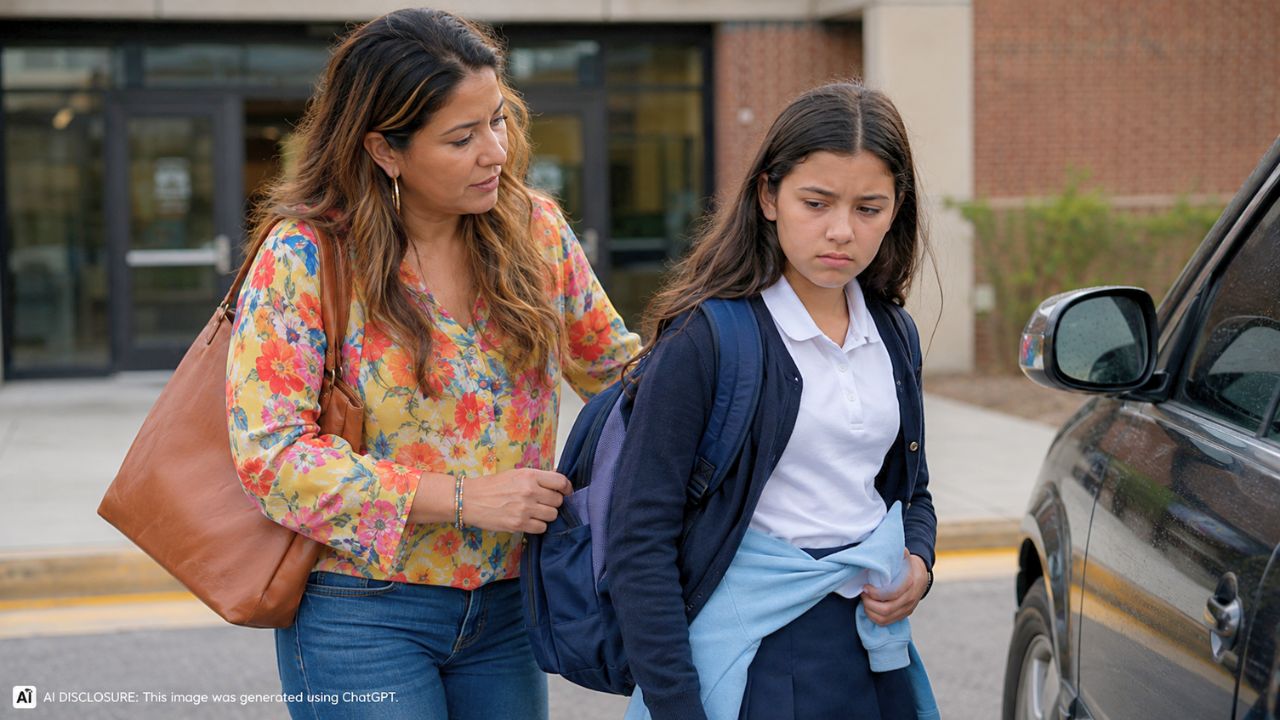
The dad made the call: he told his wife to pick his daughter up. So she did—signed her out, drove her to Walmart, bought ibuprofen and ginger ale, and took her home to lie down.
After the medicine kicked in, the stepmom says her stepdaughter was doing much better. The immediate crisis—pain, embarrassment, and being stuck at school—was handled.
Five hours later, the anger finally landed
The calm didn’t last. About five hours after the pickup, the biological mother called “absolutely furious,” according to the stepmom’s account.
She argued that the school could have handled it and complained that her daughter missed her after-school program. The mother also accused the stepmom of trying to “be a better mom than her,” and pointed to what she called an agreement about boundaries.
The stepmom told her she wasn’t trying to replace anyone. Her focus was that the child had been in pain for hours and now felt better, and that should be the priority. The mother responded with, “you parent your kid, I’ll parent mine,” and hung up.
That left the stepmom stuck in the part no one prepares you for: doing what feels obviously right in the moment, then being told you crossed a line afterward. Her husband backed her up, telling her she did nothing wrong and that he was glad she stepped in, especially since she understands what painful periods can be like.
Where the boundary argument gets messy fast
The heart of the fight wasn’t really about pads or missed activities. It was about control—who gets to be present for a “first,” and who gets to make decisions when the child is uncomfortable and one parent can’t leave work.
The stepmom emphasizes she was on the school’s approved pickup list, which matters because it means the family had already cleared her as someone trusted to sign the child out. In other words, this wasn’t a stranger showing up; it was an adult the school was allowed to release the child to.
But the mother’s comments show this wasn’t just about logistics. Calling it something for the “real mother” and dismissing the stepmom until she had her “own” child turned a health-and-comfort issue into a hierarchy issue. And the longer the child stayed at school in pain, the more those adult dynamics risked becoming the main story for the kid.
There’s also the reality that first periods can be physically rough, emotionally overwhelming, and confusing—especially at age 10. Even with pads available, cramps and nausea can be intense, and the embarrassment of bleeding at school can feel like a crisis all by itself. In this case, the stepmom didn’t just pick the child up; she treated it like a sick day: medication, hydration, and rest.
What readers zeroed in on: the kid’s comfort and the dad’s decision
The post labels the stepmom “Not the A-hole,” and the reactions centered on two points: the child needed help right then, and the father—who shares responsibility—authorized the pickup.
People also focused on the biological mother’s suggestion that the girl use toilet paper until she arrived, reading it as a sign the argument had drifted far from what the child needed. Missing an after-school program didn’t land as a compelling complaint next to a crying 10-year-old asking for pain medicine.
Others honed in on the mother’s “real mother” comment as needlessly cruel and inflammatory, especially given that the stepmom is pregnant and already trying to navigate her place in the family carefully.
At the same time, the boundary issue didn’t disappear. The underlying tension—who gets included in intimate care moments, and how decisions get made when parents disagree—still sits there waiting for the next flashpoint.
For now, the immediate outcome is straightforward: a child in pain got picked up, medicated, and rested at home, with her father’s approval. The longer-term consequence is less tidy. The parents are now staring at a bigger co-parenting question—what happens the next time school calls, the mother doesn’t answer, and the stepmom is the only adult who can get there fast.
Check out more from Now Rundown:
- A Party of 12 Came Back a Month Later Demanding Their $80 Tip Refunded — My Restaurant Made Me Pay It
- Her Coworker Kept Filing the Same Complaint About Her After Being Warned — Then She Filed a Counter-Report With Every Email Documented
- Siblings Demanded Half of Their Sister’s $11 Million Inheritance — She Refused Because They Never Visited
- The Kid I Bullied in Middle School Just Interviewed for a Job on My Team — He Bombed It and I Didn’t Hire Him

Abbie Clark is the founder and editor of Now Rundown, covering the stories that hit households first—health, politics, insurance, home costs, scams, and the fine print people often learn too late.