Divorced Father Refused to Let His Ex-Spouse Move Their Four Kids to a New Town — Citing the Custody Agreement’s School District Clause
Photo credit: AI-generated image created using ChatGPT. Illustrative only.
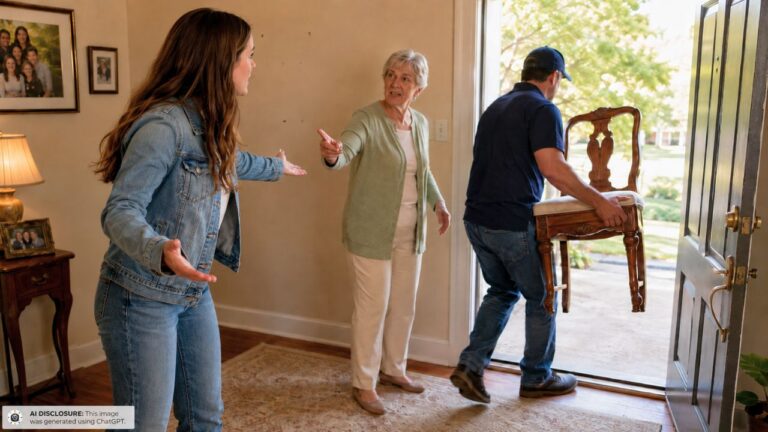
A divorced parent with four children says a routine text message from an ex-spouse quickly turned into a fight over stability, sports, and a custody agreement that ties the kids’ legal residence to a specific school district. The parent, who shares 50/50 custody, said the children had already been talking about the possibility of moving—and weren’t happy about it.
In the original post, the parent explained that the family has lived in the current town for nearly eight years, and the kids are involved in athletics there. When the ex announced plans to relocate to another town, the poster said they “put my foot down,” arguing the move was about the ex’s convenience rather than the children’s needs.
A text message, and then the pressure to just accept it
The poster said they were with their ex for 13 years and divorced about 4½ years ago. The co-parenting arrangement has been in place long enough that routines—school, sports, and time split between homes—are established. That’s why the move text hit like a disruption already in motion.
According to the post, the children had been telling the poster about the move before the ex formally brought it up. The kids also voiced that they didn’t want to leave because of their sports and ties in the current town. The poster framed their response as advocating for the kids, not trying to control the ex.
But the ex, the poster wrote, seemed to believe they could relocate without revising the custody agreement. That’s where the conflict sharpened: not just a disagreement about what’s best, but a dispute over what the written plan allows.
The school district clause that changed the whole argument
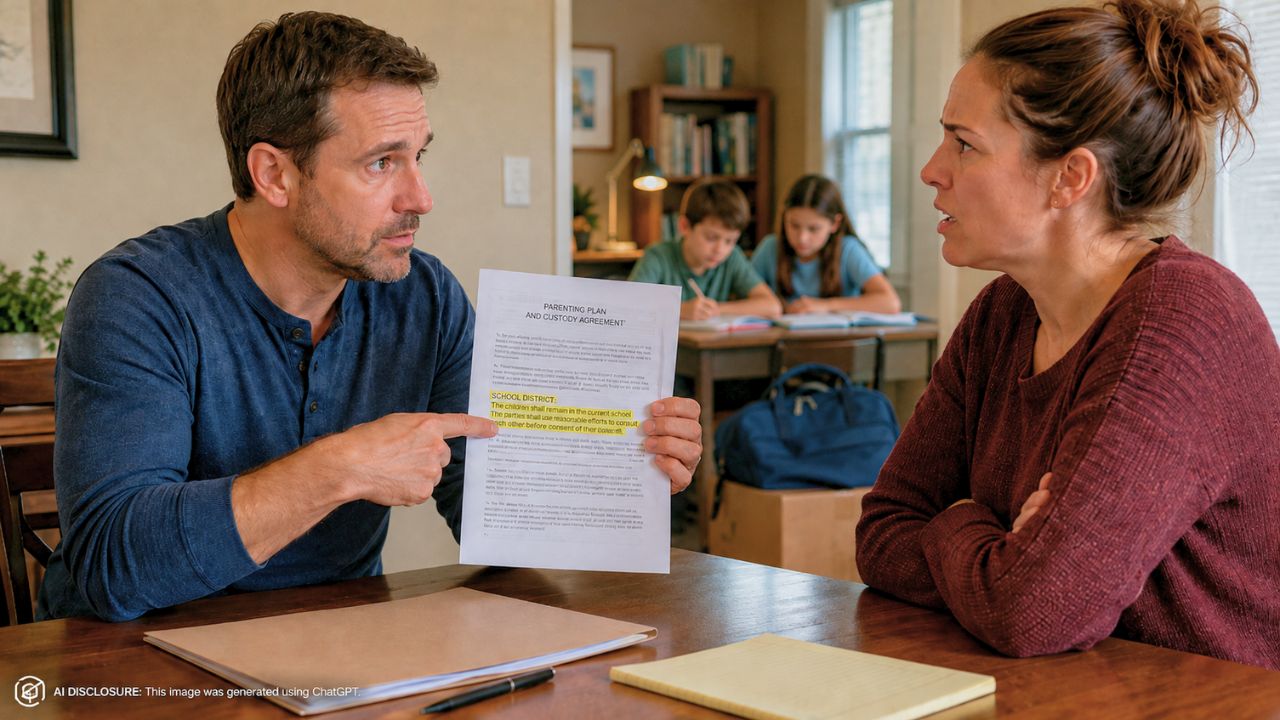
The key detail, the poster explained, is a clause in their parenting plan about school attendance and legal residence. They shared language stating that “the legal residence of the child for school attendance shall be whichever parent’s address is located within the _____ School District.”
They also noted the plan says “primary residential responsibility shall be jointly shared between the mother and the father,” reinforcing that neither parent is supposed to unilaterally make sweeping changes. To the poster, that meant the ex couldn’t simply move the kids to a new town, switch their schooling arrangements, and treat it as a done deal.
The poster added that if the children were truly miserable in their current school—mentally struggling or unhappy—they’d be willing to support a district change. But they believed this wasn’t that. In their view, the move was personal convenience presented as an inevitable family decision.
“Surprise, you’re homeschooled”: the part that escalated it
What took the disagreement from tense to urgent was the poster’s claim that the ex planned to tell the children after the fact. The ex allegedly said they would move and then inform the kids with “the surprise of no longer being in public school— but homeschooled.”
For a parent already focused on stability, that kind of surprise announcement raises the stakes. It’s not just changing addresses; it’s changing the kids’ daily structure, their social environment, and potentially their access to extracurriculars. The poster’s concern wasn’t only the move itself, but the idea of doing it abruptly and without collaboration.
They also acknowledged emotional baggage from the relationship, writing that they were “battling some old narcissistic wounds” from their ex. That admission suggested they were trying to check their own reactions while still taking the practical threat seriously.
Logistics, sports, and the reality of split households
The post included a detail that hints at how the family makes a 50/50 schedule work: one of the children has a driver’s license and can drive between houses for visitation. There is a transportation clause in the plan, the poster said, but day-to-day movement is already smoothed out by that built-in flexibility.
That matters because relocation changes everything about those logistics. A longer drive can turn exchanges into a burden, complicate school pick-ups, and make practices or games harder to attend consistently. For kids playing sports in their current town, a move could mean losing their teams outright—or spending far more time commuting than participating.
The poster’s framing stayed consistent: if the move were driven by the children’s needs, they could get on board. But if the ex’s plan is to relocate, then cut ties with the public school district by switching to homeschooling, the poster saw it as a unilateral reset that undermines the spirit of a joint custody arrangement.
Outside reactions zeroed in on paperwork and proof
While the post itself focused on the co-parenting conflict, the practical center of gravity was always the written parenting plan. The poster asked for an outside perspective—whether they were overreacting—and said they were considering legal guidance.
The update made that move official: the poster scheduled a meeting with their lawyer and planned to follow up after. Even without a detailed rundown of what others said, the overall direction was clear—don’t argue in circles, don’t rely on verbal assurances, and don’t wait until the move happens before acting.
In these disputes, the leverage usually comes from documentation: what the custody order says about school district, notice requirements, and decision-making authority. The poster seemed to recognize that the difference between a stressful threat and an enforceable violation comes down to whether a court order is being ignored.
The lawyer’s message: the plan is there to stop exactly this
After the meeting, the poster shared a detailed update: their attorney told them the parenting plan already covers the issue. The lawyer emphasized that with 50/50 custody, the ex could not simply walk into a school, unenroll the children, and move them without consequence.
The attorney also laid out what would happen if the ex tried to force it. If the ex moved without telling the other parent, or moved and left the kids behind, the lawyer said to call immediately so they could file an emergency motion seeking primary custody—and that the ex could end up paying more child support as well.
In the lawyer’s view, the protective purpose of the plan was straightforward: it exists to preserve the kids’ stability and prevent one parent from making disruptive decisions unilaterally. The update ended with reassurance that the children were safe and instructions to stay alert and document any “crazy” moves.
For now, the dispute appears to be at a crossroads: one parent asserting they can relocate and change schooling on their own, the other prepared to enforce the school district clause and the joint custody structure. The next step isn’t another argument over text—it’s whether the ex backs down, or tests the boundaries of a court order that was designed to keep the kids’ lives from being upended overnight.
Check out more from Now Rundown:
- A Party of 12 Came Back a Month Later Demanding Their $80 Tip Refunded — My Restaurant Made Me Pay It
- Her Coworker Kept Filing the Same Complaint About Her After Being Warned — Then She Filed a Counter-Report With Every Email Documented
- Siblings Demanded Half of Their Sister’s $11 Million Inheritance — She Refused Because They Never Visited
- The Kid I Bullied in Middle School Just Interviewed for a Job on My Team — He Bombed It and I Didn’t Hire Him

Abbie Clark is the founder and editor of Now Rundown, covering the stories that hit households first—health, politics, insurance, home costs, scams, and the fine print people often learn too late.