Neighbors Tore Down a Shared Fence After a Couple Declined to Pay Their $1,900 Share of the Replacement — Despite Saying It Was Fine
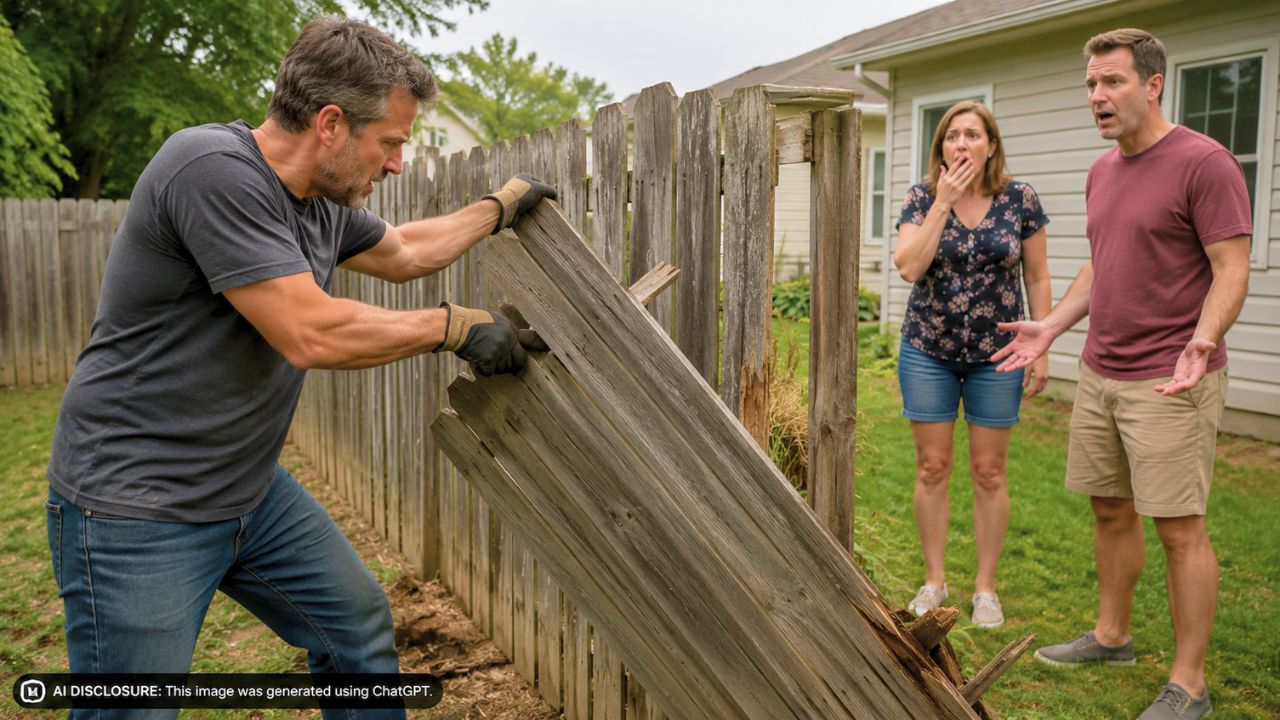
Photo credit: AI-generated image created using ChatGPT. Illustrative only
It started as a normal neighborly question: would they want to split the cost of replacing a shared backyard fence? One couple said no—$1,900 wasn’t in the budget, and the existing fence seemed fine. By the time they got home from work the next day, the entire fence line was gone anyway.
In the original post, the homeowners describe feeling blindsided—not just because the fence came down without warning, but because parts of their deck were attached to it. They say the neighbors removed the fence and cut the top sections of their deck supports in the process, leaving them to deal with the fallout while a new fence plan was still being figured out.
A $1,900 ask, a polite “no,” and then the fence disappeared
The neighbors had recently decided to redo their backyard fences and approached the couple about going in together on the shared side. The homeowners understood that if they didn’t want to pay, it would be “completely fine,” and that the neighbors would just replace the other sides.
After talking it over, the couple declined. They said money was tight and, from their perspective, the fence didn’t need replacing. The neighbors initially responded that it was understandable, and the conversation seemed over.
Then came the surprise. The next day, while the couple was at work, they returned to find the whole fence taken down, including the shared side they hadn’t agreed to fund.
What made it worse: the deck supports were part of the fence
It wasn’t just a matter of losing privacy for a while. The homeowners say the fence removal also affected their property in a more physical way: the top sections of the supports on their deck were cut because those supports were “a part of the fence.”
No notice, no knock, no “we’re starting tomorrow.” Just a missing fence and altered deck supports when they arrived home.
The neighbors did come over to explain. According to the post, they said they were still going to pay for the fence themselves, but they “really still wanted to get it done.” The couple didn’t object to the neighbors paying for an upgrade—what shook them was how it happened, and what it meant for their own structures and property line.
A crooked old fence turned into a property-line problem
With the fence down, the couple took a closer look at something they’d noticed before: the original fence line wasn’t straight. It “jutted in” toward their yard at an odd angle, and apparently had been that way when they bought the home.
Since they’d purchased the property recently, they still had their survey documents handy. Looking them over, they realized the spot where the neighbors wanted to put the replacement fence would push onto their property by almost a foot—essentially following the old, incorrect fence placement.
They brought that information back to the neighbors in a friendly way, framing it as a heads-up rather than a fight. At first, it sounded workable. The neighbors were “very nice” about it and talked through possible solutions.
Solutions fell apart once gates, bylaws, and deck construction got involved
That cooperative mood didn’t solve the logistical problem, though. The option everyone agreed on initially stopped working because of gate sizing rules—something the poster describes as a bylaw requirement at the entrance.
From there, the remaining choices weren’t great. One option was to rebuild the fence with the same strange angle as before. The other was to straighten the fence line in a way that would require cutting into the couple’s deck.
The homeowners weren’t willing to do that. They describe the deck as older, and say cutting into it would mean adding new supports and braces. At the same time, the neighbors’ preferred gate setup “doesn’t quite work” if the fence follows the true property line.
Instead, the couple says they’re now “forced” to move their own gate back so nothing impedes the property line on either side. Even with the neighbors covering the cost of the new fence, the couple is left adjusting their yard layout because the replacement plan collided with the legal boundary.
The real question: free fence, but at what cost?
The homeowner doesn’t pretend they’re getting nothing out of this. They recognize it’s essentially a “free brand new fence,” and they say they’ve tried to be accommodating and avoid putting up a fight.
But they also don’t think they should have to “keep our mouth shut” about where their property ends—especially after the fence came down without warning and their deck supports were altered as part of the removal.
The underlying tension is easy to see: the neighbors are paying, but the homeowners are absorbing risk and disruption. A fence isn’t just cosmetic when it’s tied into a deck, gates, and a surveyed boundary.
What readers zeroed in on: notice, documentation, and boundaries
In the post, the homeowner frames their worry as whether they’re being ungrateful by insisting on the true property line and resisting changes to their deck. But the details naturally steer attention to process and permission.
Even when neighbors are paying for improvements, tearing down a shared fence affects both properties immediately—privacy, pets, security, and basic use of the yard. And when the removal involves cutting portions of a deck support, it stops being a simple “we’re upgrading” project and becomes something that can affect safety and repair costs.
The survey documents become the turning point. The couple didn’t start by arguing; they checked their paperwork after the fence was already gone. Once measurements enter the picture, the conversation shifts from preference to permanent boundaries—especially when a planned replacement would effectively move a fence line by nearly a foot.
For this couple, the disagreement isn’t about blocking an upgrade. It’s about not giving away a slice of their yard, not having their deck modified to accommodate a neighbor’s preferred layout, and not being pushed into redesigning their own gate because someone else started construction without a final plan.
The couple is now stuck trying to keep the peace while protecting what they own—an awkward place to be when the neighbors have already shown they’re willing to move forward quickly. If they push too hard, they risk a hostile relationship next door. If they don’t push at all, they risk losing space and taking on unwanted construction work around their deck and gate for years to come.
Check out more from Now Rundown:
- A Party of 12 Came Back a Month Later Demanding Their $80 Tip Refunded — My Restaurant Made Me Pay It
- Her Coworker Kept Filing the Same Complaint About Her After Being Warned — Then She Filed a Counter-Report With Every Email Documented
- Siblings Demanded Half of Their Sister’s $11 Million Inheritance — She Refused Because They Never Visited
- The Kid I Bullied in Middle School Just Interviewed for a Job on My Team — He Bombed It and I Didn’t Hire Him

Abbie Clark is the founder and editor of Now Rundown, covering the stories that hit households first—health, politics, insurance, home costs, scams, and the fine print people often learn too late.