Man Refused to Change His Mind About a Family Settlement — Then His Siblings Cut Him Off Completely Over It
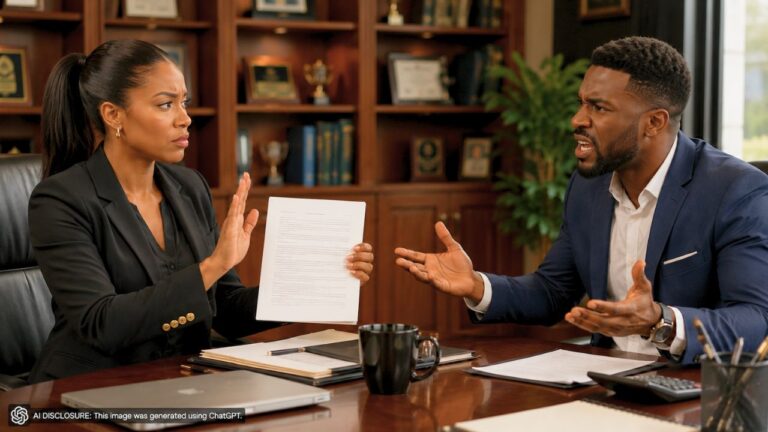
Photo credit: AI-generated image created using ChatGPT. Illustrative only.
It started as a straightforward wedding gift: an uncle handed his niece a “decent sum of money” to help with her big day, no strings attached and no regrets. Then a fight over a few lines on a save-the-date turned that gift into a family loyalty test—one that ended with the uncle getting iced out when he refused to take the money back.
In the original post, the uncle explains that his brother and sister-in-law demanded he pressure the bride to return the cash after she “upset” them. He wouldn’t do it. And once he made that clear, he says his siblings cut him off completely.
A gift given freely suddenly came with conditions
The uncle’s position was simple: the money was a gift, “100%” voluntary, and he didn’t believe he had any right—or reason—to claw it back. He also didn’t want to be recruited into a punishment campaign against his niece over what he saw as an over-the-top reaction.
But his brother and sister-in-law viewed the wedding funding as leverage, not generosity. In their eyes, continuing to support the wedding financially after the save-the-date wording was like underwriting an insult. They wanted the uncle to help send a message: apologize, or pay it back.
That demand put the uncle in the middle of a dispute that wasn’t really about money at all. The money just became the tool everyone tried to use to force the outcome they wanted.
The wording on the save-the-dates hit a nerve
The blowup centered on how the couple listed family members on the save-the-date. On the groom’s side, the format was traditional and clean: “Parents of the Groom” followed by names.
On the bride’s side, the couple listed the uncle’s brother as “Father of the Bride,” followed by “+ His Wife” and the sister-in-law’s name. The niece also included a line saying she is the daughter of her late mother, naming her.
For the brother and sister-in-law, “his wife” wasn’t a neutral label—it read like a demotion. The sister-in-law came into the kids’ lives when they were all under 10, and the couple has long framed that as her having helped raise them. Seeing her introduced as a spouse instead of a parent felt, to them, like the bride was rewriting the family story in public.
And the mention of the late mother made it worse for them. The brother, in particular, was angry that his late wife was explicitly named as the bride’s mother while his current wife was described as “just his wife,” as if the years of parenting didn’t count.
Private conversations didn’t fix it—so the family escalated
The uncle says the bride didn’t regret the wording and didn’t apologize after “multiple discussions” that happened once the save-the-dates went out. That stalemate seems to be where the dispute hardened from hurt feelings into a full-on family standoff.
From the parents’ perspective, the lack of apology wasn’t just stubborn—it was disrespect. They believed the wording was a deliberate slight, and they wanted consequences. They weren’t only mad at the bride; they were angry that other relatives weren’t lining up behind them.
That’s where the uncle became the next target. When he refused to demand the money back and refused to “turn against” his niece, his brother and sister-in-law redirected their anger at him. What he considered staying neutral, they considered choosing sides.
They argued that he should be defending the sister-in-law because she “raised” the bride and her siblings. They also framed it as a threat to the entire blended family: they said the bride’s wording created “a crack” in what they built, and they feared the other kids—including the sister-in-law’s biological children from her late husband—would “follow suit.”
Why the money fight turned into a cutoff
Once the dispute became about loyalty, the uncle’s refusal to act became an action in itself. He wasn’t just saying, “I won’t ask for the money back.” He was also signaling that he didn’t share their view of the offense, and he wasn’t willing to punish the bride to protect the parents’ version of the family narrative.
That’s a hard thing for some families to tolerate, especially when the pressure is on to present a united front before a wedding. Save-the-dates are designed to announce something publicly. If the parents believed the wording embarrassed them in front of friends and extended relatives, it would explain why they were desperate to correct it—or at least reclaim control.
The uncle, however, seemed to be drawing a line around what a gift is. If money given in goodwill can later be converted into a weapon, then it was never really a gift. And he didn’t want to set a precedent that every disagreement comes with a financial penalty.
His brother and sister-in-law’s response was extreme: they cut him off. The post doesn’t detail how that cutoff looked day-to-day—blocked numbers, refusing visits, skipping gatherings—but the message was clear. If he wouldn’t help discipline the bride, he’d be treated as part of the problem.
Reactions zeroed in on control, not stationery etiquette
Most reactions to stories like this tend to split between two instincts: respect for a stepparent’s role, and respect for a child’s right to name their own relationships. Here, the sharp edge wasn’t only the label “his wife.” It was the expectation that the bride should publicly define her family in the exact way her parents preferred.
People also tend to focus on the practical reality that wedding gifts aren’t deposits held in escrow. Once the money is given, it’s gone, and attempting to retrieve it often backfires by making the givers look controlling. Even if the parents felt sincerely hurt, pressuring an uncle to demand repayment from the bride was always likely to widen the conflict instead of shrinking it.
And there’s another layer: the niece didn’t erase the sister-in-law. She named her. She just didn’t use the word “parent.” For some, that distinction matters a lot, especially when a deceased parent is involved. Including her late mother’s name reads less like an attack and more like a choice to honor someone who can’t be there.
That’s why many readers tend to view the parents’ reaction—demanding money back, demanding an apology, demanding family members join the pressure—as the bigger warning sign than the original wording choice.
The uncle ended his post questioning whether he was being dismissive because his brother and sister-in-law’s feelings were hurt. But his account shows a family that moved quickly from disappointment to punishment, and then to isolation. With the wedding approaching and relationships already strained, the bigger question isn’t whether the save-the-date wording can be “fixed.” It’s whether the family can come back from turning a gift into a loyalty ultimatum.
Check out more from Now Rundown:
- A Party of 12 Came Back a Month Later Demanding Their $80 Tip Refunded — My Restaurant Made Me Pay It
- Her Coworker Kept Filing the Same Complaint About Her After Being Warned — Then She Filed a Counter-Report With Every Email Documented
- Siblings Demanded Half of Their Sister’s $11 Million Inheritance — She Refused Because They Never Visited
- The Kid I Bullied in Middle School Just Interviewed for a Job on My Team — He Bombed It and I Didn’t Hire Him

Abbie Clark is the founder and editor of Now Rundown, covering the stories that hit households first—health, politics, insurance, home costs, scams, and the fine print people often learn too late.